How Long Can Drywall Stay Wet Before It Needs to Be Removed?
A plumbing leak, overflowing toilet, broken supply line, appliance leak, or other water loss can soak drywall surprisingly quickly. One of the first questions property owners ask is whether the wet drywall can be dried or whether it has to be removed.
There is not one universal number of hours that automatically determines whether drywall is salvageable.
The condition of the drywall, the source of the water, how saturated the material became, whether insulation is wet behind it, and how quickly effective drying begins all influence the decision.
For property owners in Riverside County, the most important step is to identify the water source, stop additional water from entering the property, and determine how far the moisture has traveled.
Can Wet Drywall Be Dried Without Removing It?
Sometimes.
Drywall that has been exposed to relatively clean water and remains structurally sound may be capable of drying in place under the right conditions.
A restoration professional may evaluate factors such as:
How wet the drywall is
How long it has been exposed to moisture
The source and category of the water
Whether the drywall is swollen, crumbling, sagging, or separating
Whether insulation behind the wall is wet
Whether moisture is trapped inside the wall cavity
Whether baseboards or other finishes are restricting evaporation
Whether microbial growth is already present
Whether drying equipment can effectively reach the affected materials
The goal should not be to remove drywall unnecessarily. At the same time, leaving materials in place when they cannot be properly dried can create additional problems.
How Quickly Does Drywall Absorb Water?
Drywall is a porous building material.
When water reaches the bottom of a wall, moisture can wick upward through the gypsum core and paper facing. The extent of that movement depends on the amount of water, duration of exposure, construction of the wall assembly, and surrounding environmental conditions.
The drywall may also look dry on the surface while moisture remains inside the material or wall cavity.
That is why a visual inspection alone may not be enough after a significant water loss.
Does Drywall Have to Be Removed After 24 or 48 Hours?
Not automatically.
You may see general rules online stating that drywall must always be removed after a specific number of hours. Real water-damage decisions are more complicated.
Time matters because prolonged moisture increases the opportunity for material deterioration and microbial growth, but elapsed time is only one part of the evaluation.
For example, drywall exposed briefly to clean water with immediate professional drying may present a very different situation than drywall saturated for an extended period by a sewage backup.
The actual condition of the material matters more than applying a single time limit to every property.
When Does Wet Drywall Usually Need to Be Removed?
Removal may be appropriate when drywall is physically damaged, contaminated, heavily saturated, unable to dry effectively, or otherwise unsalvageable.
Common conditions that can lead to drywall removal include:
The drywall is sagging or deteriorated
Gypsum board can lose structural integrity after significant saturation. Soft, crumbling, swollen, or sagging drywall may not be suitable to remain.
Contaminated water affected the material
Water from sewage backups or other contaminated sources can change how porous materials need to be handled.
Drywall exposed to contaminated water may require removal rather than drying in place.
Wet insulation is trapped behind the drywall
Insulation inside a wall cavity can hold moisture and make drying the complete assembly more difficult.
Opening the wall may be necessary to evaluate or remove affected insulation.
Moisture cannot escape
Cabinets, tile, vinyl wall coverings, insulation, multiple layers of material, or other construction components can restrict evaporation.
A wall that appears simple from the outside may contain moisture that cannot be effectively addressed without access.
Mold growth is present
If microbial growth has developed, the appropriate scope may involve containment, affected-material removal, HEPA filtration, detailed cleaning, moisture control, and restoration.
How Do Restoration Companies Check Wet Drywall?
Professional water damage restoration involves more than simply touching the wall to see whether it feels damp.
At 911 Restoration of Riverside County, moisture investigation may involve visual inspection, infrared imaging as a screening tool, and moisture-detection equipment to help evaluate affected building materials.
Infrared cameras can show temperature differences that may indicate areas requiring further investigation, but an infrared image by itself does not confirm moisture.
Additional moisture testing helps determine what materials are actually affected.
The information collected during the inspection helps establish the drying or removal strategy.
What Happens If Wet Drywall Is Left Untreated?
Moisture can continue moving into adjacent materials.
Depending on the water loss, untreated moisture may affect:
Insulation
Baseboards
Flooring
Cabinets
Wood framing
Ceiling assemblies
Adjacent rooms
Wall cavities
Prolonged moisture can also create conditions that support microbial growth.
The sooner the affected area is evaluated, the easier it generally is to understand the true extent of the damage.
How Is Wet Drywall Dried?
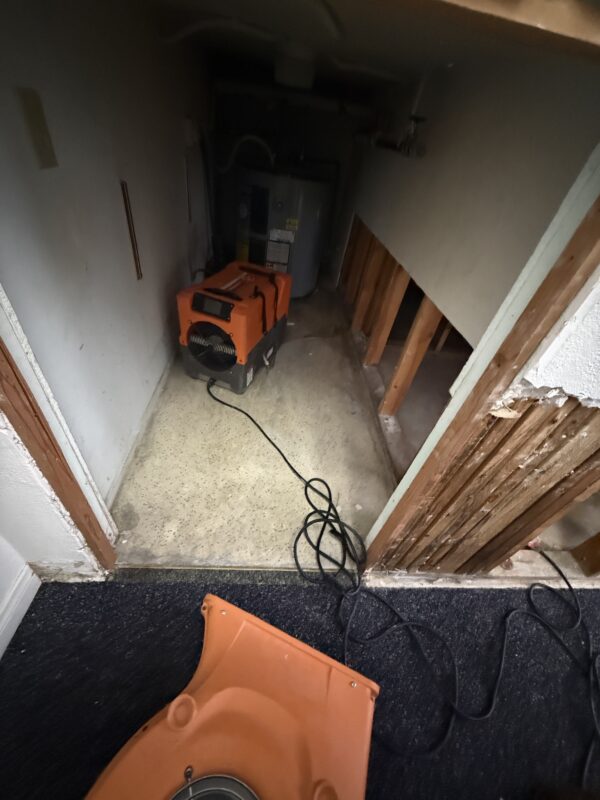
When drywall is considered suitable for drying in place, restoration equipment may be used to control the environment and promote evaporation.
A drying setup can include air movers and commercial dehumidification.
Air movement helps encourage moisture to evaporate from wet materials, while dehumidification removes moisture from the surrounding air.
Drying progress should be evaluated using moisture readings rather than assuming a wall is dry simply because several days have passed.
The number of days required depends on the materials involved and the conditions of the individual property.
Should You Cut Holes in Wet Drywall Yourself?
Property owners should be cautious about immediately cutting into walls without understanding what is behind them.
Walls may contain:
Electrical wiring
Plumbing
Gas lines
Insulation
HVAC components
Contaminated materials
Mold growth
There are also situations where unnecessarily opening a wall can increase the repair scope.
An inspection can help determine whether opening the assembly is actually necessary.
What Should You Do After Discovering Wet Drywall?
First, stop the source of water if it can be done safely.
Then avoid assuming that the visible wet area represents the entire loss. Water can travel underneath flooring, through wall cavities, behind cabinets, and into adjoining spaces.
If the water loss is significant, professional moisture evaluation can help determine which materials are affected and whether they can be dried or require removal.
Photographs and moisture documentation can also be valuable when the loss involves an insurance claim.
Water Damage Restoration in Riverside County
911 Restoration of Riverside County provides water damage restoration for homes and commercial properties throughout Riverside County and nearby Inland Empire communities.
Depending on the loss, our water-damage services can include:
Water extraction
Moisture detection
Structural drying
Commercial dehumidification
Air movement
Moisture monitoring
Damage documentation
Affected-material removal when necessary
Reconstruction and interior repairs
Our restoration team can continue from the initial water mitigation through reconstruction when damaged drywall, flooring, baseboards, cabinets, paint, or other interior finishes need to be repaired.
Frequently Asked Questions About Wet Drywall
Can drywall dry on its own?
Minor surface moisture may eventually evaporate, but significant water damage should not simply be left to air dry. Moisture can remain inside walls or adjacent materials even after the visible surface appears dry.
Does wet drywall always grow mold?
No. Wet drywall does not automatically mean mold growth will occur. Mold development depends on factors including moisture, temperature, available organic material, and duration of favorable conditions. Quickly addressing the moisture source is important.
Can you paint over drywall after it gets wet?
The material should first be evaluated and properly dried. Painting over drywall that still contains excess moisture can trap moisture and may lead to coating or material problems.
How do I know whether moisture is behind my wall?
Moisture-detection equipment can help evaluate drywall and surrounding building materials. Infrared imaging can also be useful as a screening tool when followed by appropriate moisture testing.
Can 911 Restoration repair the drywall after water mitigation?
Yes. When reconstruction is needed after water mitigation, 911 Restoration of Riverside County can handle drywall, texture, painting, flooring, baseboards, cabinets, trim, and other interior repairs.
Need Help With Wet Drywall or Water Damage?
If you have wet drywall, a leaking pipe, overflowing toilet, appliance leak, flooding, or hidden moisture, the first priority is determining how far the water traveled and which materials are affected.
Call 911 Restoration of Riverside County at (951) 228-4583 for water damage restoration and emergency property damage assistance.
This article provides general property-restoration information. The correct scope for a specific loss depends on the source of damage, water category or contamination conditions, affected materials, building assembly, duration of exposure, moisture readings, and other site conditions.