Burst & Leaking Pipes
Supply-line failures, plumbing leaks, and broken pipes affecting walls, ceilings, flooring, and adjacent rooms.
Emergency water removal, moisture detection, structural drying, damage documentation, and reconstruction for homes and commercial properties throughout Riverside County and nearby Inland Empire communities.
Water damage should be addressed as soon as possible. Moisture can move into drywall, flooring, cabinets, insulation, baseboards, and other porous building materials where it may not be visible from the surface.
Our Riverside County water damage restoration process focuses on identifying affected areas, removing standing water when present, documenting moisture conditions, setting up appropriate drying equipment, monitoring progress, and determining what materials can be dried versus what may need to be removed.
Every loss is different, but these are some of the most common causes of residential and commercial water damage.
Supply-line failures, plumbing leaks, and broken pipes affecting walls, ceilings, flooring, and adjacent rooms.
Overflowing toilets, tubs, showers, and bathroom plumbing losses that can spread into nearby rooms or lower levels.
Dishwashers, washing machines, refrigerators, ice-maker lines, and other appliance-related water losses.
Leaking or failed water heaters that can release a significant amount of water into surrounding building materials.
Water entering through roofing, flashing, or building-envelope failures and affecting ceilings, walls, or insulation.
Larger water losses affecting multiple rooms, flooring systems, wall assemblies, cabinets, and contents.
A clear, documented process helps property owners understand what is happening and why each step is needed.
Tell us what happened, whether the source is still active, and which rooms or areas appear affected.
We inspect affected areas and use moisture-detection tools to identify visible and hidden moisture conditions.
Standing water is removed when present, and materials that cannot remain are addressed so drying can begin.
Air movement and dehumidification are set based on the affected materials, layout, and drying conditions.
Moisture readings and drying progress are documented until the affected materials reach appropriate drying goals.
When repairs are needed, our team can continue from mitigation into reconstruction and final finishes.
Not every wet material automatically has to be removed, and not every material can be safely or effectively dried in place. The decision depends on the source of water, saturation, physical damage, material type, contamination, and other job conditions.
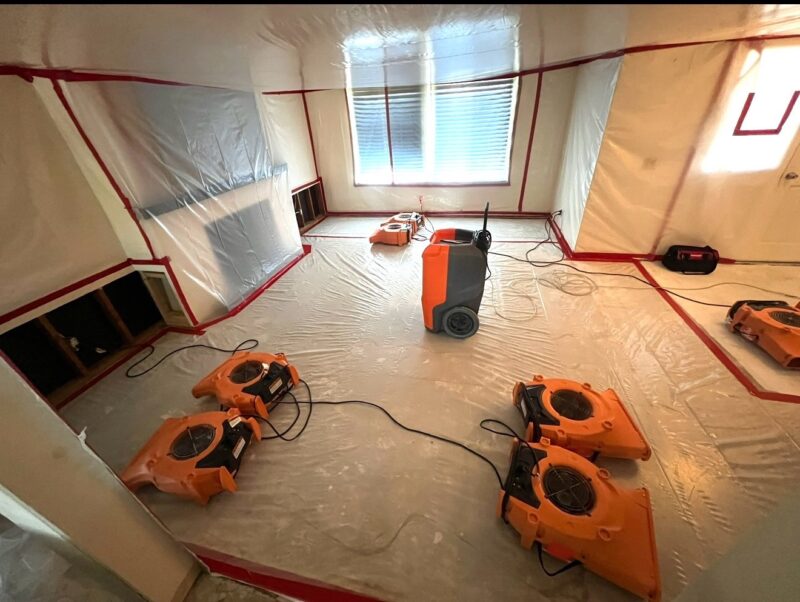
This Riverside project included moisture control, air mover setup, structural drying, and monitoring of affected building materials after a residential water loss.
Request Water Damage HelpWhen a water loss involves homeowners or commercial property insurance, our team can provide photographs, moisture documentation, drying records, and restoration estimating information for the claim file.
Coverage and claim decisions are determined by the insurance carrier and the terms of the policy. We do not guarantee coverage.
Damage, affected materials, work areas, equipment, and progress.
Documented moisture conditions and drying progress.
Documentation of mitigation and repair-related work.
Organized restoration estimating information when required.
We provide water damage restoration across our local service territory.
Direct answers to common questions about emergency water removal, drying, wet building materials, insurance documentation, and reconstruction.
Stop the water source if it can be done safely, avoid electrical hazards, and call a restoration company as soon as possible. Fast inspection, water removal, moisture detection, and structural drying can help limit additional damage.
Water damage restoration should begin as soon as possible. Water can continue spreading into drywall, flooring, cabinets, insulation, and other porous building materials even after the visible water is gone.
Structural drying is the controlled removal of excess moisture from building materials using moisture measurements, dehumidification, air movement, and ongoing monitoring until appropriate drying goals are reached.
Sometimes, but not always. Whether drywall can remain depends on the water category, level of saturation, physical damage, insulation behind the wall, length of exposure, and other job conditions.
Water trapped beneath flooring can affect the underlayment, adhesives, baseboards, and subfloor. The flooring system should be evaluated so hidden moisture can be identified and the correct drying or removal plan can be determined.
Drying time varies based on the materials affected, amount of water, how long the materials were wet, and site conditions. Moisture readings are used to monitor progress rather than relying on a fixed number of days.
Coverage depends on the cause of loss and the terms of the policy. We can provide photographs, moisture documentation, drying records, and restoration estimating information for the claim process, but the insurance carrier determines coverage.
Yes. When repairs are needed after mitigation, 911 Restoration of Riverside County can continue into reconstruction, including interior repairs, flooring, drywall, painting, and finish work.