Quick answer: After water damage, insurance documentation may include photographs, videos, moisture readings, affected-material measurements, the source and cause of the loss, mitigation records, drying documentation, equipment logs, estimates, invoices, and reconstruction information. The exact requirements vary by insurance carrier and policy.
911 Restoration of Riverside County documents water damage projects throughout the restoration process so homeowners, adjusters, and other parties have a clearer record of the conditions found, work performed, drying progress, and repairs that may be necessary.
Why Is Documentation Important After Water Damage?
Water damage can change quickly. Standing water may be extracted, damaged materials may need to be removed, and drying equipment may be installed shortly after the loss occurs.
Once those conditions change, photographs and documentation become an important record of what the property looked like before mitigation began.
Good documentation can help establish:
- Where the water originated
- Which rooms were affected
- How far moisture traveled
- Which building materials were wet or damaged
- What materials required removal
- What drying equipment was used
- How drying progressed
- What repairs or reconstruction may be necessary
What Should a Homeowner Document First?
If it is safe to do so, homeowners should photograph and video the affected areas as soon as possible after discovering the loss.
Try to document:
- The apparent source of the water
- Standing water
- Wet flooring
- Damaged drywall or ceilings
- Baseboards and trim
- Cabinetry
- Furniture and personal property
- Adjacent rooms that may have been affected
Wide photos help show the overall room, while closer photographs can document specific damage.
Should You Take Photos Before Cleanup Begins?
When conditions are safe, yes.
Initial photographs can help establish the condition of the property before water extraction, demolition, or other mitigation work changes the appearance of the loss.
However, homeowners should not delay emergency steps simply to take additional photographs when doing so could allow the damage to worsen or create a safety concern.
What Does a Restoration Company Document?
Professional restoration documentation can go beyond basic photographs.
Depending on the loss, 911 Restoration of Riverside County may document:
- Initial property conditions
- Source and cause information when known
- Affected rooms and materials
- Moisture readings
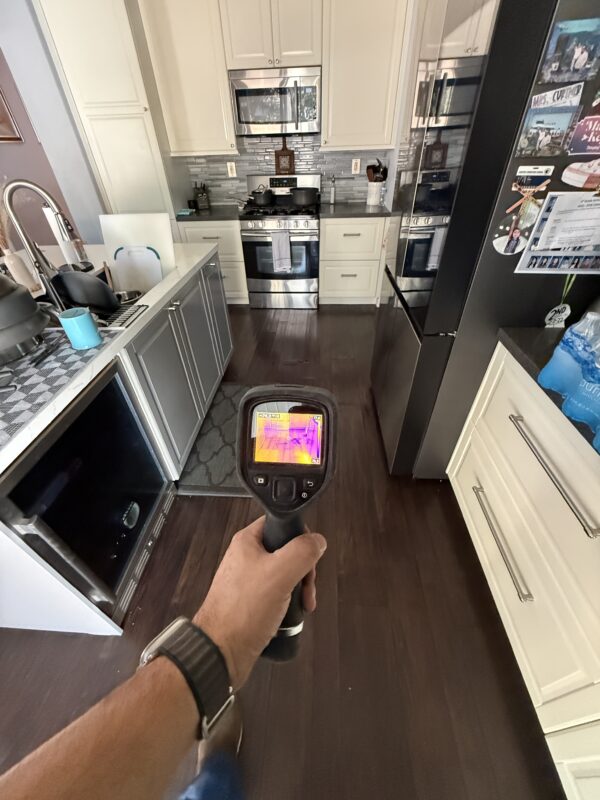
- Infrared screening
- Material measurements
- Controlled demolition
- Equipment placement
- Temperature and relative humidity
- Drying progress
- Post-mitigation conditions
- Reconstruction needs
Why Are Moisture Readings Important?
Water damage is not always visible from the surface.
Moisture readings can help identify building materials with elevated moisture levels and compare them with known dry materials.
They can also be used during the drying process to show whether affected materials are progressing toward appropriate moisture conditions.
This helps create a more objective record than relying only on whether a surface looks or feels dry.
What Is Infrared Documentation?
Infrared cameras can identify temperature differences across walls, ceilings, and floors that may indicate areas requiring further moisture investigation.
Infrared images can be useful as supporting documentation, but they should not be interpreted as proof of moisture by themselves.
Suspected areas should be evaluated using moisture readings and physical inspection.
What Are Drying Logs?
Drying logs document how conditions change during the structural drying process.
Depending on the project, drying documentation may include:
- Moisture readings
- Temperature readings
- Relative humidity readings
- Equipment used
- Equipment placement
- Daily or periodic monitoring notes
- Changes to the drying setup
These records help show that drying progress was monitored rather than simply installing equipment and removing it after a predetermined number of days.
Why Is Equipment Documentation Important?
Professional water damage restoration may involve air movers, dehumidifiers, air filtration devices, extraction equipment, and other tools depending on the conditions of the loss.
Documenting the type, quantity, placement, and duration of equipment can help create a clearer record of the mitigation work performed.
Equipment should be based on the needs of the project rather than automatically using the same setup for every water loss.
Should Removed Materials Be Documented?
Yes. When drywall, insulation, flooring, baseboards, cabinets, or other building materials need to be removed, photographs and measurements can help document what was affected and why removal was performed.
This can be especially important when the materials are no longer present by the time an adjuster or other party reviews the loss.
911 Restoration of Riverside County documents affected-material removal as part of the mitigation process when appropriate.
What Should Be Documented During a Sewage Loss?
Sewage and other contaminated-water losses may require additional documentation because contamination can affect how building materials are handled.
Documentation may include:
- Source of the contaminated water
- Areas contacted by the water
- Porous materials affected
- Containment setup
- Material removal
- Cleaning procedures
- Drying conditions
- Post-mitigation photographs
What Should Be Documented During Mold Remediation?
Mold and moisture projects may include documentation of the moisture source, affected materials, containment, material removal, HEPA filtration, cleaning procedures, structural drying, and post-remediation conditions.
The exact documentation depends on the project and whether testing or additional verification is part of the scope.
What Is Included in a Restoration Estimate?
A restoration estimate may describe the labor, materials, equipment, cleaning, demolition, drying, and other work necessary to address the damage.
The estimate should correspond with the actual conditions documented at the property.
For larger projects, the mitigation estimate and reconstruction estimate may be separate because they represent different phases of the restoration process.
What Is the Difference Between Mitigation Documentation and Reconstruction Documentation?
Mitigation documentation explains what was done to stop additional damage, remove affected materials, clean the property, and dry the structure. Reconstruction documentation explains what needs to be repaired or rebuilt afterward.
For example, mitigation documentation may show that wet drywall was removed and framing was dried.
Reconstruction documentation may then identify the drywall replacement, texture, paint, baseboards, flooring, cabinetry, or other repairs needed to return the property to a finished condition.
Should Homeowners Keep Receipts and Invoices?
Yes. Homeowners should keep copies of invoices, receipts, repair records, temporary repair expenses, and other documentation related to the loss.
If personal property was damaged, creating a list of affected items with photographs and available purchase information may also be helpful.
The insurance carrier can explain what documentation it requires for a specific claim.
What If the Insurance Adjuster Has Not Arrived Yet?
Homeowners should not necessarily leave an active water loss untreated while waiting for an adjuster.
Reasonable emergency mitigation may be necessary to prevent additional damage.
When possible, document the original conditions thoroughly before significant work begins and continue documenting the project throughout mitigation.
This allows the property to be protected while preserving a record of the original loss.
Can a Restoration Company Decide What Insurance Covers?
No. A restoration company can document the conditions found, describe the work performed, and provide estimates and invoices, but the insurance carrier determines coverage according to the terms of the policy.
911 Restoration of Riverside County does not determine whether a claim is covered.
Homeowners should direct questions about deductibles, exclusions, coverage limits, endorsements, and claim decisions to their insurance carrier or adjuster.
What Happens If the Insurance Estimate Misses Damage?
Sometimes additional damage is discovered after mitigation begins, especially when water has traveled into concealed areas.
If new conditions are identified, additional photographs, moisture readings, measurements, and estimates can help document what was discovered.
This type of additional documentation may be used to explain why the restoration scope changed from the original estimate.
What Is a Supplement?
A supplement is additional documentation submitted when the original scope or estimate does not include all of the work that may be necessary based on documented conditions.
A supplement can include photographs, measurements, estimates, invoices, material information, drying records, and notes explaining why additional work is being requested.
The insurance carrier reviews the information and determines whether any additional amount is approved.
Why Does Detailed Documentation Matter for Reconstruction?
The mitigation phase often determines what must later be rebuilt.
If flooring, drywall, insulation, cabinetry, ceilings, trim, or other materials are removed, reconstruction documentation helps show what needs to be restored.
911 Restoration of Riverside County provides both restoration and reconstruction services, which allows the project record to continue from the initial water loss through drying and rebuilding.
Insurance Documentation for Water Damage in Riverside County
911 Restoration of Riverside County provides professional documentation throughout water damage restoration projects, including photographs, moisture readings, infrared screening, affected-material measurements, mitigation documentation, drying records, equipment documentation, and reconstruction information when required.
Our team handles water losses involving burst pipes, appliance leaks, washing machine overflows, toilet overflows, water heater failures, sewage backups, and other residential property damage.
If your home has experienced water damage, 911 Restoration of Riverside County can document the affected areas, perform the necessary mitigation and drying work, and provide a clear restoration record from the initial inspection through reconstruction.
Frequently Asked Questions
What documentation does insurance need for water damage?
Insurance documentation may include photographs, videos, moisture readings, affected-material measurements, mitigation records, drying logs, equipment information, estimates, invoices, and reconstruction documentation. Requirements vary by insurance carrier.
Should I take pictures before water damage cleanup?
Yes, when it is safe to do so. Initial photographs and videos can help document the condition of the property before extraction, demolition, and drying begin.
What are water damage drying logs?
Drying logs record moisture conditions, temperature, humidity, equipment use, and drying progress during the restoration process.
Can a restoration company help document an insurance claim?
A restoration company can document the conditions found and work performed through photographs, measurements, moisture readings, drying records, estimates, and invoices. The insurance carrier ultimately determines coverage.
Can 911 Restoration of Riverside County provide reconstruction documentation?
Yes. 911 Restoration of Riverside County provides both mitigation and reconstruction services and can document the project from the initial water damage inspection through structural drying and rebuilding when necessary.
This article provides general property-restoration information. The correct scope for a specific loss depends on the source of damage, water category or contamination conditions, affected materials, building assembly, duration of exposure, moisture readings, and other site conditions.