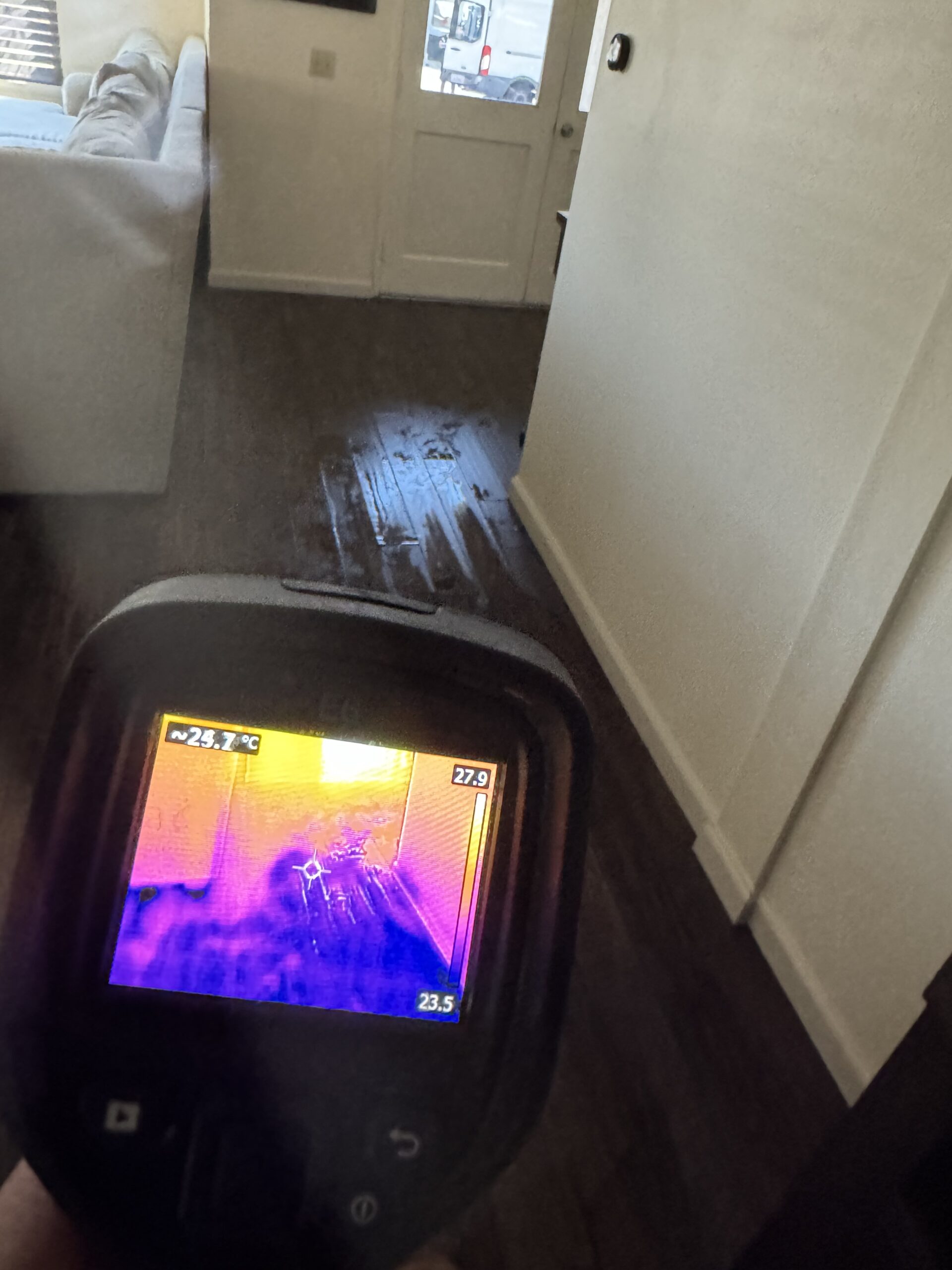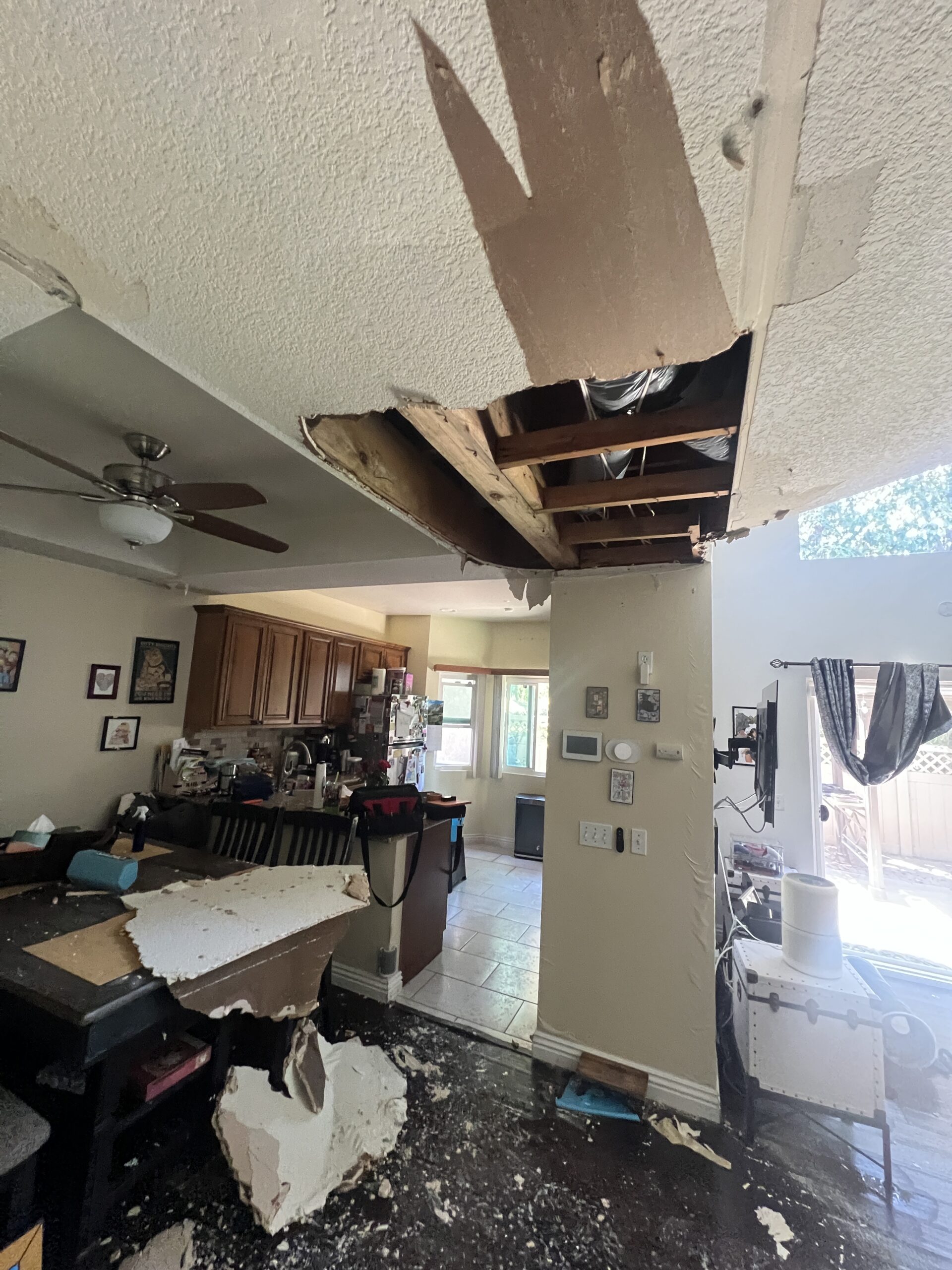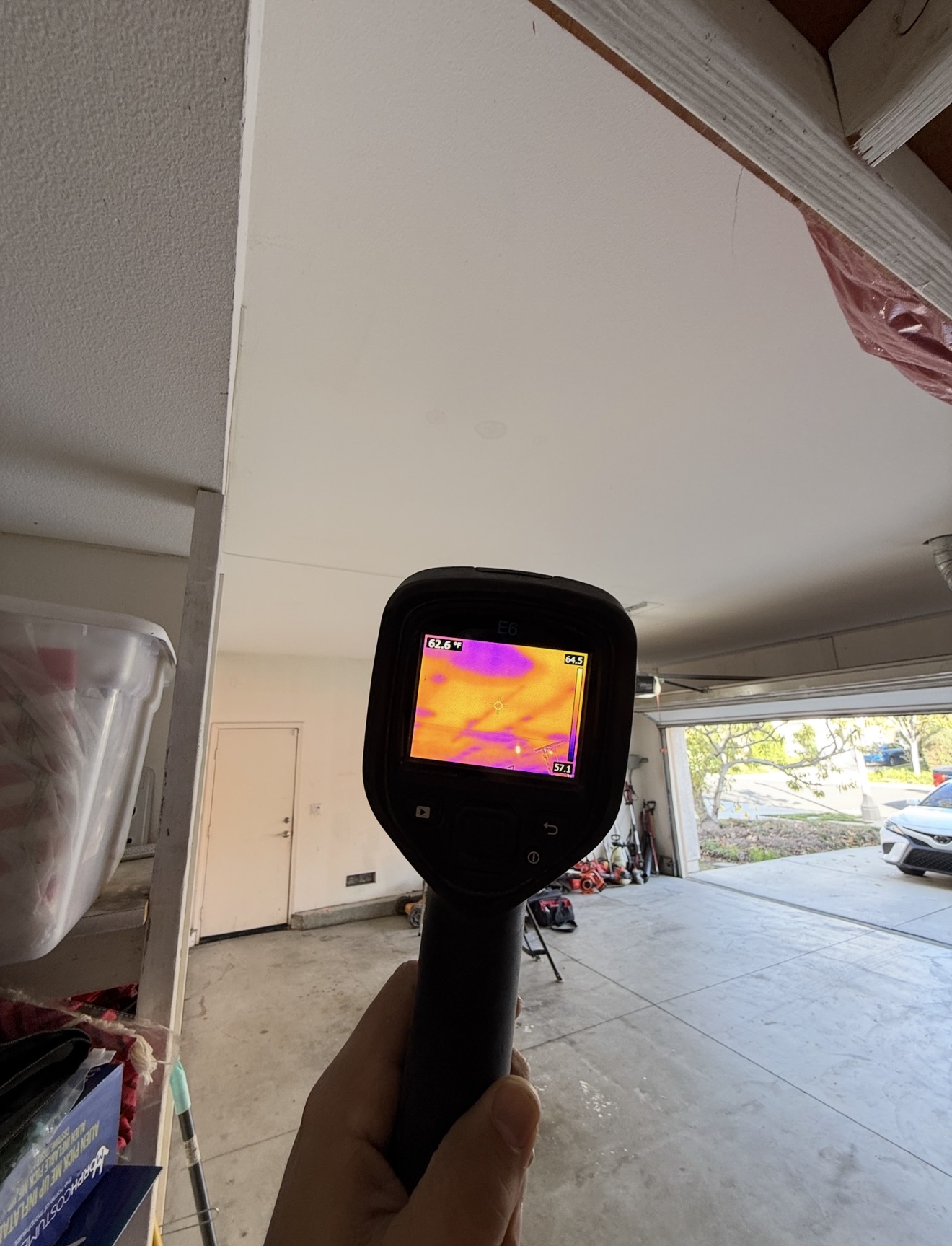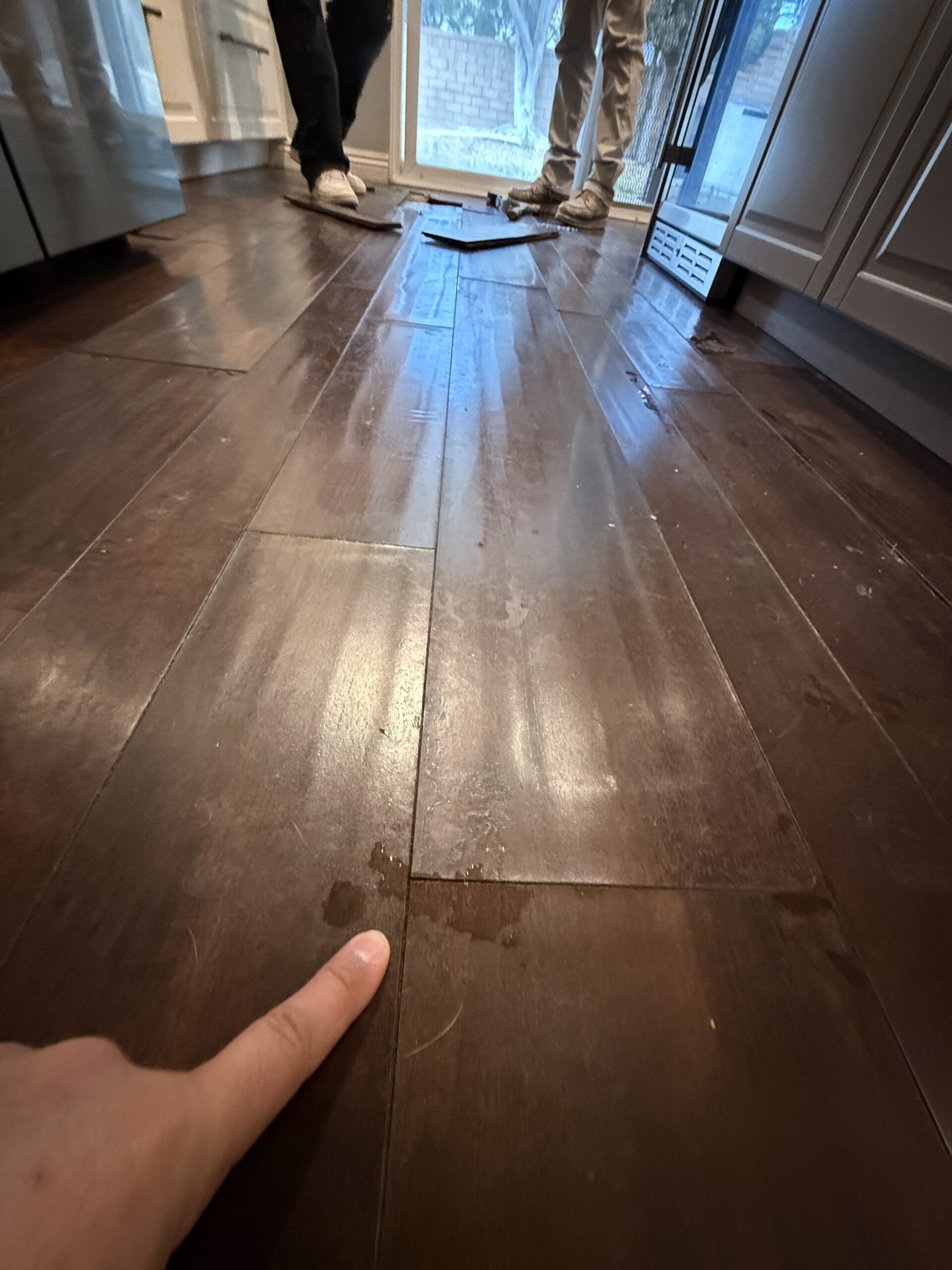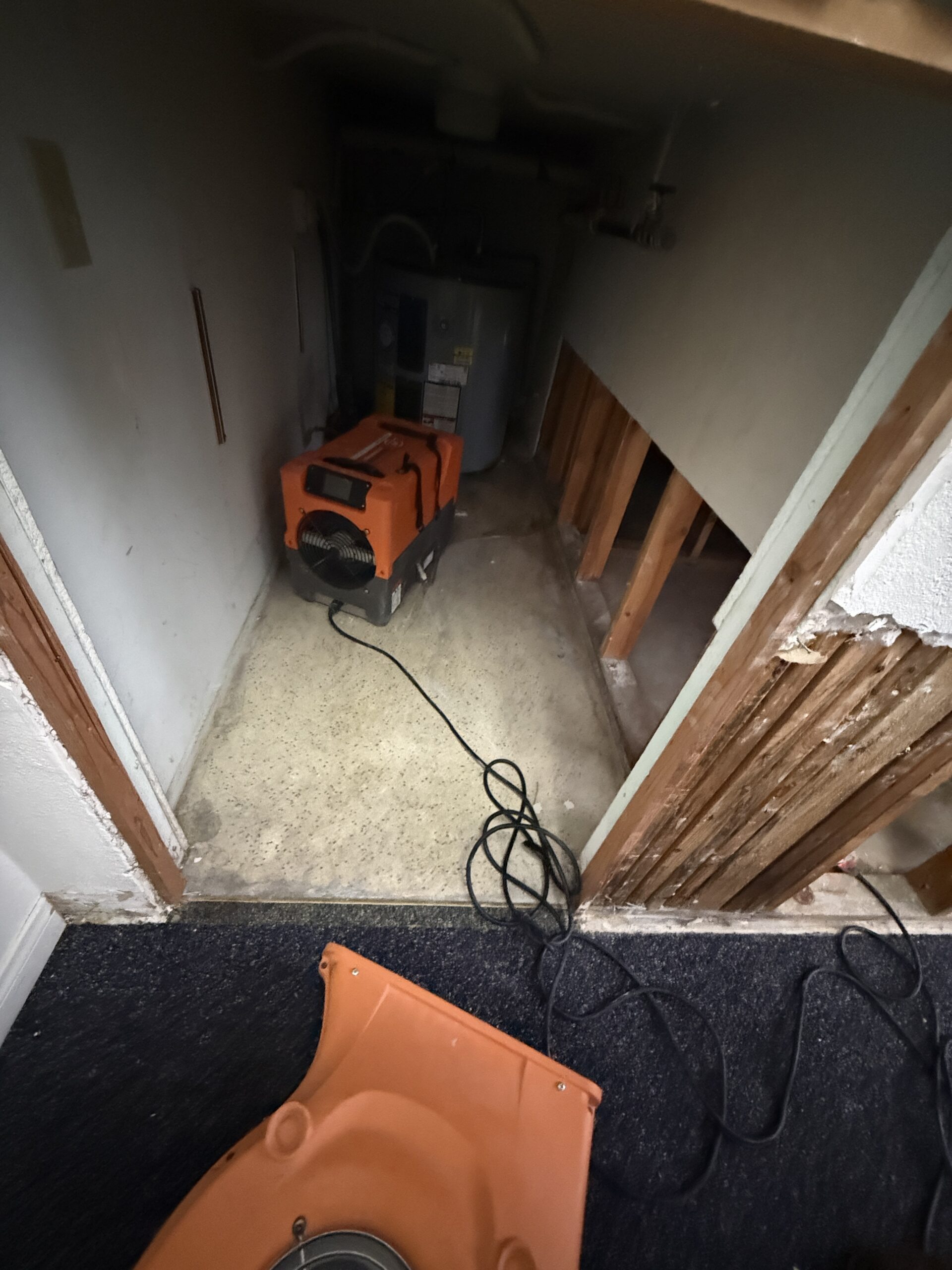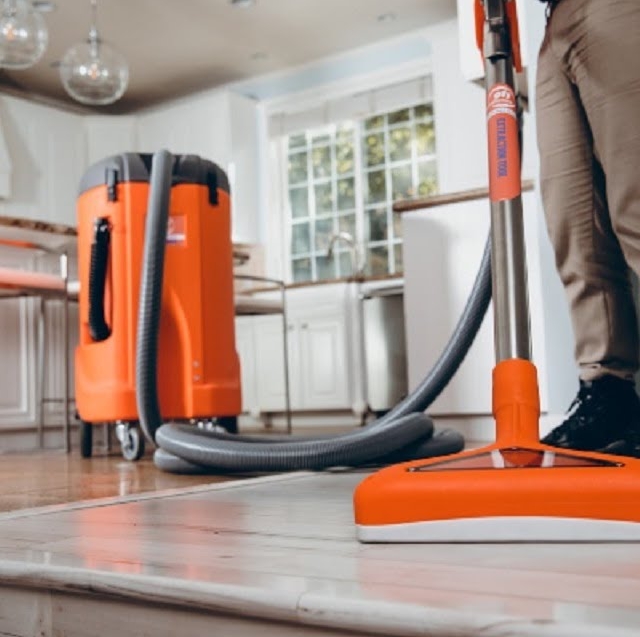
Kitchen water damage can show up as staining, swollen cabinets, soft drywall, warped flooring, musty odors, recurring moisture, or leaks beneath sinks and appliances. Even when the visible surface looks dry, water can travel into cabinet bases, flooring systems, drywall, baseboards, and other building materials.
If a leak has spread beyond a small surface spill, the priority is to stop the source when it is safe to do so and determine how far the moisture traveled. Our water damage restoration process includes moisture inspection, water extraction when needed, structural drying, documentation, and repairs based on the conditions found.
Top Signs of Kitchen Water Damage
Kitchen water damage is not always a large puddle in the middle of the floor. Slow plumbing and appliance leaks can affect building materials gradually. Watch for changes that keep returning or appear near a water source.
- Water stains or discoloration on walls, ceilings, cabinet interiors, or toe kicks
- Swollen, peeling, or delaminating cabinet material
- Drywall that feels soft, swollen, or deteriorated
- Flooring that lifts, buckles, separates, or feels uneven
- Musty odors that remain even after the visible water is gone
- Recurring dampness beneath the sink, dishwasher, refrigerator, or nearby baseboards
- Peeling paint, bubbling finishes, rust, or corrosion near plumbing connections
- An unexplained increase in water use that may indicate a hidden leak
One sign by itself does not always confirm an active leak, but recurring moisture or material changes are good reasons to investigate further.
What Are the Main Causes of Kitchen Water Damage?
Kitchens concentrate plumbing lines, fixtures, drains, and water-supplied appliances in a relatively small area. A failure at any of those points can allow water to move into cabinets, walls, flooring, and adjacent rooms.
Kitchen Sink and Faucet Leaks
Leaks can develop at the faucet, supply connections, shutoff valves, drain assembly, garbage disposal, or plumbing beneath the sink. Check the cabinet base and connection points for dampness, staining, swelling, or recurring puddles. A slow leak can damage the cabinet before water becomes obvious outside it.
Dishwasher Leaks
Dishwashers can leak from a supply line, drain hose, door seal, pump, connection, or other component. Because much of the plumbing sits behind or beneath the appliance, a slow leak may spread under finished flooring or nearby cabinets before it is noticed. Water appearing at the front of the dishwasher can be only part of the affected area.
Refrigerator Supply Lines and Ice Makers
Refrigerators with ice makers or water dispensers rely on small supply lines and fittings that can loosen, crack, kink, or fail. Moisture can remain hidden behind the refrigerator and travel beneath flooring or into a nearby wall. Periodically checking the connection area can help identify a leak before extensive material damage develops.
Plumbing Supply and Drain Leaks
Kitchen plumbing can leak from supply piping, joints, fittings, drain lines, or concealed plumbing inside a wall. Some failures release water quickly, while others create intermittent or slow moisture. If staining or dampness keeps returning after the visible area is wiped dry, the source and surrounding materials should be evaluated.
Can Water Damage Be Hidden Under Kitchen Cabinets or Flooring?
Yes. Water can travel beneath toe kicks, cabinet bases, flooring, underlayment, baseboards, drywall, and other concealed materials even when the top surface looks dry. The visible edge of a leak does not necessarily show the full extent of the affected area.
For example, a dishwasher or refrigerator leak can move underneath flooring before appearing at a wall or cabinet several feet away. If you are trying to determine whether moisture has moved into a concealed assembly, see our guide to signs of water damage behind a wall.
What Happens to Cabinets, Flooring, and Drywall After a Kitchen Leak?
The appropriate restoration approach depends on the water source, material type, amount of saturation, length of exposure, physical condition, and whether the material can be accessed and dried effectively.
- Cabinets: Particleboard, MDF, plywood, solid wood, and finished cabinet components can respond differently to water. Swelling, delamination, staining, and trapped moisture should be evaluated.
- Flooring: Moisture can affect the finished surface, adhesive, underlayment, subfloor, or concrete beneath it. The visible flooring alone may not show the entire water path.
- Drywall and baseboards: Water can wick upward or travel into a wall cavity. Removal is not automatically required in every loss, but moisture conditions and material condition should be confirmed.
Why Drying Matters Even After the Leak Stops
Stopping the leak does not automatically remove moisture already absorbed by building materials. Depending on the loss, professional drying can include moisture measurements, air movement, dehumidification, monitoring, and controlled material removal when necessary. Learn more about how structural drying works after water damage.
If building materials remain damp for an extended period, those moisture conditions can also support microbial growth. That does not mean every kitchen leak causes mold, but visible or suspected growth may require a separate evaluation and an appropriate mold remediation process.
When Should You Call a Water Damage Restoration Company?
Professional help is appropriate when water has spread into cabinets, drywall, flooring, subflooring, wall cavities, or other building materials; when standing water needs extraction; when hidden moisture is suspected; or when you cannot confirm that the affected materials are drying appropriately.
A restoration inspection can help document where moisture traveled, determine which materials are affected, and establish an appropriate drying and repair plan rather than relying only on what looks dry from the surface.
Small spill or hidden water loss? The key difference is whether moisture stayed on a cleanable surface or moved into the building materials. If you are unsure, moisture inspection can help define the affected area before unnecessary repairs are made.
This article provides general property-restoration information. The correct scope for a specific loss depends on the source of damage, water category or contamination conditions, affected materials, building assembly, duration of exposure, moisture readings, and other site conditions.