Plumbing Supply Leaks
Water from failed supply lines, interior piping, fixture connections, or plumbing components can move into drywall, flooring, cabinets, and adjoining rooms.
Emergency water removal, moisture detection, structural drying, damage documentation, and reconstruction for homes and businesses throughout Corona, California.
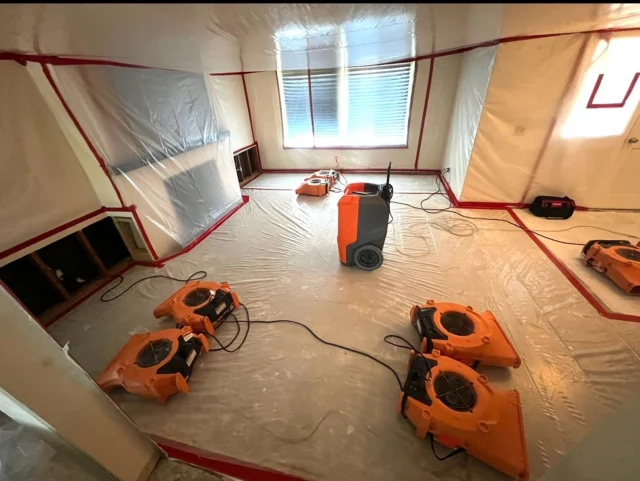
The source may be obvious, but the full moisture footprint often is not. Our inspection focuses on both the visible damage and where water may have migrated into surrounding materials.
Water from failed supply lines, interior piping, fixture connections, or plumbing components can move into drywall, flooring, cabinets, and adjoining rooms.
Overflow water can spread beneath flooring and baseboards or move through ceilings and wall cavities when the source is upstairs.
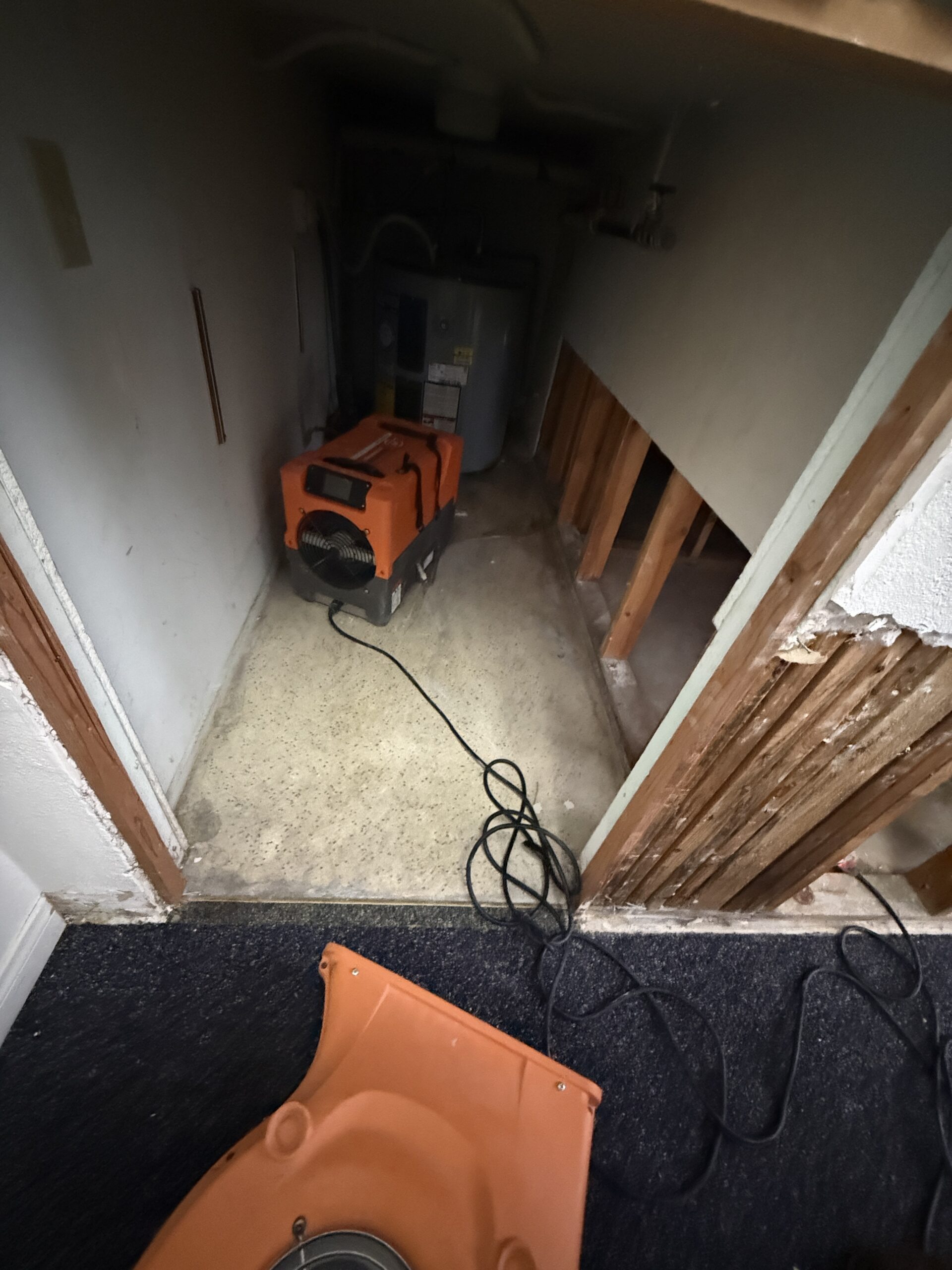
Water heater failures can affect utility areas, garages, drywall, platforms, cabinets, adjacent flooring, and nearby rooms.
Dishwashers, refrigerators, washing machines, and their supply or drain connections can release water behind or beneath finishes.
Slow leaks may create elevated moisture behind finishes before staining, swelling, odor, or other visible signs become obvious.
Water losses in offices, retail spaces, managed properties, and commercial buildings may require fast moisture mapping, drying, documentation, and repair planning.
Common residential sources include fixture overflows, appliance connections, water heaters, supply lines, and plumbing failures. The restoration scope depends on how far the water traveled and which materials were affected.
Water from an upstairs toilet or bathroom can move through flooring assemblies and into ceilings, walls, and rooms below.
Refrigerators, washing machines, dishwashers, ice-maker lines, and fixture supply lines can release water into cabinets, flooring, and concealed spaces.
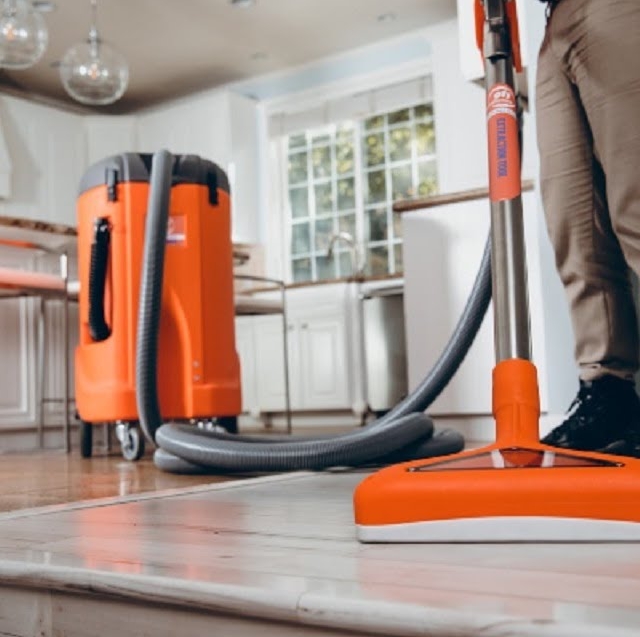
Water-heater leaks and plumbing failures can create significant standing water and require extraction, moisture mapping, and structural drying.
Moisture can remain trapped beneath flooring, behind cabinets, or within drywall after surface water is removed. Prolonged dampness can also create conditions that support mold growth; learn more about our mold remediation process.
Larger losses can affect several rooms and building materials at once. For widespread standing water or multi-room flooding, see our flood cleanup and water extraction services.
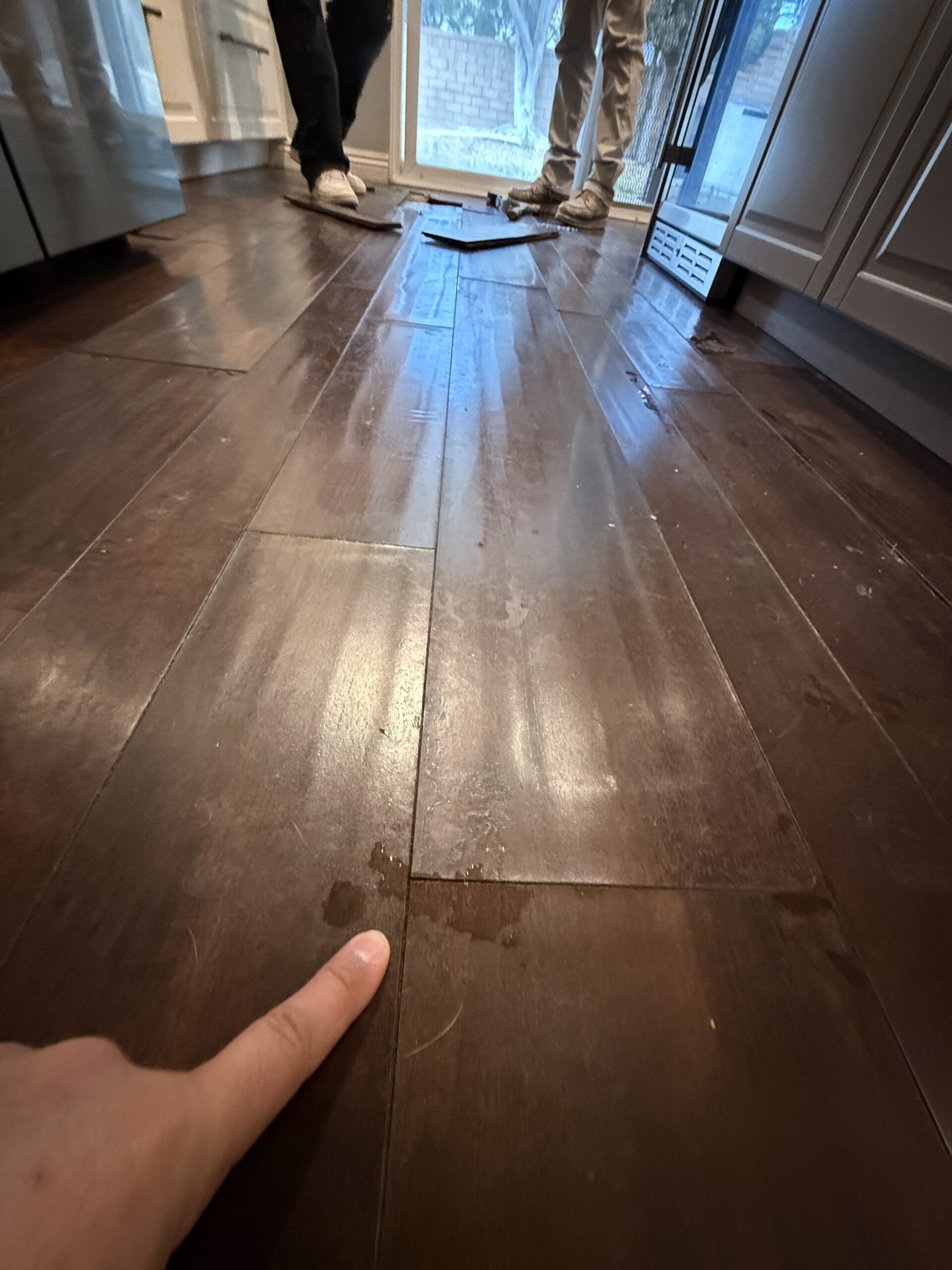
Water can remain out of sight inside wall, floor, ceiling, and cabinet assemblies. A dry-looking surface does not confirm that the materials behind or below it are dry.
Infrared screening looks for temperature differences that may indicate hidden moisture behind walls, beneath flooring, or inside other building materials. Moisture meters are then used to confirm and document whether those materials are wet.
Identify the visible source, staining, swelling, damaged finishes, and obvious water migration.
Use thermal imaging to identify temperature patterns that may require additional moisture testing.
Use appropriate moisture meters to confirm and document affected building materials.
Use the findings to determine which areas can be dried, which require access, and which materials may need removal.
The exact scope depends on the source, category of water, affected materials, building assembly, and how far moisture has spread.
Confirm what happened, whether the source is controlled, and which rooms or building areas may be affected.
Document visible damage and use moisture-detection tools to help define the affected materials.
Remove standing water and address materials that cannot appropriately remain in place based on the conditions of the loss.
Structural drying means using professional air movers and dehumidification equipment to remove excess moisture from building materials. Equipment and monitoring are adjusted to the conditions of the loss.
Track moisture conditions and drying progress so equipment and scope decisions are based on the actual project conditions.
After mitigation, our reconstruction team can repair drywall, flooring, paint, cabinets, trim, and other finishes when needed.
Removal decisions should be based on the type of water, material condition, saturation, contamination, accessibility, building assembly, and whether the material can be dried effectively.
Some drywall can be dried in place. Removal may be appropriate when it is heavily saturated, physically damaged, contaminated, conceals wet insulation, or cannot be dried effectively within the assembly.
Vinyl plank, laminate, hardwood, carpet, padding, tile assemblies, and subfloors behave differently after water exposure. The full flooring assembly should be evaluated.
Toe kicks, cabinet boxes, backing, wall cavities, and flooring beneath cabinets can trap moisture. The inspection should determine whether drying access or removal is needed.
Wet insulation and enclosed cavities can change the drying strategy because surface readings alone may not represent conditions inside the wall or ceiling assembly.
Real project documentation shows how water damage is inspected, confirmed, mitigated, dried, and restored on local properties.
See how our team documented, mitigated, dried, and reconstructed a real Category 3 toilet overflow water-damage loss in Corona.
Category 3 water is highly contaminated water that requires additional safety controls, material-removal decisions, cleaning, and drying procedures.
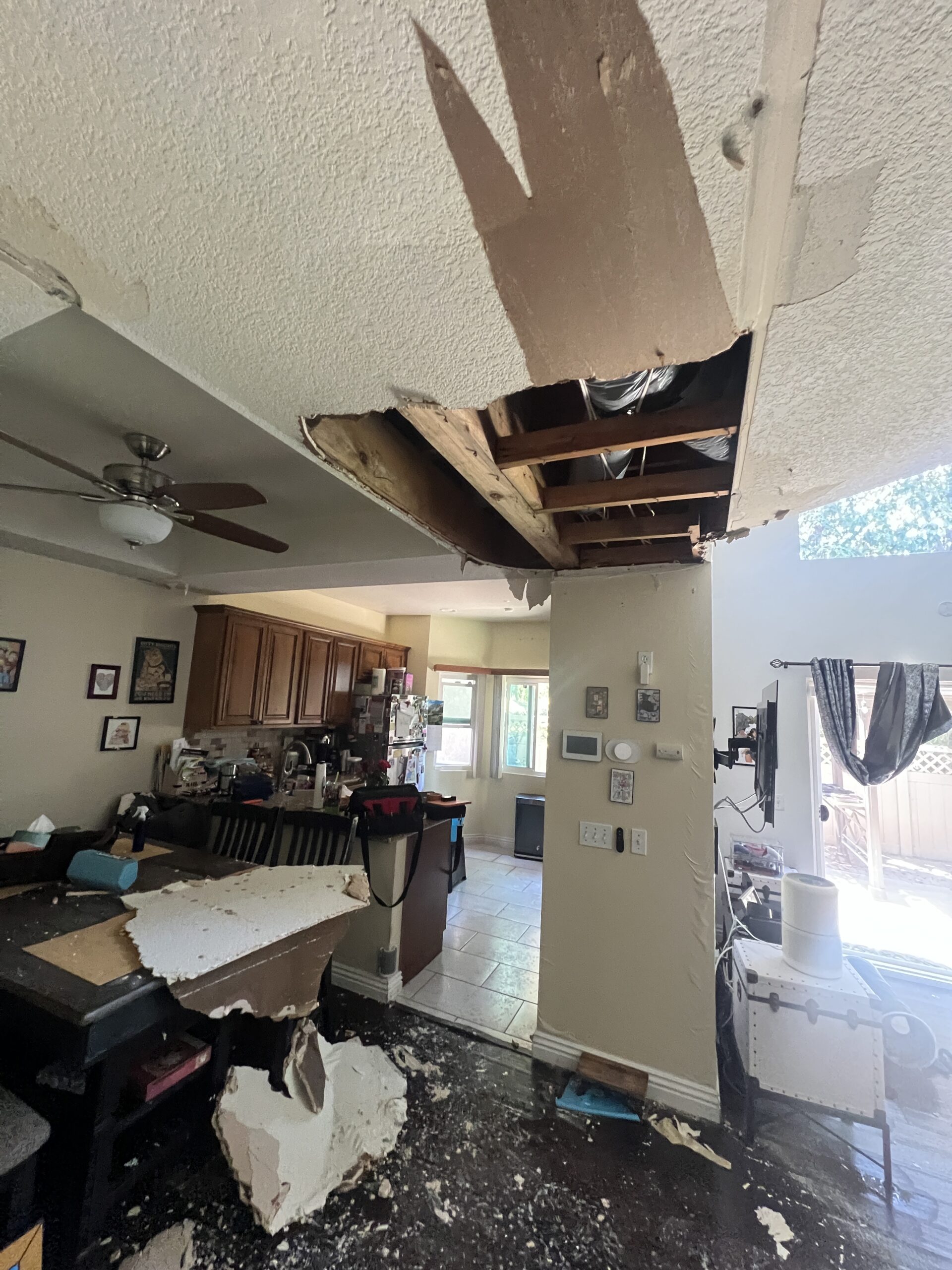
Water damage from a cracked toilet
View real case study →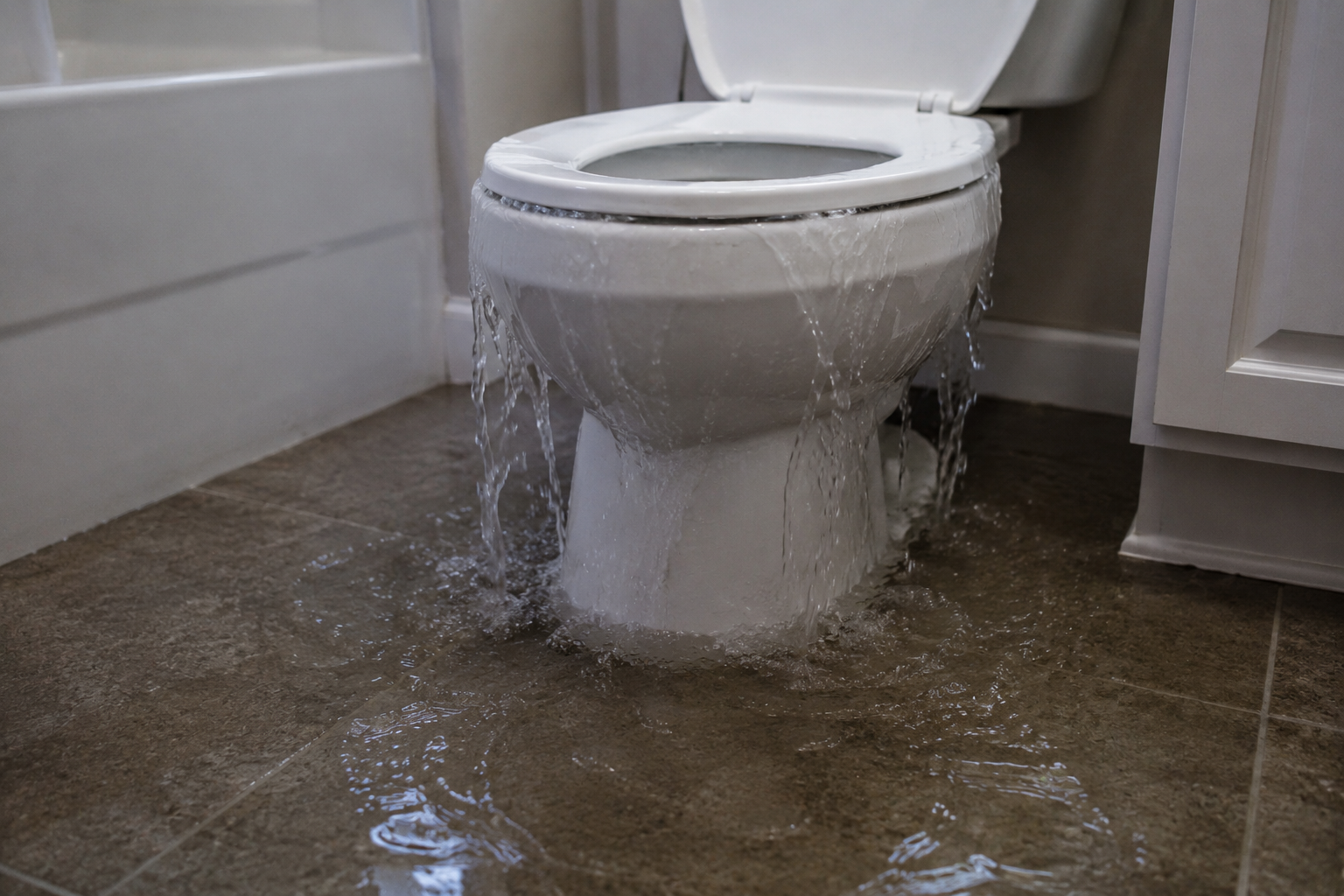
Category 3 Water Damage
View real case study →911 Restoration of Riverside County
1451 Rimpau Ave #105
Corona, CA 92879
24/7 Emergency Response
When a loss involves insurance, accurate project documentation can help explain what was affected and what restoration work was required. Depending on the project, the file can include inspection photos, moisture readings, drying documentation, affected-material details, equipment information, and estimating support. Homeowners can also review what to expect during the property damage insurance claim process.
Coverage and claim decisions are determined by the insurance carrier and the terms of the policy. We do not guarantee coverage.
Document visible conditions and affected rooms or building areas.
Record moisture readings and affected materials when applicable.
Document equipment, monitoring, and drying progress during mitigation.
Organize information for drywall, flooring, cabinets, painting, trim, and other reconstruction needs.
We serve residential and commercial properties throughout Corona and surrounding areas.
View All Corona Restoration ServicesLearn how moisture moves through building materials, when removal may be necessary, and what to expect during structural drying.
Direct answers to questions homeowners and property managers commonly have after a water loss.
Yes. 911 Restoration of Riverside County provides 24/7 response for active water damage in Corona. Depending on the loss, services can include extraction, moisture detection, structural drying, monitoring, affected-material removal, documentation, and reconstruction.
Active water damage should be addressed as soon as practical. Water can move beneath flooring, into drywall, behind baseboards and cabinets, and into insulation or adjoining rooms even when the visible surface does not appear heavily damaged.
The inspection can use infrared imaging as a screening tool to identify temperature differences, followed by moisture meters to confirm and document whether building materials are actually wet.
No. The correct decision depends on the source and category of water, how saturated the drywall is, whether insulation or cavities are affected, the condition of the material, and whether the assembly can be dried effectively. Some drywall can be dried in place while other drywall should be removed.
It depends on the flooring system, underlayment, subfloor, amount and type of water, and how far moisture migrated. The assembly should be evaluated before deciding whether drying in place or removal is appropriate.
When applicable, the restoration file can include photos, moisture readings, affected-material information, drying records, equipment documentation, and scope information. Coverage is determined by the insurance carrier and the terms of the policy.
Yes. When materials must be removed, reconstruction can include drywall, texture, paint, flooring, baseboards, cabinets, trim, doors, and other interior finishes needed to restore the affected area.
The cost depends on the amount of water, affected square footage, water category, materials involved, required demolition, drying equipment, and whether reconstruction is needed. A small localized loss can require a very different scope than a multi-room or contaminated-water loss.
We serve properties throughout Corona, including Downtown Corona, West Corona, Sierra Del Oro, Corona Hills, South Corona, Eagle Glen, Dos Lagos, The Crossings, Green River, the McKinley area, and surrounding neighborhoods.
For active water damage, call the 24/7 emergency line. For inspections, estimates, or reconstruction planning, send us the property details online.