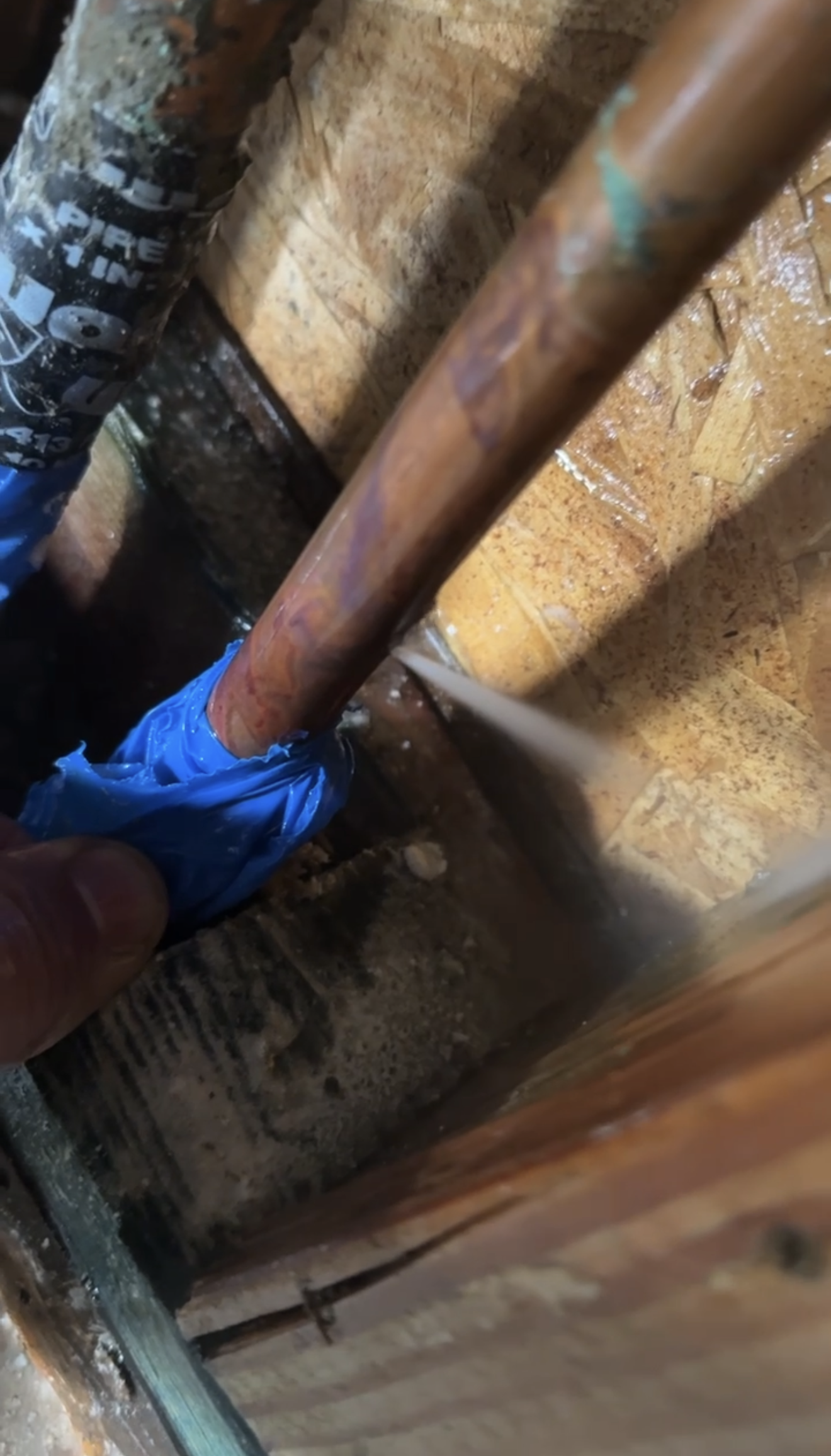
Quick answer: Yes. Water from a plumbing leak, appliance overflow, toilet overflow, water heater failure, or other water loss can travel underneath flooring even when very little water remains visible on the surface. Moisture may become trapped beneath flooring, underlayment, baseboards, cabinetry, or the subfloor, which is why a professional moisture inspection can be important after a water loss.
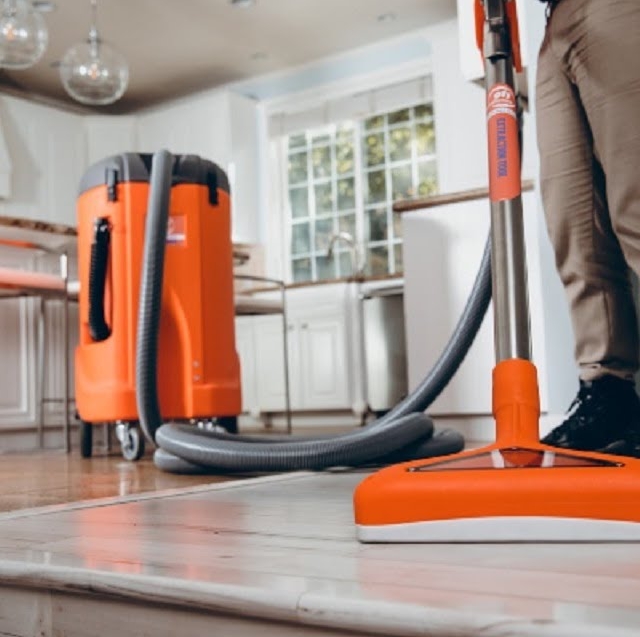
911 Restoration of Riverside County evaluates water-damaged homes to determine where moisture traveled, which materials were affected, and whether flooring can be dried or needs to be removed. Our water damage restoration process can include moisture inspection, infrared screening, water extraction, structural drying, controlled material removal, monitoring, and reconstruction when necessary.
How Does Water Get Under Flooring?
Water does not always remain where the leak originally occurred. Once water reaches the floor, it can spread across the surface and migrate underneath flooring through seams, edges, transitions, wall lines, cabinet openings, and other pathways.
Water may also move through porous building materials and reach areas that never appeared visibly flooded.
This commonly happens after losses involving:
- Burst or leaking pipes
- Washing machine overflows
- Dishwasher leaks
- Refrigerator supply-line leaks
- Water heater failures
- Toilet overflows
- Sink or bathtub overflows
- Plumbing leaks inside walls
- Water traveling from an upper floor
Can Flooring Look Dry While Water Is Underneath It?
Yes. One of the challenges with water damage is that the finished surface can look relatively normal while moisture remains underneath it.
For example, water may travel beneath luxury vinyl plank, laminate, engineered flooring, tile assemblies, carpet, or other flooring systems without leaving standing water on top.
The surface looking dry does not automatically mean the flooring system or materials underneath it are dry.
What Are Signs That Water May Be Under the Floor?
Possible signs of moisture beneath flooring can include:
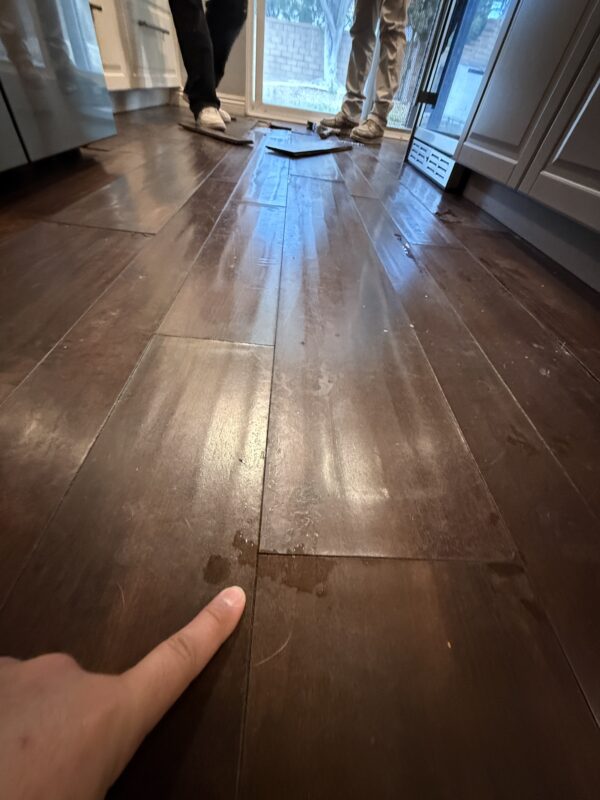
- Flooring that begins lifting or buckling
- Seams separating
- Changes in flooring color
- Warping or cupping
- Water appearing between flooring seams when stepped on
- Loose flooring
- Swollen baseboards
- Persistent musty odors
- Unexplained moisture near walls or cabinets
- Previous water damage in the area
However, flooring does not always show obvious symptoms immediately. Moisture testing may identify affected areas before visible damage becomes significant.
How Do Professionals Check for Water Under Flooring?
A water damage inspection should consider more than what is visible from the surface.
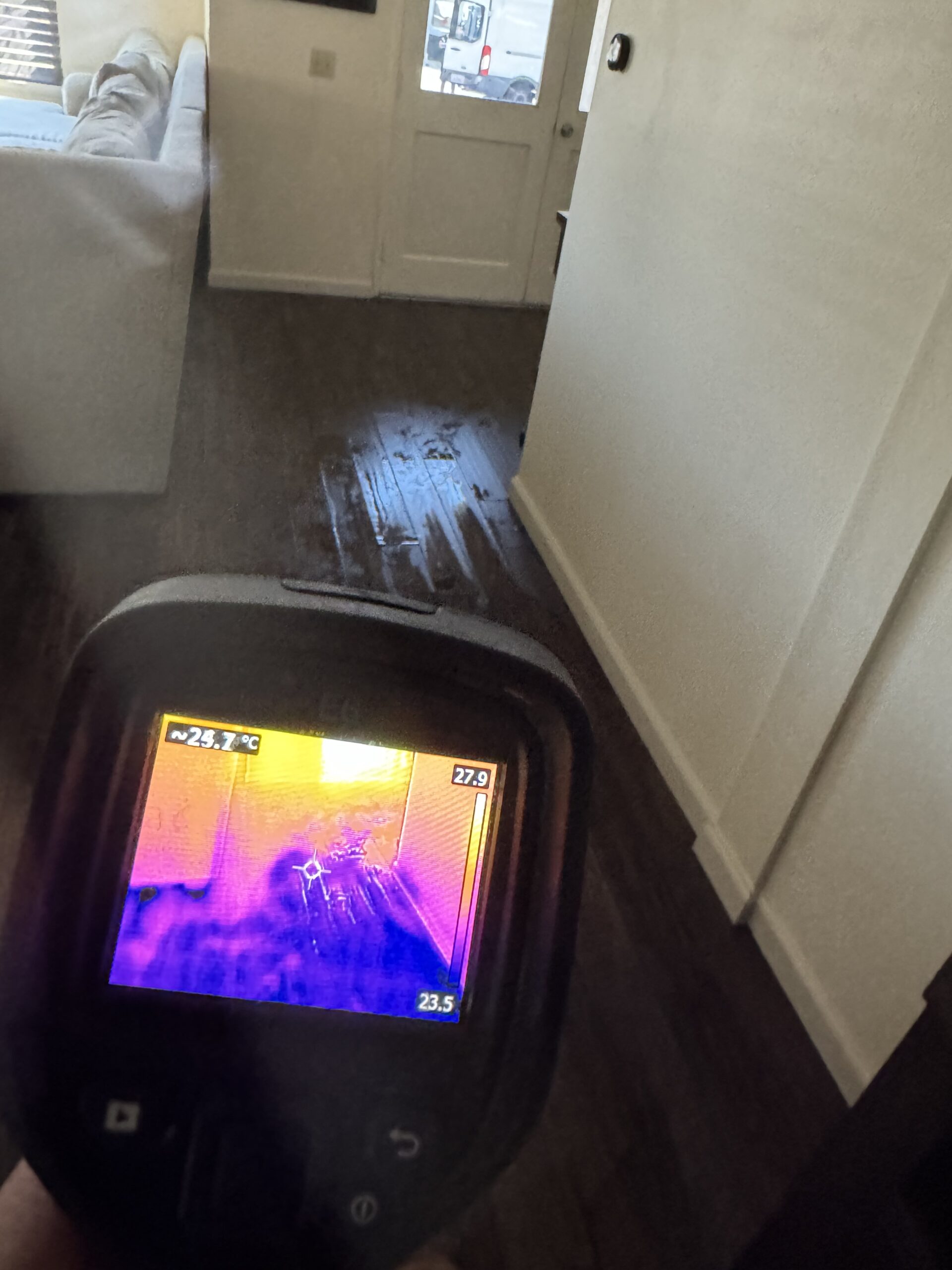
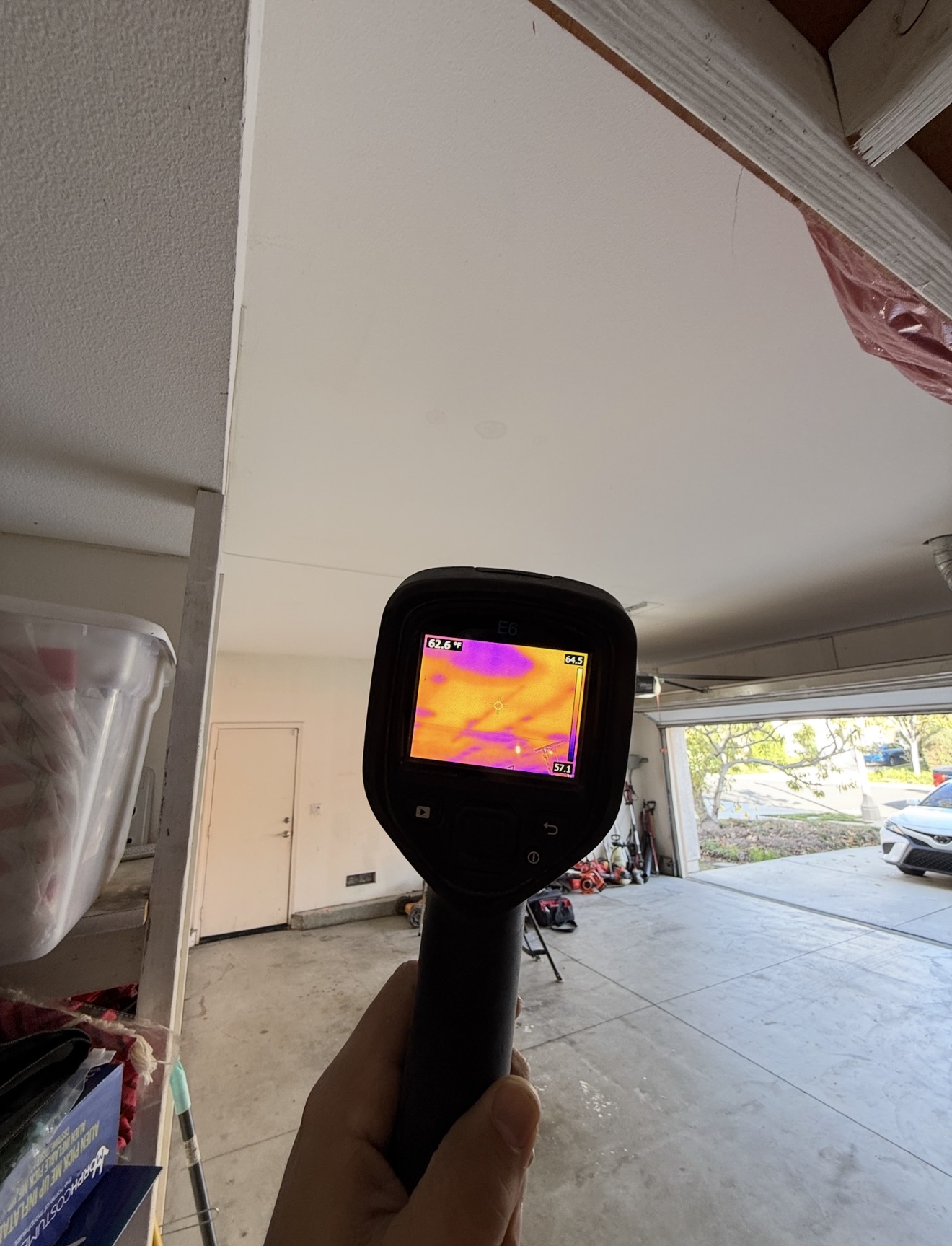
911 Restoration of Riverside County may use moisture meters, infrared screening, visual inspection, and physical observations to help determine how far moisture traveled.
Moisture Meters
Moisture meters can help identify elevated moisture in affected building materials and compare those readings with known dry materials.
Different materials may require different testing approaches, so readings should be interpreted as part of the overall inspection rather than relying on a single number.
Infrared Screening
Infrared cameras can identify temperature differences across floors, walls, and ceilings that may indicate areas requiring additional investigation.
An infrared camera does not directly see water underneath flooring. Suspected areas should be evaluated with moisture readings and physical inspection before determining the restoration scope.
Can Water Travel Beyond the Room Where the Leak Happened?
Yes. Water frequently migrates farther than homeowners expect.
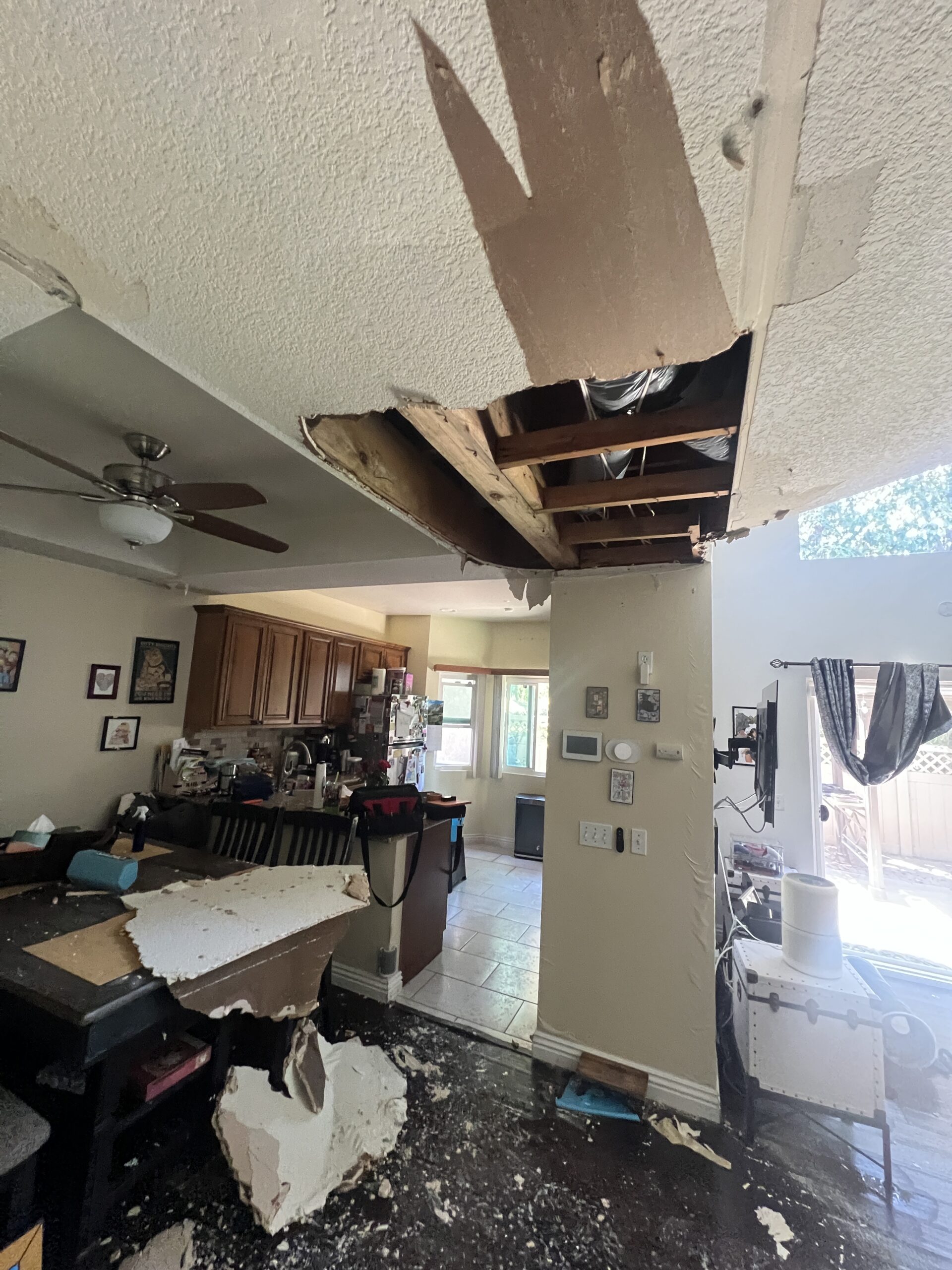
A leak in a kitchen, bathroom, laundry room, or upstairs room can potentially affect adjoining rooms, hallways, wall cavities, ceilings, and flooring beyond the immediately visible area.
For example, a washing machine overflow on a second floor may affect the laundry room flooring while also allowing water to migrate through the floor assembly and into drywall, insulation, framing, or the ceiling below.
This is why 911 Restoration of Riverside County evaluates the path of water migration rather than limiting an inspection only to the location where the leak originated.
Does Wet Flooring Always Need to Be Removed?
No. Finding moisture does not automatically mean all flooring has to be removed.
Whether flooring can be dried or requires removal depends on several factors:
- The type of flooring
- The source and category of water
- The amount of water involved
- How long the materials remained wet
- Whether water reached the underlayment or subfloor
- Whether contamination is present
- The condition of the flooring
- Whether trapped moisture can be effectively addressed
The restoration approach should be based on the conditions found at the property rather than automatically removing every material that became wet.
What Happens When Water Gets Under Laminate Flooring?
Laminate flooring can be vulnerable to moisture because components of the flooring system may absorb water and swell.
Once swelling, edge damage, separation, or deterioration occurs, the flooring may not return to its previous condition simply by drying the room.
The flooring and materials underneath it should be evaluated to determine the extent of the damage.
What About Luxury Vinyl Plank or SPC Flooring?
Some vinyl and SPC flooring products themselves may be highly water resistant, but that does not necessarily mean the entire flooring assembly is unaffected by water.
Moisture can become trapped underneath the finished flooring and affect underlayment, adhesives, baseboards, walls, cabinets, or the substrate below.
The important question is not only whether the top flooring material is waterproof. The restoration team must determine where the water traveled and whether materials underneath the flooring remain wet.
Can Water Get Under Tile?
Yes. Tile itself may tolerate water well, but water can sometimes migrate through grout joints, transitions, perimeter areas, cracks, or surrounding building materials.
Depending on the flooring assembly, moisture may affect the setting materials, substrate, surrounding walls, baseboards, or adjacent flooring.
Moisture testing and inspection can help determine whether the area beneath or around the tile requires additional attention.
What Happens When Water Gets Under Wood Flooring?
Wood and engineered wood products can absorb moisture and change dimension as their moisture content increases.
Possible symptoms can include cupping, crowning, warping, separation, or other changes to the flooring.
Whether the flooring can be restored depends on the extent of exposure, construction of the flooring system, moisture conditions, and how the material responds during drying.
Can Water Under Flooring Cause Mold?
Moisture trapped beneath flooring can create conditions that support microbial growth when moisture remains present and other environmental conditions are favorable.
The risk is one reason hidden moisture should be identified rather than assuming the property is dry because standing water has been removed.
If suspected microbial growth is found, additional evaluation and remediation procedures may be appropriate based on the conditions.
How Is Water Under Flooring Dried?
The appropriate drying method depends on the flooring system and extent of the water damage.
Restoration may involve:
- Water extraction
- Removal of flooring when necessary
- Removal of affected baseboards or trim
- Opening concealed areas when required
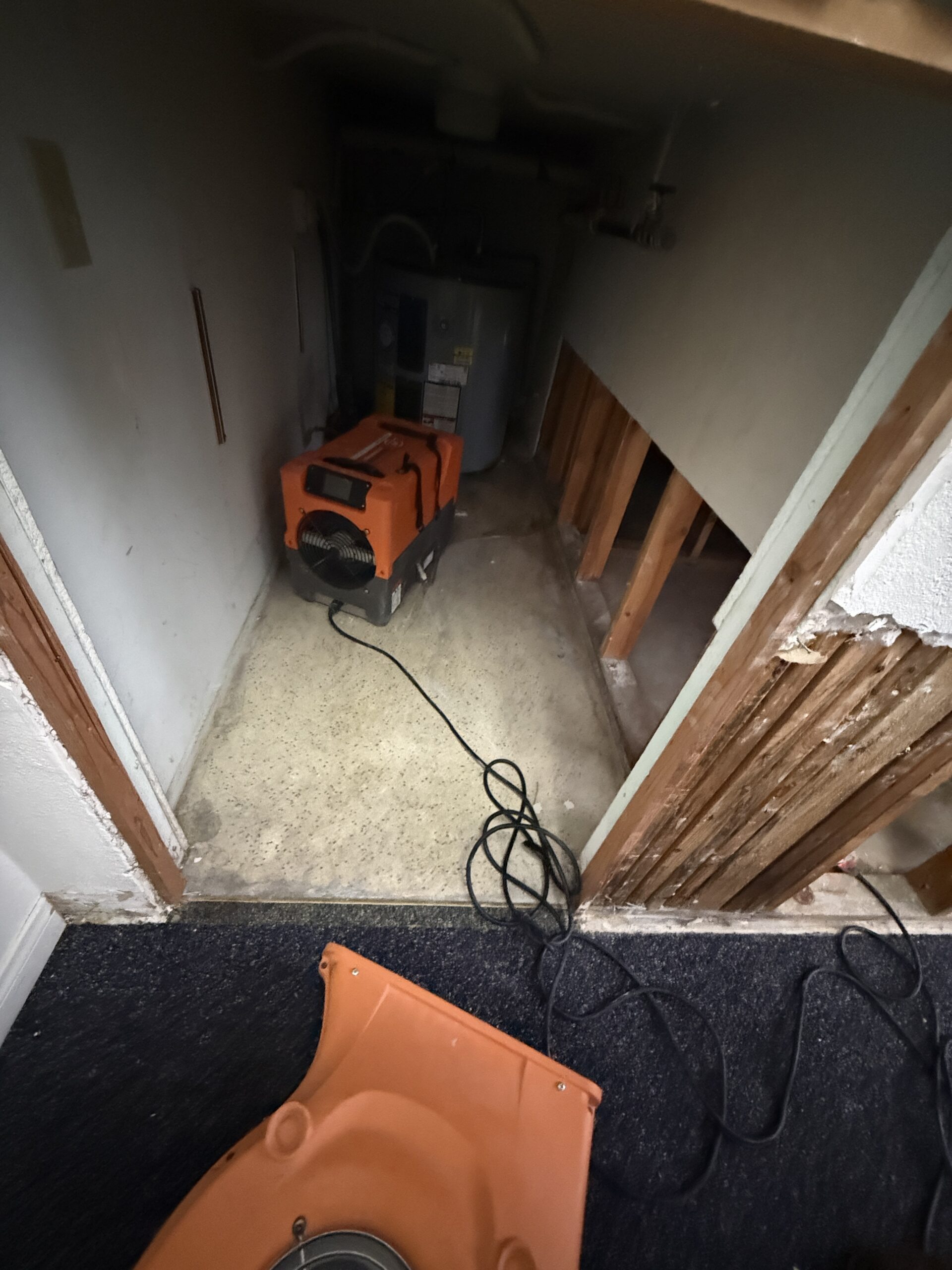
- Professional air movement
- Commercial dehumidification
- Moisture monitoring
- Cleaning or treatment when appropriate
The goal is to address moisture throughout the affected assembly rather than simply blowing air across the top of the floor.
Why Are Air Movers and Dehumidifiers Used?
Air movers and dehumidifiers perform different roles during structural drying.
Air movers help encourage moisture to evaporate from wet materials, while dehumidifiers remove moisture from the surrounding air.
Moisture readings can then be taken during the drying process to determine whether affected materials are progressing toward appropriate drying conditions.
How Long Does Flooring Take to Dry?
There is no single drying timeline that applies to every water loss.
Drying time depends on factors including the flooring material, amount of water, substrate, environmental conditions, extent of saturation, and how quickly mitigation began.
For that reason, professional drying should be based on moisture conditions and documented progress rather than automatically removing equipment after a predetermined number of days.
Should You Remove Flooring Yourself After Water Damage?
Removing flooring before determining the source, water category, and extent of moisture can make it more difficult to understand the original conditions of the loss.
If an insurance claim may be involved, photographs and documentation should also be collected before significant material removal when reasonably possible.
A professional inspection can help determine what is actually affected and whether removal is necessary.
What Happens If the Flooring Cannot Be Saved?
If flooring or other building materials need to be removed during mitigation, the property eventually moves into reconstruction.
Reconstruction may include replacing flooring, baseboards, drywall, cabinets, trim, paint, and other materials necessary to restore the affected area.
911 Restoration of Riverside County provides both water damage mitigation and reconstruction services.
That allows our team to help move a property from moisture inspection and structural drying into the rebuilding phase when materials require replacement.
Does Homeowners Insurance Cover Water-Damaged Flooring?
Coverage depends on the cause of the water loss and the terms of the individual homeowners insurance policy.
Damage resulting from a sudden and accidental plumbing event may be handled differently from damage caused by long-term leakage, maintenance issues, flooding, or excluded causes.
911 Restoration of Riverside County can document the conditions found and restoration work performed, but the insurance carrier ultimately determines whether the flooring and other damage are covered.
Water Damage Restoration in Riverside County
911 Restoration of Riverside County provides water damage restoration for burst pipes, appliance leaks, washing machine overflows, toilet overflows, water heater failures, plumbing leaks, and other residential water emergencies.
Our restoration process can include moisture inspection, infrared screening, water extraction, controlled material removal, structural drying, professional dehumidification, moisture monitoring, documentation, and reconstruction.
If you suspect water may be trapped underneath your flooring, 911 Restoration of Riverside County can evaluate the affected area and determine how far the moisture traveled before establishing the appropriate restoration plan.
Frequently Asked Questions
Can water be trapped underneath flooring?
Yes. Water can travel underneath flooring through seams, transitions, edges, and surrounding building materials. The surface may appear dry while moisture remains underneath.
How do you know if water is under the floor?
Signs can include buckling, separating seams, swelling, odors, or water appearing between flooring joints. Professional moisture meters and infrared screening can also help identify areas requiring further investigation.
Will water under flooring dry by itself?
It depends on the flooring assembly and extent of the water damage. Moisture trapped beneath flooring may not dry effectively without additional access, airflow, dehumidification, or material removal.
Does wet flooring always need to be replaced?
No. Whether flooring can be restored depends on the type of material, water category, extent of saturation, duration of exposure, condition of the flooring, and whether concealed moisture can be properly addressed.
Can 911 Restoration of Riverside County replace flooring after water damage?
Yes. 911 Restoration of Riverside County provides water damage mitigation and reconstruction services. When damaged flooring requires removal, reconstruction can include replacement of flooring and other affected finishes after appropriate drying conditions have been reached.
This article provides general property-restoration information. The correct scope for a specific loss depends on the source of damage, water category or contamination conditions, affected materials, building assembly, duration of exposure, moisture readings, and other site conditions.