Quick answer: Thermal imaging can help identify temperature differences that may point to hidden water damage, but an infrared camera does not directly “see” moisture through walls or flooring. Professional restoration technicians use thermal imaging together with moisture meters, visual inspection, and physical testing to confirm whether building materials are actually wet.
911 Restoration of Riverside County uses infrared screening as part of water damage inspections for homes in Corona, California. This can help identify areas that require additional moisture testing after plumbing leaks, appliance failures, toilet overflows, water heater leaks, and other residential water losses.
What Does a Thermal Imaging Camera Show?
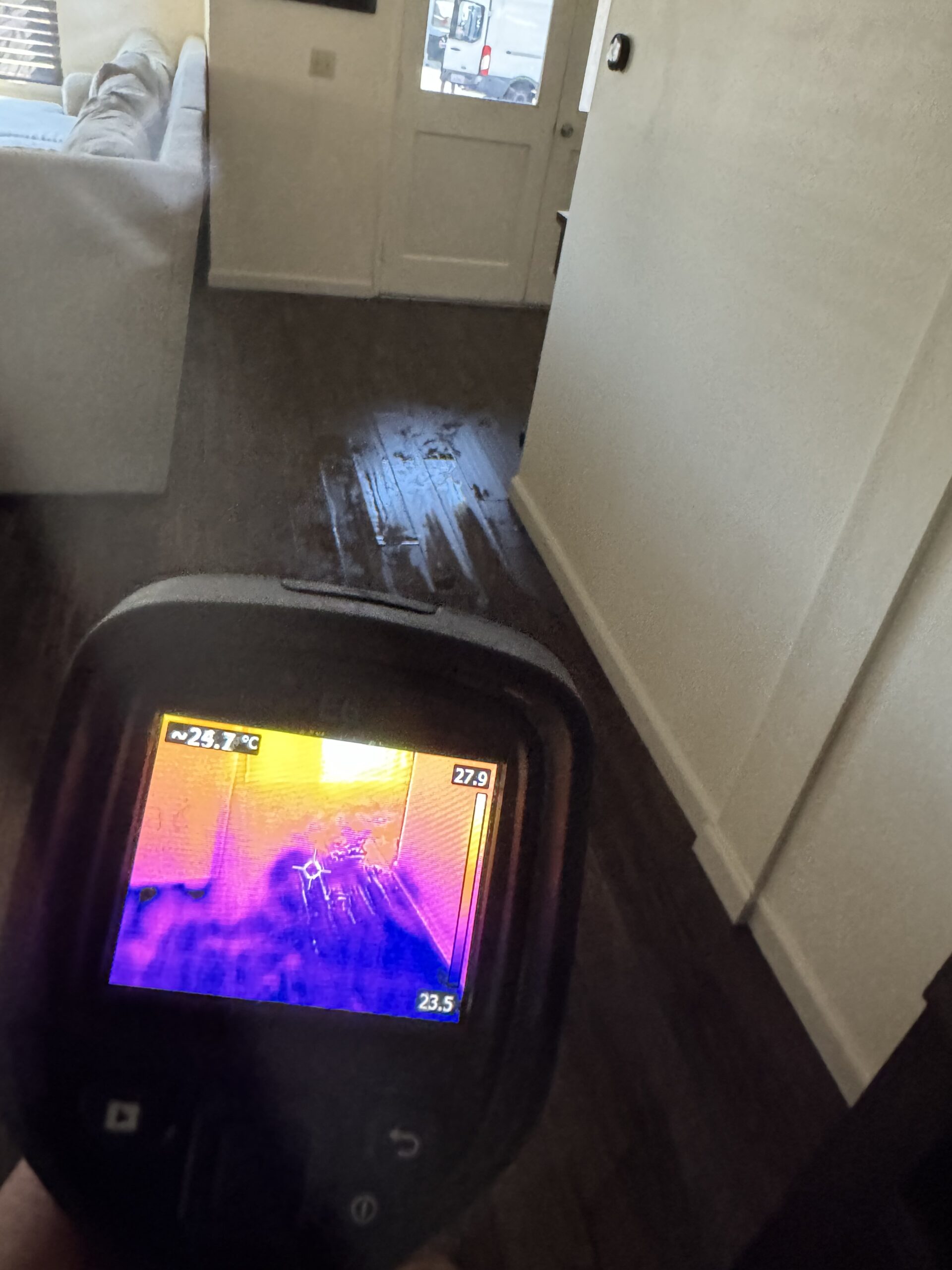
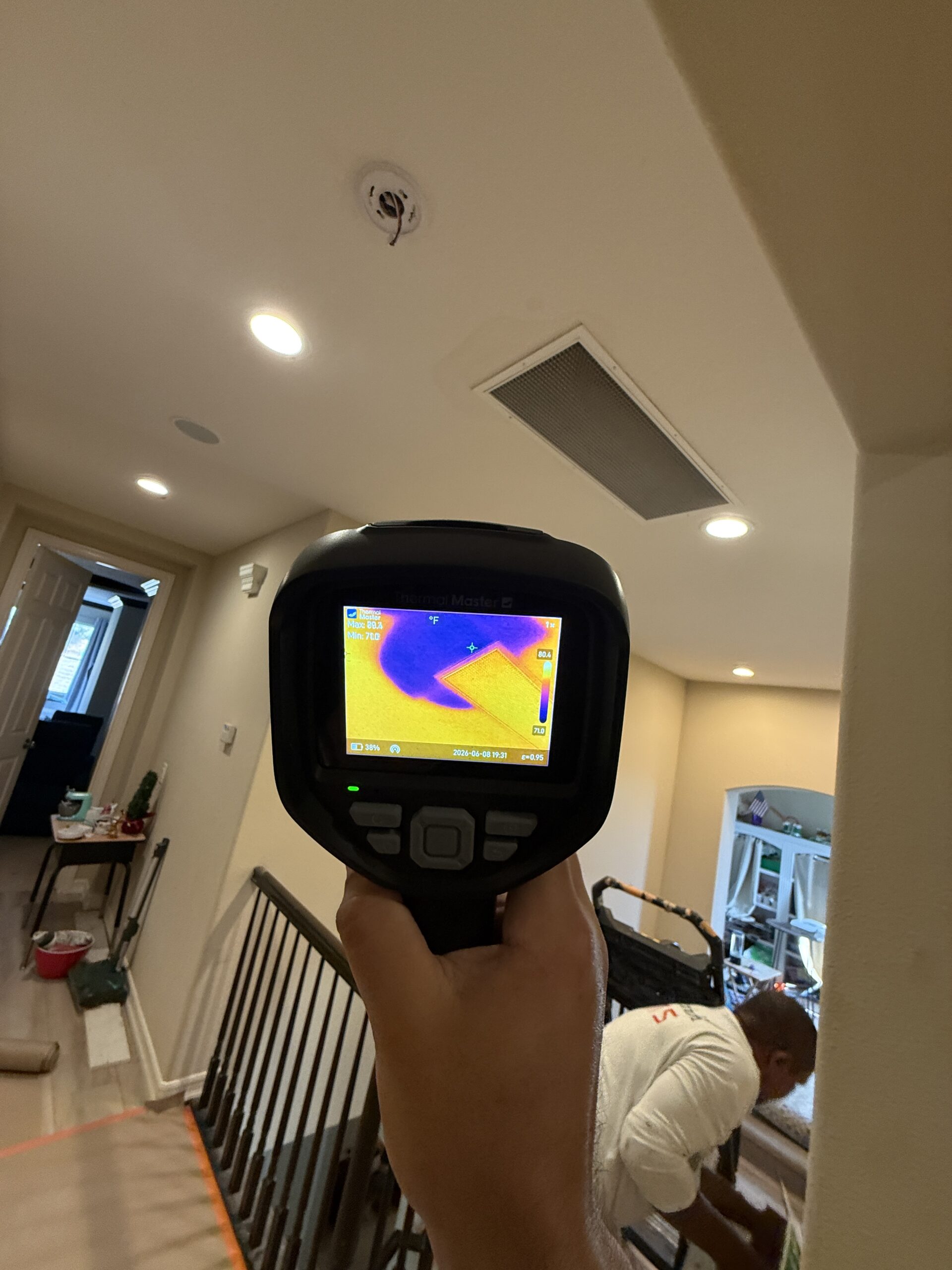
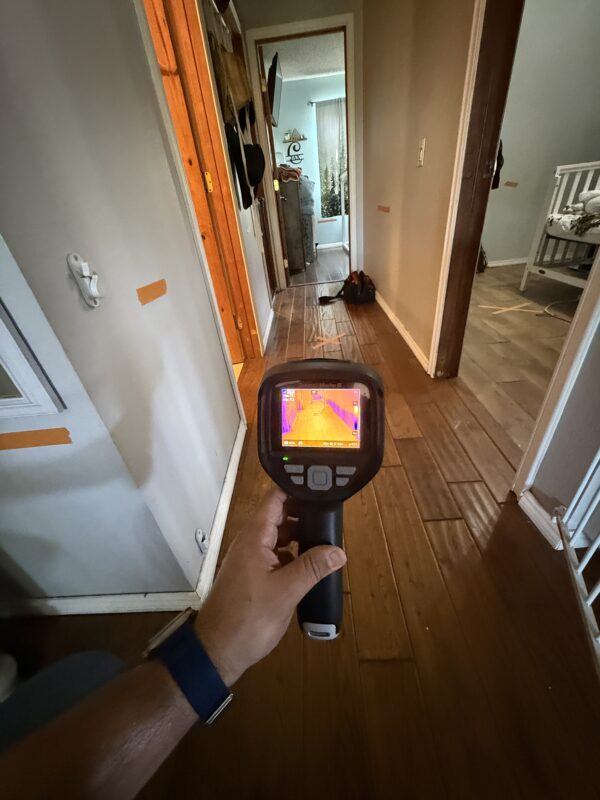
A thermal imaging camera displays differences in surface temperature. On the screen, warmer and cooler areas appear as different colors or shades.
When building materials become wet, evaporation and other conditions can sometimes cause a temperature difference compared with surrounding dry materials. Those temperature patterns can help a restoration technician identify areas that deserve closer inspection.
Thermal imaging is a screening tool, not a moisture meter.
If an infrared image shows a suspicious temperature pattern, the area should be checked with moisture-testing equipment before determining the restoration scope.
Can an Infrared Camera See Water Through a Wall?
No. An infrared camera does not literally see water behind drywall.
Instead, it detects surface-temperature differences that may be associated with moisture, airflow, insulation differences, plumbing, sunlight, HVAC conditions, or other factors.
That is why professional water damage inspections should not rely on thermal imaging alone.
911 Restoration of Riverside County combines infrared screening with moisture readings and physical inspection to help determine whether a suspicious area is actually affected by water.
Why Use Thermal Imaging During a Water Damage Inspection?
Water does not always remain directly where the leak started. It can travel underneath flooring, behind baseboards, through wall cavities, beneath cabinets, and into adjoining rooms.
Thermal imaging can help technicians quickly screen larger areas and identify places where additional testing may be needed.
This can be particularly useful after:
- Plumbing supply-line leaks
- Toilet overflows
- Washing machine leaks or overflows
- Dishwasher leaks
- Water heater failures
- Refrigerator supply-line leaks
- Leaks from upstairs bathrooms
- Water traveling through ceilings or walls
How Is Hidden Water Damage Confirmed?
Once thermal imaging identifies an area of concern, restoration technicians can use additional tools and observations to evaluate the material.
Moisture Meters
Moisture meters help determine whether building materials contain elevated moisture compared with known dry areas.
Depending on the material and type of meter being used, technicians may evaluate drywall, wood, flooring, framing, and other building components.
Physical Inspection
Technicians also look for physical signs of water damage such as staining, swelling, soft drywall, separating flooring, damaged baseboards, cabinet deterioration, or visible moisture.
Water Migration Pattern
The location of the original leak also matters. If water originated from an upstairs bathroom, for example, technicians may inspect flooring, lower walls, nearby rooms, and the ceiling below to determine how far the water traveled.
Can Water Damage Be Hidden Under Flooring?
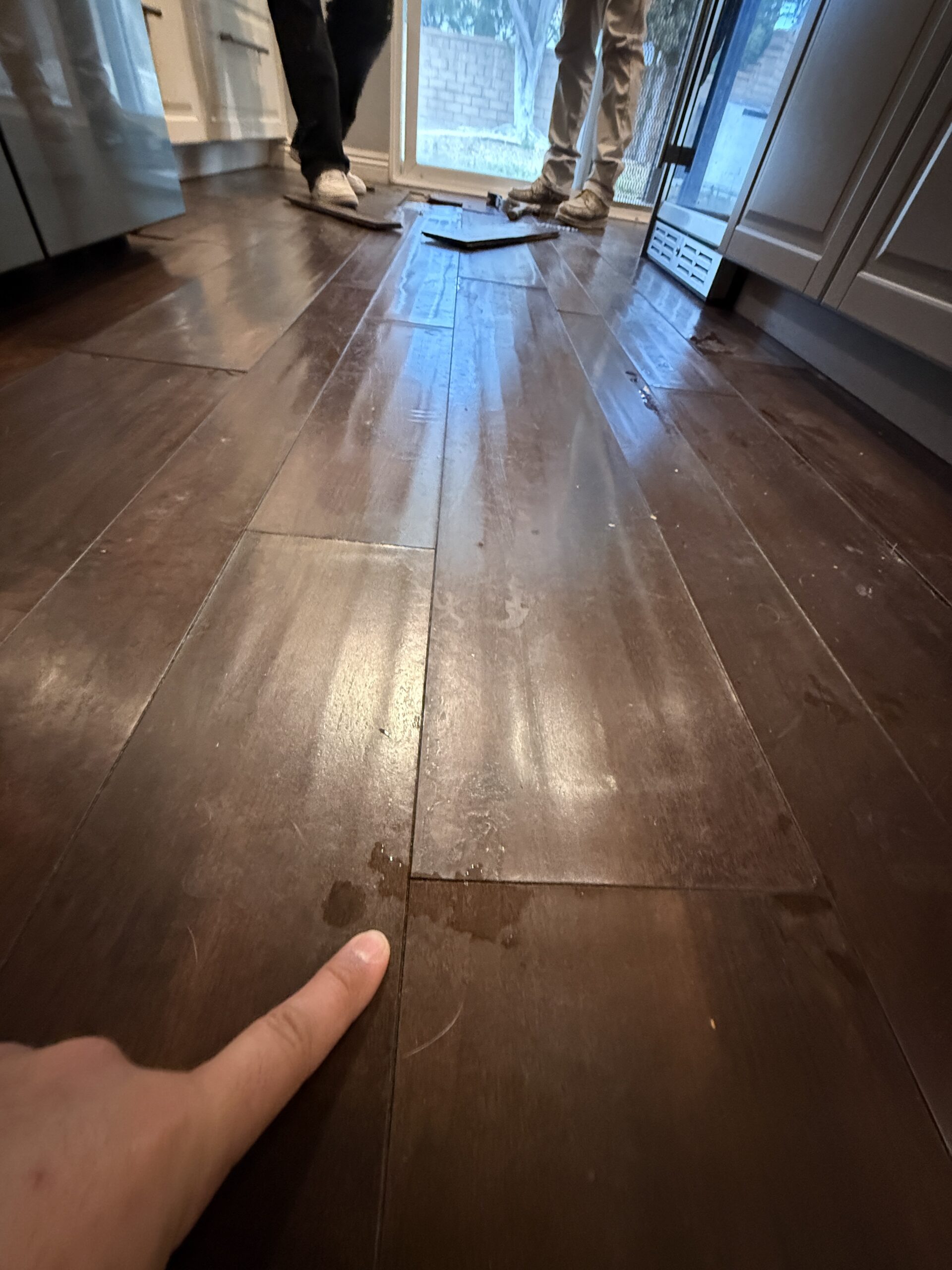
Yes. Flooring can appear dry on the surface while moisture remains underneath it.
Water may migrate beneath:
- Luxury vinyl plank
- SPC flooring
- Laminate flooring
- Engineered wood
- Carpet and padding
- Tile assemblies
- Underlayment
- Subflooring
A thermal image may help identify suspicious temperature differences across the floor, but moisture testing is still needed to confirm conditions.
Can Water Damage Be Hidden Behind Drywall?
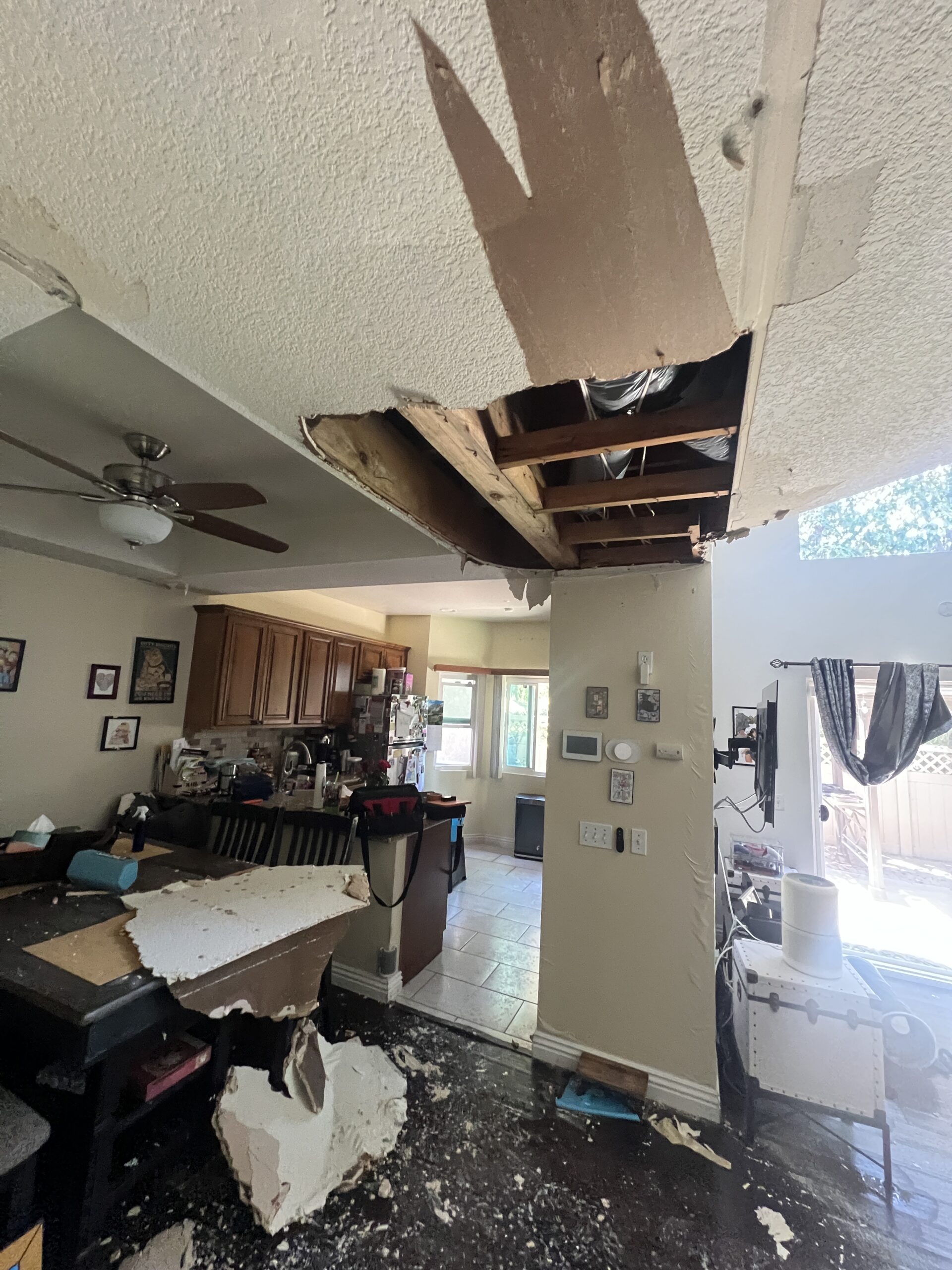
Yes. Water from plumbing leaks and other losses can enter wall cavities without immediately creating obvious surface damage.
Materials inside the wall may include drywall, insulation, framing, plumbing, and other components that can remain wet even when the finished surface looks normal.
Infrared screening can help identify areas requiring further investigation, but moisture readings and physical inspection are used to confirm whether water is present.
Why Is Finding Hidden Moisture Important?
Water that remains concealed inside building materials can continue causing damage even after visible water has been removed.
Hidden moisture may contribute to:
- Drywall deterioration
- Swollen or damaged baseboards
- Flooring movement or separation
- Cabinet damage
- Wood swelling
- Moisture-related microbial growth
- Additional reconstruction needs
Identifying the full extent of the water loss helps restoration professionals determine which materials may be dried and which may require removal.
Does Every Wet Wall or Floor Need to Be Removed?
No. Finding elevated moisture does not automatically mean every affected material must be demolished.
The proper approach depends on factors such as:
- The source of the water
- The water category
- How saturated the material became
- How long the material remained wet
- The type of material involved
- Whether contamination is present
- Whether concealed areas can be effectively dried
A professional moisture inspection helps establish the restoration scope before unnecessary material removal is performed.
What Happens After Hidden Moisture Is Found?
Once the affected areas are identified, the mitigation process can be planned based on the actual conditions of the property.
Depending on the loss, restoration may include:
- Stopping the water source
- Documenting affected areas
- Water extraction when necessary
- Controlled removal of affected materials
- Cleaning or treatment based on the water category
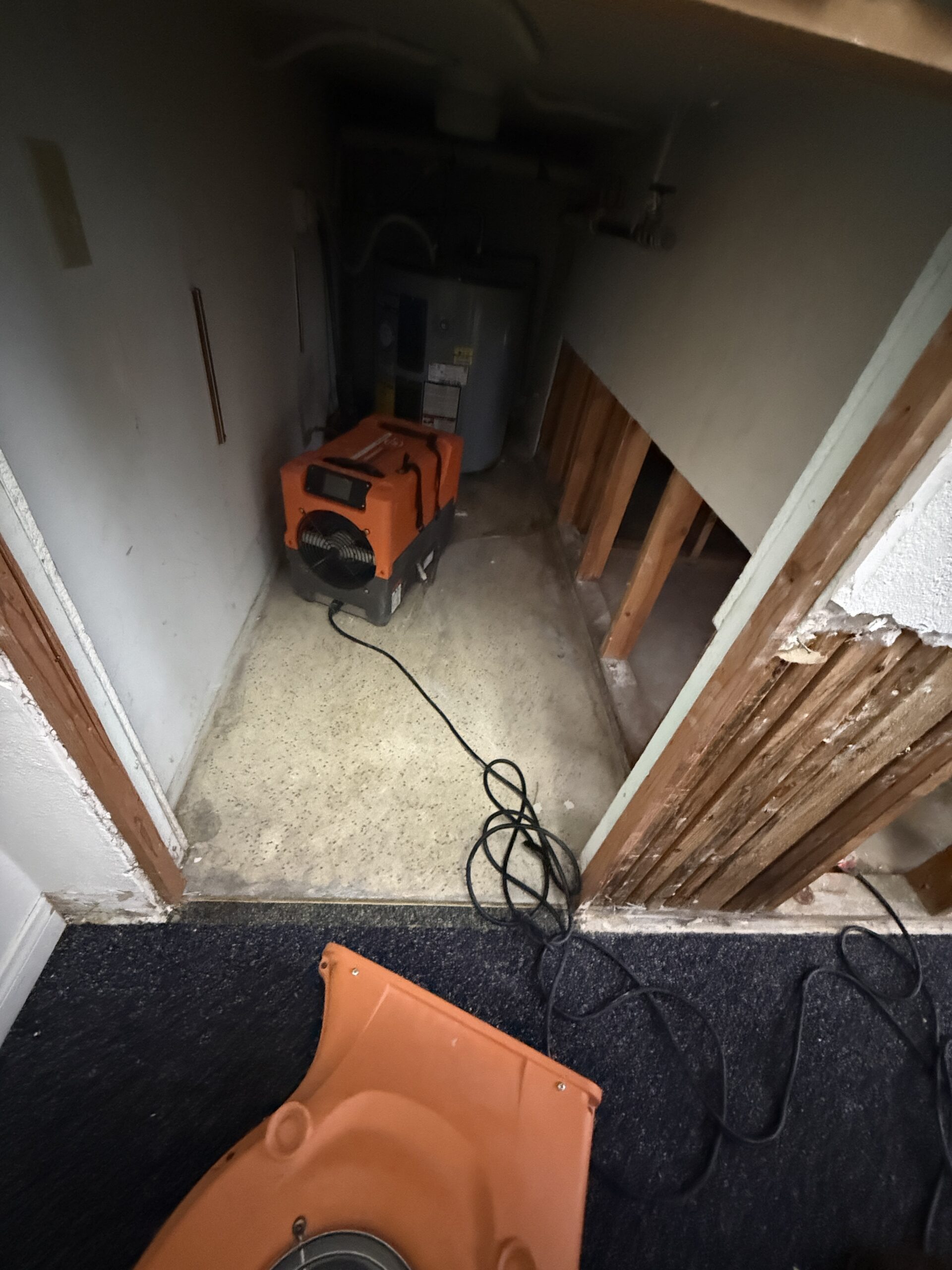
- Installation of professional drying equipment
- Structural drying
- Moisture monitoring
- Post-mitigation documentation
- Reconstruction
How Does Structural Drying Work?
After standing water and materials requiring removal have been addressed, remaining structural moisture may need to be dried using professional equipment.
Air movers help increase airflow across affected materials, while commercial dehumidifiers remove moisture from the surrounding air.
Moisture readings can then be taken throughout the drying process to determine whether remaining building materials are progressing toward appropriate drying conditions.
Why Is Moisture Documentation Important?
Water damage conditions can change quickly once mitigation begins.
911 Restoration of Riverside County documents restoration projects using information that may include:
- Initial damage photographs
- Infrared images
- Moisture readings
- Affected-material measurements
- Mitigation photographs
- Drying equipment documentation
- Monitoring records
- Post-mitigation photographs
- Reconstruction documentation
This provides a clearer record of what was found and how the project progressed.
Does Insurance Require Infrared Photos?
Insurance requirements vary by carrier and individual claim. Infrared images may be useful supporting documentation, but they do not replace moisture readings or other evidence showing that building materials were affected.
911 Restoration of Riverside County can document the conditions found and the restoration work performed, but the insurance carrier ultimately determines coverage under the homeowner’s policy.
What Happens If Reconstruction Is Needed?
If flooring, drywall, insulation, baseboards, cabinets, ceilings, or other materials need to be removed during mitigation, reconstruction may be required after the structure has been appropriately dried.
911 Restoration of Riverside County provides both water damage mitigation and reconstruction services.
Depending on the project, reconstruction can include flooring replacement, drywall, insulation, baseboards, trim, texture, paint, cabinetry, and other repairs necessary to restore the affected areas.
Water Damage Inspection and Thermal Imaging in Corona, CA
911 Restoration of Riverside County provides professional water damage inspection and restoration services for homeowners in Corona, California.
Our team handles water losses caused by plumbing leaks, burst pipes, appliance failures, washing machine overflows, toilet overflows, water heater failures, and other residential water emergencies.
Our restoration process can include infrared screening, moisture readings, water extraction, controlled material removal, structural drying, dehumidification, moisture monitoring, documentation, and reconstruction when necessary.
If you suspect water may be hiding behind walls or underneath flooring in your Corona home, 911 Restoration of Riverside County can inspect the affected areas and determine how far the moisture traveled before establishing the appropriate restoration plan.
Frequently Asked Questions
Can thermal imaging find hidden water damage?
Thermal imaging can identify temperature differences that may indicate areas requiring additional moisture testing. Moisture meters and physical inspection are then used to help confirm whether building materials are actually wet.
Can an infrared camera see water through walls?
No. Infrared cameras detect surface-temperature differences rather than directly seeing water through walls. Suspicious areas should be confirmed with moisture-testing equipment.
Can thermal imaging detect water under flooring?
Thermal imaging may reveal temperature patterns that suggest an area should be investigated further, but moisture readings are needed to help confirm whether water is present beneath the flooring.
Why do restoration companies use moisture meters with infrared cameras?
Infrared cameras help locate suspicious temperature patterns, while moisture meters help determine whether the building materials actually contain elevated moisture. Using both provides more useful information than relying on thermal imaging alone.
Does 911 Restoration of Riverside County use infrared cameras?
Yes. 911 Restoration of Riverside County uses infrared screening as part of water damage inspections when appropriate, along with moisture readings, visual observations, and physical inspection to evaluate affected building materials.
Can 911 Restoration of Riverside County rebuild after water damage?
Yes. 911 Restoration of Riverside County provides both water damage mitigation and reconstruction, allowing affected properties to move from moisture inspection and structural drying into repair and rebuilding when necessary.
This article provides general property-restoration information. The correct scope for a specific loss depends on the source of damage, water category or contamination conditions, affected materials, building assembly, duration of exposure, moisture readings, and other site conditions.