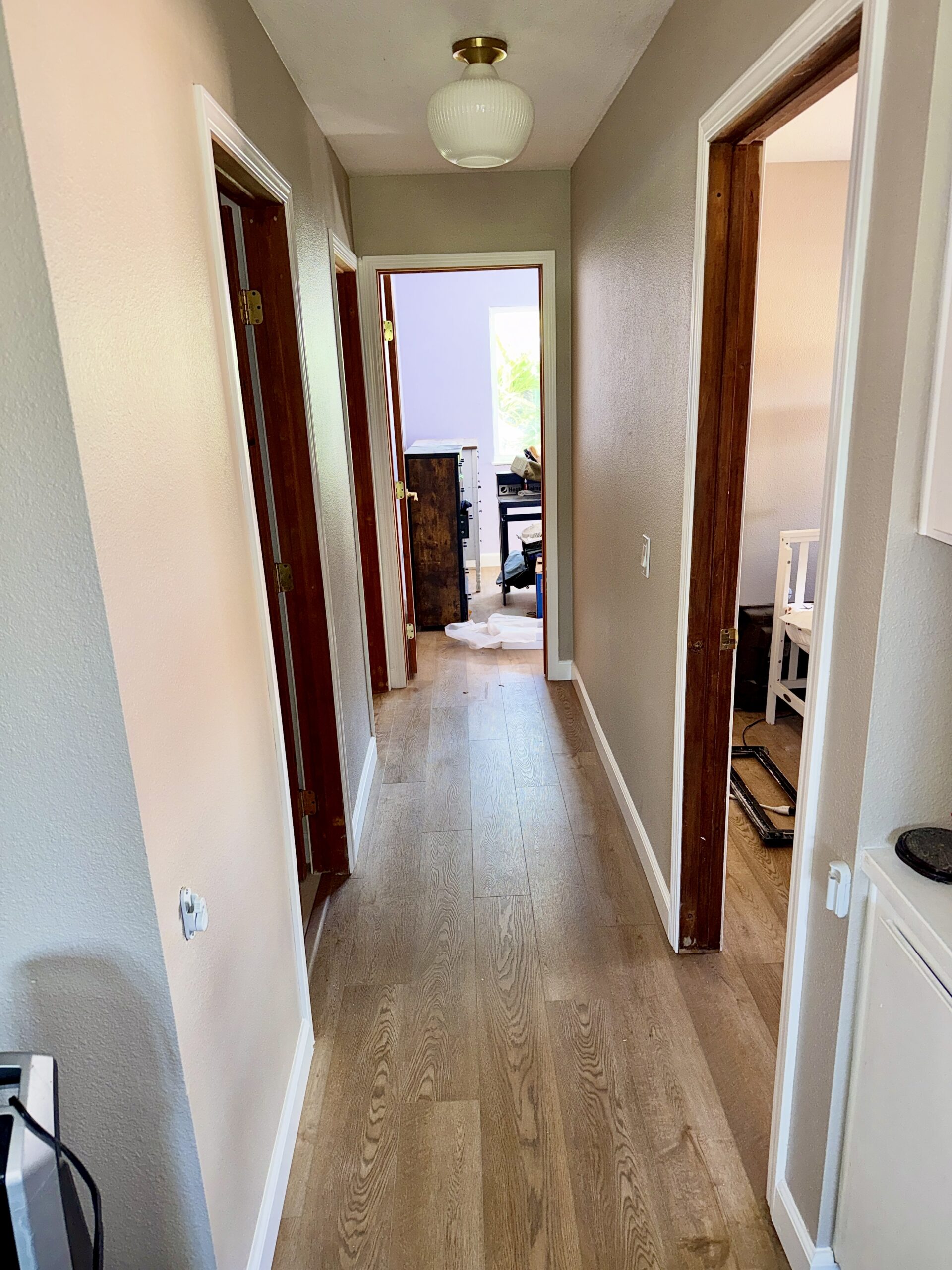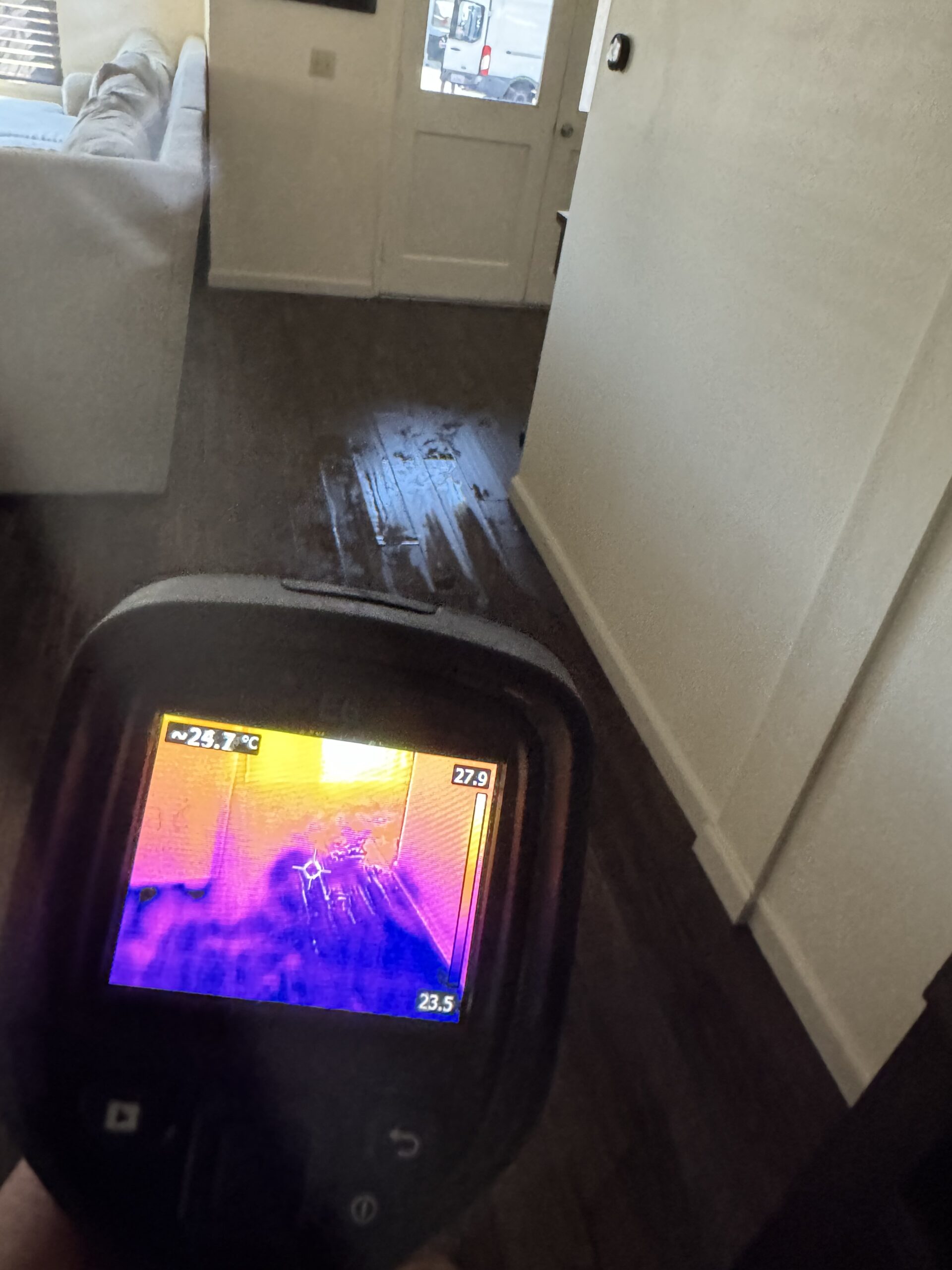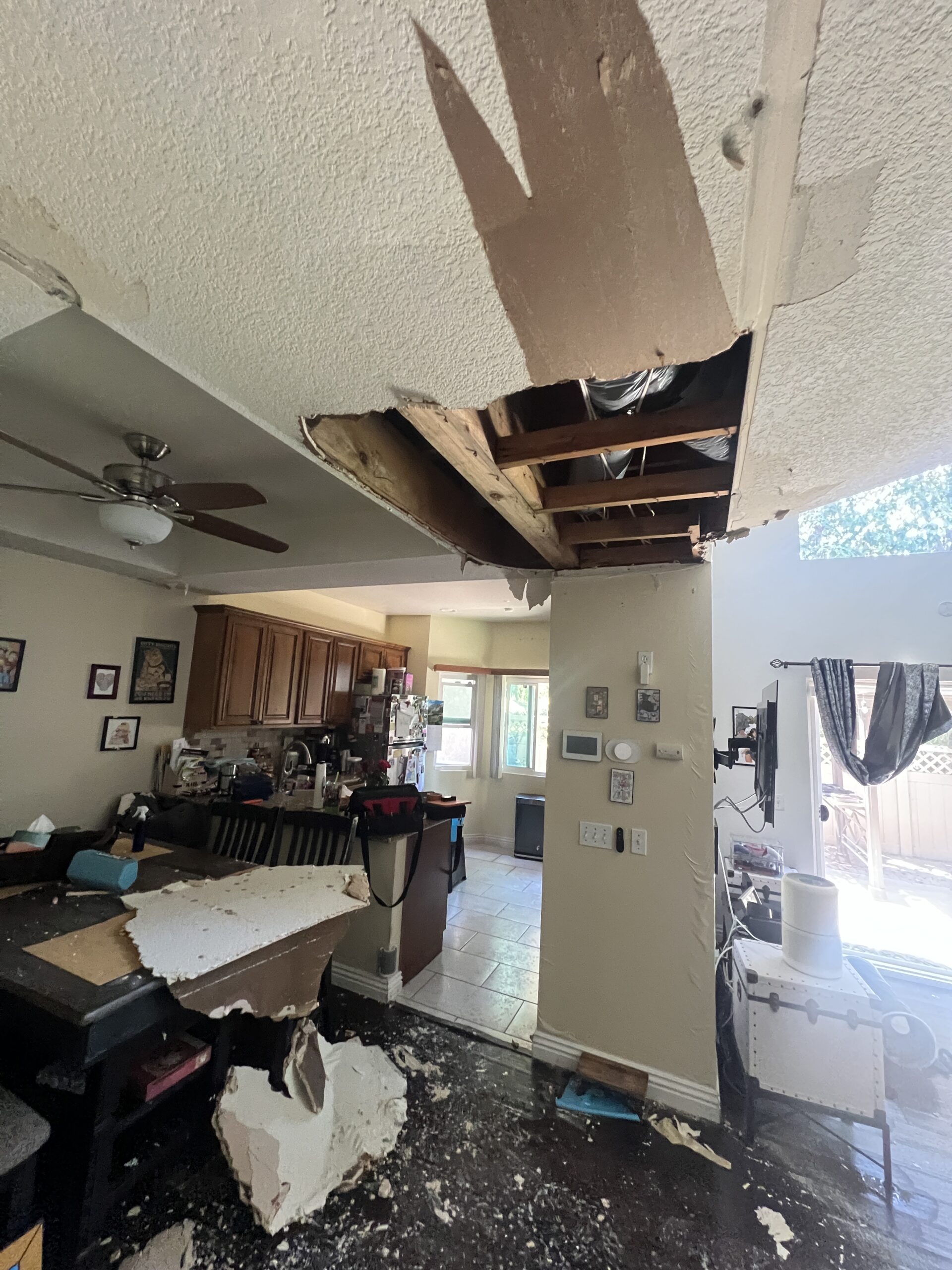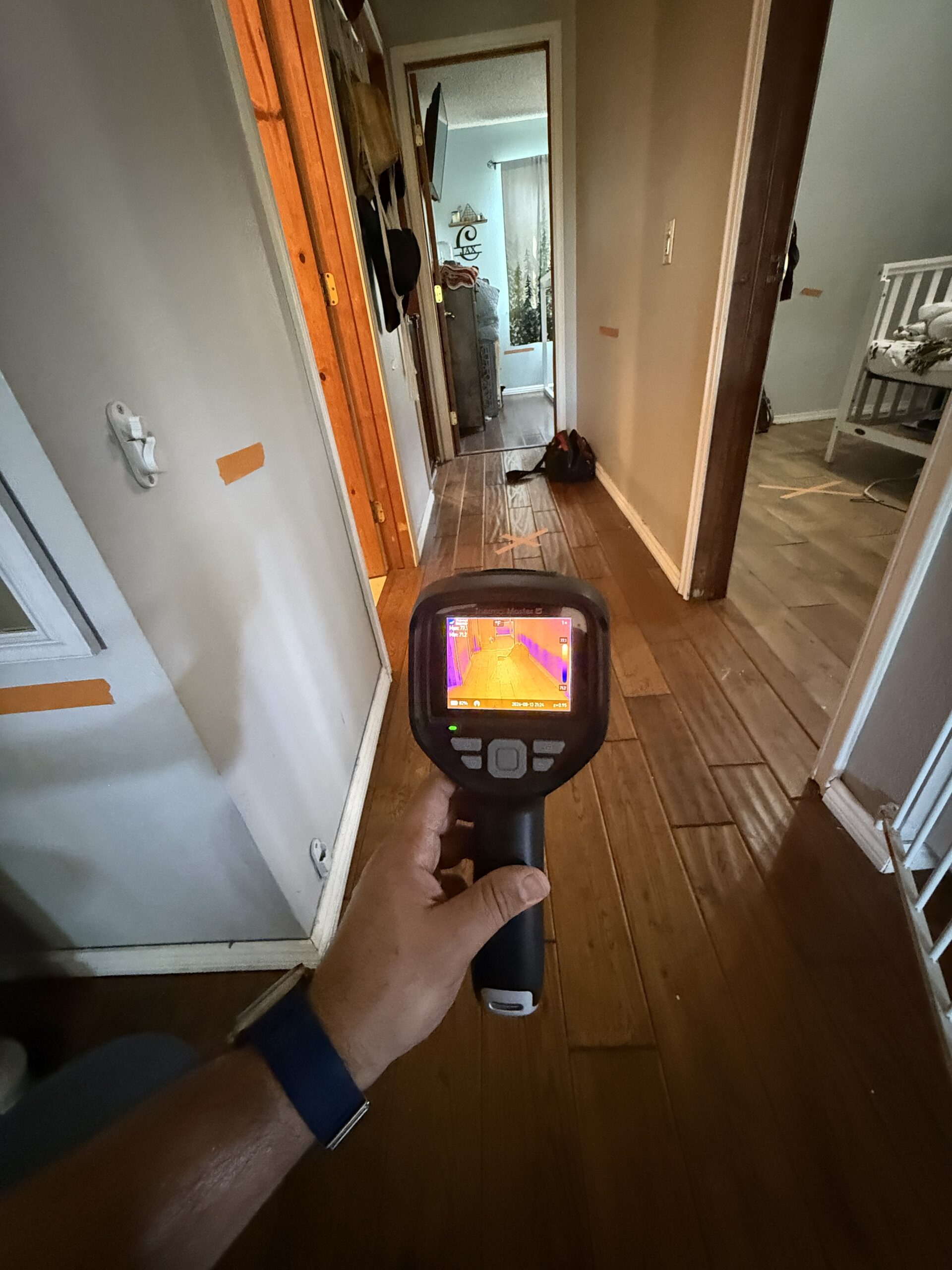
Quick answer: A professional water damage inspection determines where the water came from, how far moisture traveled, which building materials were affected, whether contamination is present, and what needs to be dried, cleaned, removed, or reconstructed. The inspection may include visual observations, moisture readings, infrared screening, photographs, measurements, and evaluation of concealed areas.
911 Restoration of Riverside County performs water damage inspections for plumbing leaks, burst pipes, appliance failures, toilet overflows, water heater leaks, washing machine overflows, sewage losses, and other property emergencies throughout Riverside County and surrounding service areas.
The goal is not simply to find where the floor looks wet. A proper inspection helps determine the full extent of the loss before the restoration plan is established.
Why Is a Water Damage Inspection Important?
Water can travel much farther than homeowners expect.
A leak that begins in one room may spread underneath flooring, behind baseboards, inside wall cavities, beneath cabinets, through ceilings, or into rooms on another level of the home.
Because much of this moisture may not be visible, inspecting only the area where the leak started can miss affected building materials.
A professional inspection helps answer several important questions:
- Where did the water originate?
- Has the source been stopped?
- What category of water is involved?
- Which rooms and materials are affected?
- How far did the moisture migrate?
- Can affected materials be dried?
- Do any materials need to be removed?
- What drying equipment may be required?
- Will reconstruction be necessary afterward?
What Happens First During a Water Damage Inspection?
The first step is understanding the source and history of the loss.
A restoration technician may ask when the water was discovered, where it appears to have originated, whether the source is still active, and which areas of the home were visibly affected.
If water is still entering the property, the source should be stopped before effective restoration can continue. Depending on the situation, this may require shutting off the water supply or having a plumber repair the failed plumbing component.
How Does 911 Restoration of Riverside County Find Hidden Moisture?
Visible damage provides important information, but professional water damage inspections often require additional moisture-detection methods.
Moisture Meters
Moisture meters help evaluate whether building materials contain elevated moisture.
Readings can be taken from affected areas and compared with known dry materials elsewhere in the property.
Moisture meters may be used on drywall, wood, flooring systems, framing, and other building materials depending on the circumstances of the loss.
Infrared Screening
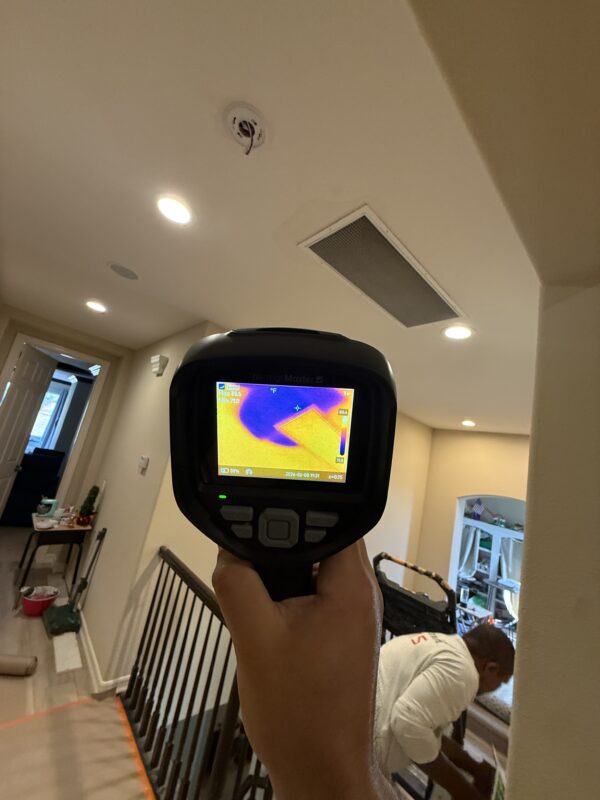
Infrared cameras identify temperature differences across building surfaces.
These temperature patterns can help identify areas that require additional moisture testing, particularly across walls, ceilings, and flooring.
Infrared cameras do not directly see water through walls. Suspected areas should be verified using moisture readings and physical inspection.
Physical Inspection
Technicians also look for physical signs such as staining, swelling, deteriorating drywall, separating flooring, damaged baseboards, cabinet swelling, ceiling discoloration, and other evidence of water migration.
Can Water Be Hidden Behind Walls?
Yes. Plumbing leaks, appliance failures, upper-floor water losses, and overflowing fixtures can introduce water into wall cavities without immediately creating obvious surface damage.
Moisture may affect:
- Drywall
- Insulation
- Wood framing
- Baseboards
- Electrical penetrations
- Adjacent flooring
A wall can sometimes look relatively normal even though materials inside the cavity remain wet.
Can Water Travel Under Flooring?
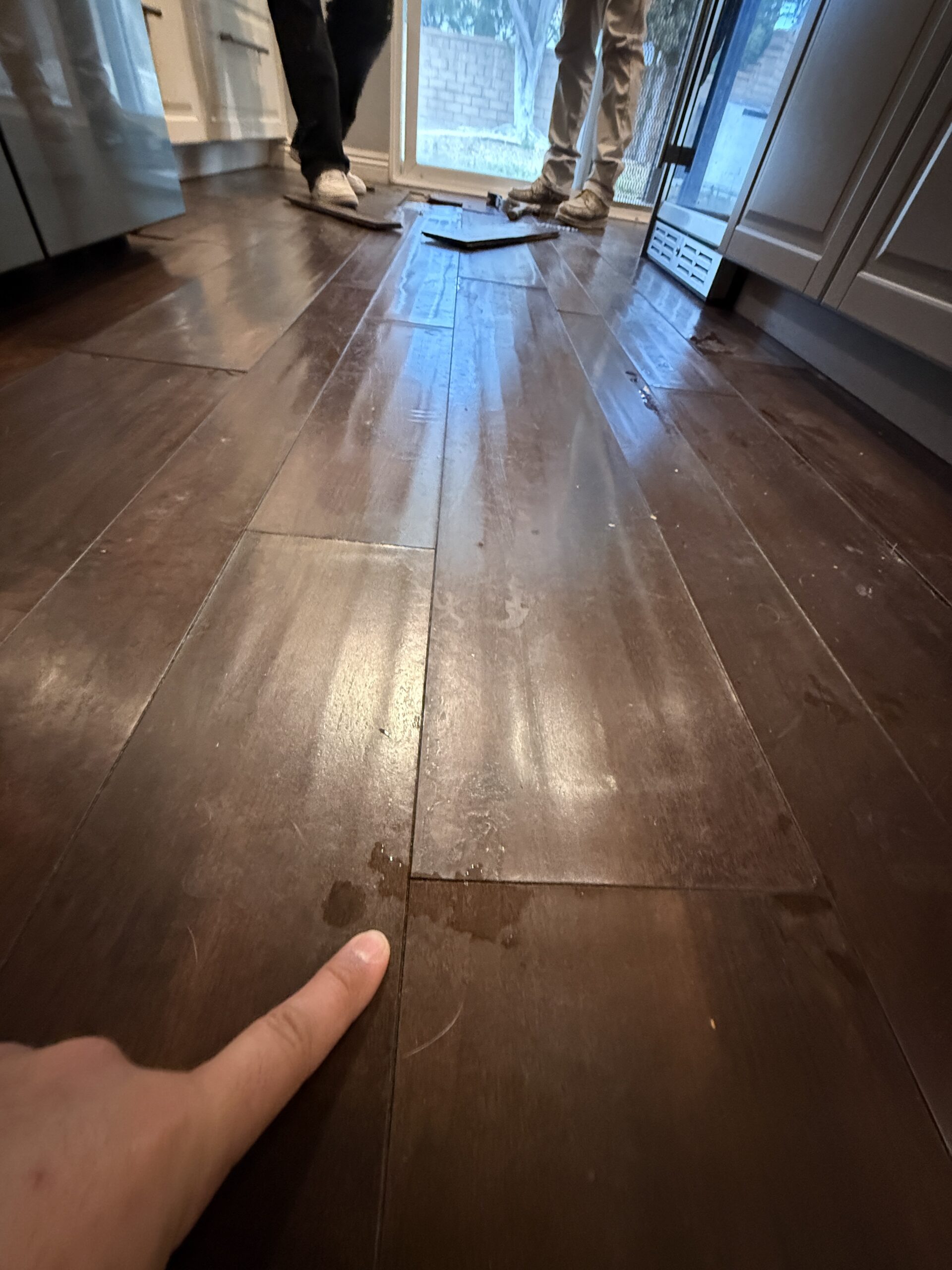
Yes. Water can migrate beneath flooring through seams, perimeter gaps, transitions, cabinet openings, and other pathways.
Depending on the flooring system, moisture may affect:
- Luxury vinyl plank
- SPC flooring
- Laminate
- Engineered wood
- Carpet and padding
- Tile assemblies
- Underlayment
- Subflooring
- Concrete substrates
The finished surface appearing dry does not necessarily mean the materials underneath it are dry.
Why Does the Water Category Matter?
The source and contamination level of the water can affect how the restoration project is handled.
Water losses are commonly evaluated as Category 1, Category 2, or Category 3 based on the source and conditions of the water.
For example, a clean-water plumbing supply leak may require a different restoration approach than a washing machine overflow or a toilet overflow involving Category 3 contamination.
Water category can influence cleaning requirements, material removal decisions, containment procedures, and whether porous materials can be appropriately restored.
Does Every Wet Material Need to Be Removed?
No. A professional water damage inspection should help determine what can reasonably be dried and what may require removal.
Factors can include:
- Water category
- Amount of saturation
- How long materials remained wet
- Material type
- Condition of the material
- Presence of contamination
- Whether moisture is trapped in a concealed area
- Whether access is necessary for proper drying
The restoration scope should be based on actual conditions rather than automatically demolishing everything near the loss.
How Is Water Damage Documented?
Documentation is an important part of a professional restoration project, especially when an insurance claim may be involved.
911 Restoration of Riverside County may document:
- Initial property conditions
- Source and cause information when known
- Visible water damage
- Moisture readings
- Infrared screening
- Affected rooms and materials
- Measurements
- Material removal
- Drying equipment
- Drying progress
- Post-mitigation conditions
- Reconstruction needs
This creates a clearer record of what was found and how the restoration project progressed.
What Happens After the Inspection?
Once the affected areas have been identified, the restoration plan can be established.
Depending on the conditions, the next steps may include:
- Water extraction
- Site protection and containment
- Removal of affected materials when necessary
- Cleaning or treatment based on the water category
- Installation of professional drying equipment
- Structural drying
- Moisture monitoring
- Post-mitigation documentation
- Reconstruction
What Is Structural Drying?
Structural drying is the controlled process of removing excess moisture from affected building materials after standing water and necessary damaged materials have been addressed.
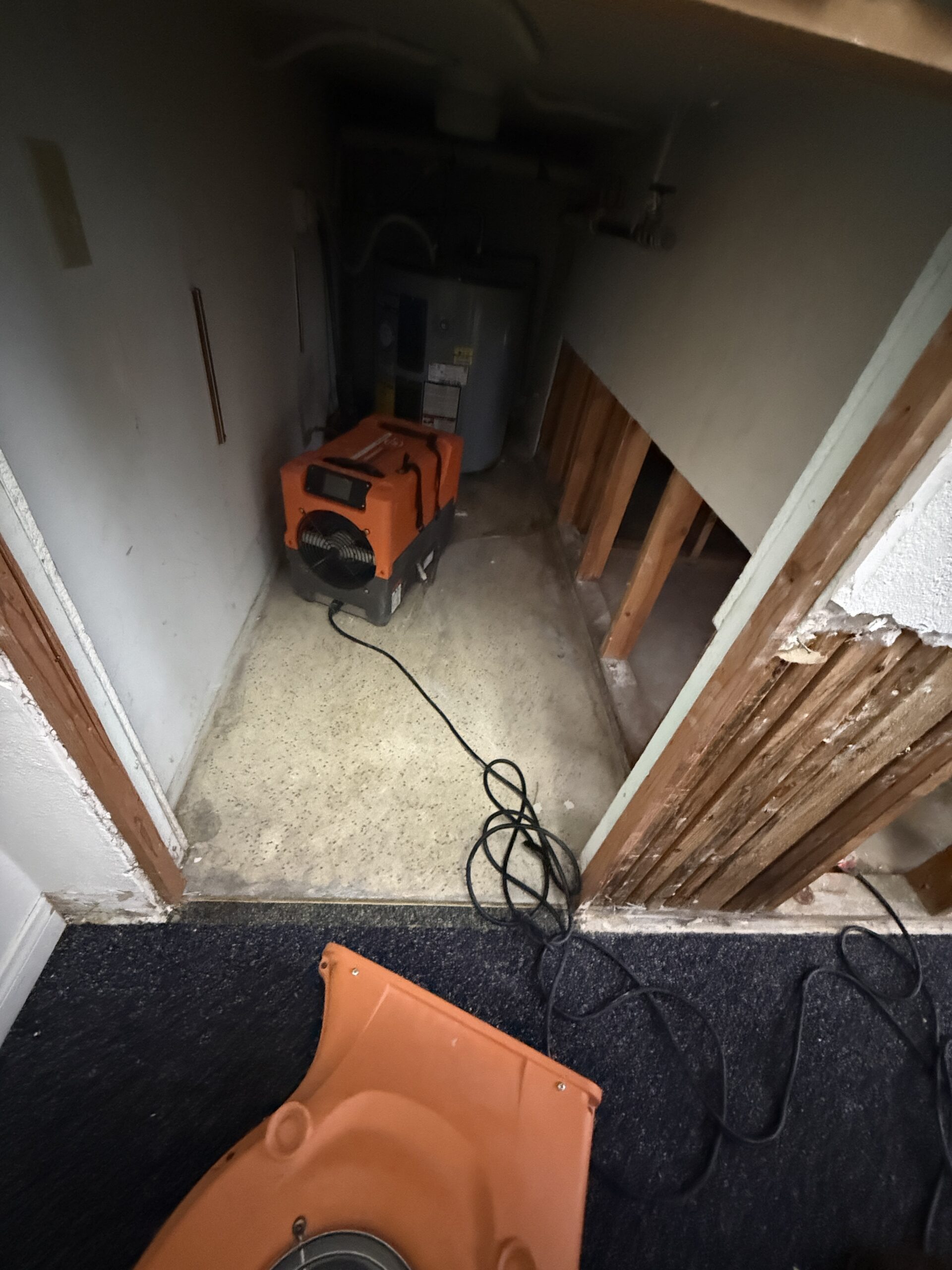
Professional drying may involve air movers and commercial dehumidifiers.
Air movers encourage moisture to evaporate from wet materials, while dehumidifiers remove moisture from the surrounding air.
Moisture readings help determine whether affected materials are actually progressing toward appropriate drying conditions.
How Long Does Water Damage Take to Dry?
There is no single drying timeline that applies to every property.
The amount of water, building materials affected, environmental conditions, extent of saturation, amount of demolition, and location of concealed moisture can all affect drying time.
For this reason, equipment should not simply be removed after a predetermined number of days.
Drying progress should be evaluated using moisture readings and environmental conditions.
What If the Inspection Finds Mold?
Moisture that remains inside building materials can create conditions that support microbial growth.
If visible or suspected mold is discovered during the inspection, additional remediation procedures may be necessary depending on the conditions.
911 Restoration of Riverside County provides both water damage restoration and mold remediation, allowing moisture-related issues to be addressed as part of the overall restoration process.
What If the Water Is From a Toilet or Sewage Backup?
Contaminated-water losses require additional consideration because restoration involves both moisture and contamination.
Category 3 water can affect porous materials such as drywall, carpet, insulation, flooring components, and cabinetry.
The inspection helps determine how far contaminated water traveled and which materials require removal, cleaning, drying, or other restoration procedures.
911 Restoration of Riverside County provides sewage cleanup and Category 3 water mitigation in addition to standard water damage restoration.
Does Homeowners Insurance Cover Water Damage?
Coverage depends on the cause of the loss and the specific homeowners insurance policy.
Certain sudden and accidental plumbing losses may be handled differently from long-term leakage, maintenance-related damage, flooding, or sewage backup losses.
911 Restoration of Riverside County can document the conditions found and restoration work performed, but the insurance carrier ultimately determines coverage under the policy.
What Happens If Reconstruction Is Needed?
If drywall, flooring, insulation, cabinetry, ceilings, baseboards, or other building materials need to be removed during mitigation, the home may require reconstruction afterward.
911 Restoration of Riverside County provides both mitigation and reconstruction services.
Depending on the project, reconstruction can include drywall, insulation, flooring, cabinetry, trim, texture, paint, and other interior repairs necessary to restore the affected areas.
This allows a project to move from initial inspection through drying and into rebuilding without automatically requiring the homeowner to begin again with an unrelated restoration contractor.
Water Damage Inspections Throughout Our Service Area
911 Restoration of Riverside County provides water damage inspection and restoration services throughout Riverside County and surrounding communities in our service territory.
Our team regularly handles property damage involving plumbing leaks, burst pipes, washing machine overflows, appliance failures, toilet overflows, water heater leaks, sewage losses, and other residential water emergencies.
Our process can include moisture inspection, infrared screening, water extraction, controlled material removal, structural drying, contamination cleanup, monitoring, documentation, and reconstruction.
If you discover water damage in your home, 911 Restoration of Riverside County can evaluate how far the moisture traveled and determine the appropriate restoration approach based on the actual conditions found.
Frequently Asked Questions
What happens during a water damage inspection?
A water damage inspection typically includes identifying the source of the loss, evaluating affected rooms and materials, checking for hidden moisture, taking moisture readings, documenting damage, and determining what needs to be dried, cleaned, removed, or reconstructed.
How do professionals detect hidden water damage?
Professionals can use moisture meters, infrared screening, visual observations, and physical inspection to identify areas requiring further moisture evaluation.
Can an infrared camera detect water damage?
An infrared camera identifies temperature differences that may indicate areas requiring investigation. It does not directly see water through building materials, so suspected areas should be verified with moisture readings.
Does 911 Restoration of Riverside County perform moisture inspections?
Yes. 911 Restoration of Riverside County performs moisture inspections as part of water damage restoration projects and can use moisture readings, infrared screening, documentation, and physical inspection to evaluate affected building materials.
Can 911 Restoration handle the reconstruction after water damage?
Yes. 911 Restoration of Riverside County provides both mitigation and reconstruction services, allowing water-damaged properties to move from inspection and structural drying into repair and rebuilding when necessary.
This article provides general property-restoration information. The correct scope for a specific loss depends on the source of damage, water category or contamination conditions, affected materials, building assembly, duration of exposure, moisture readings, and other site conditions.