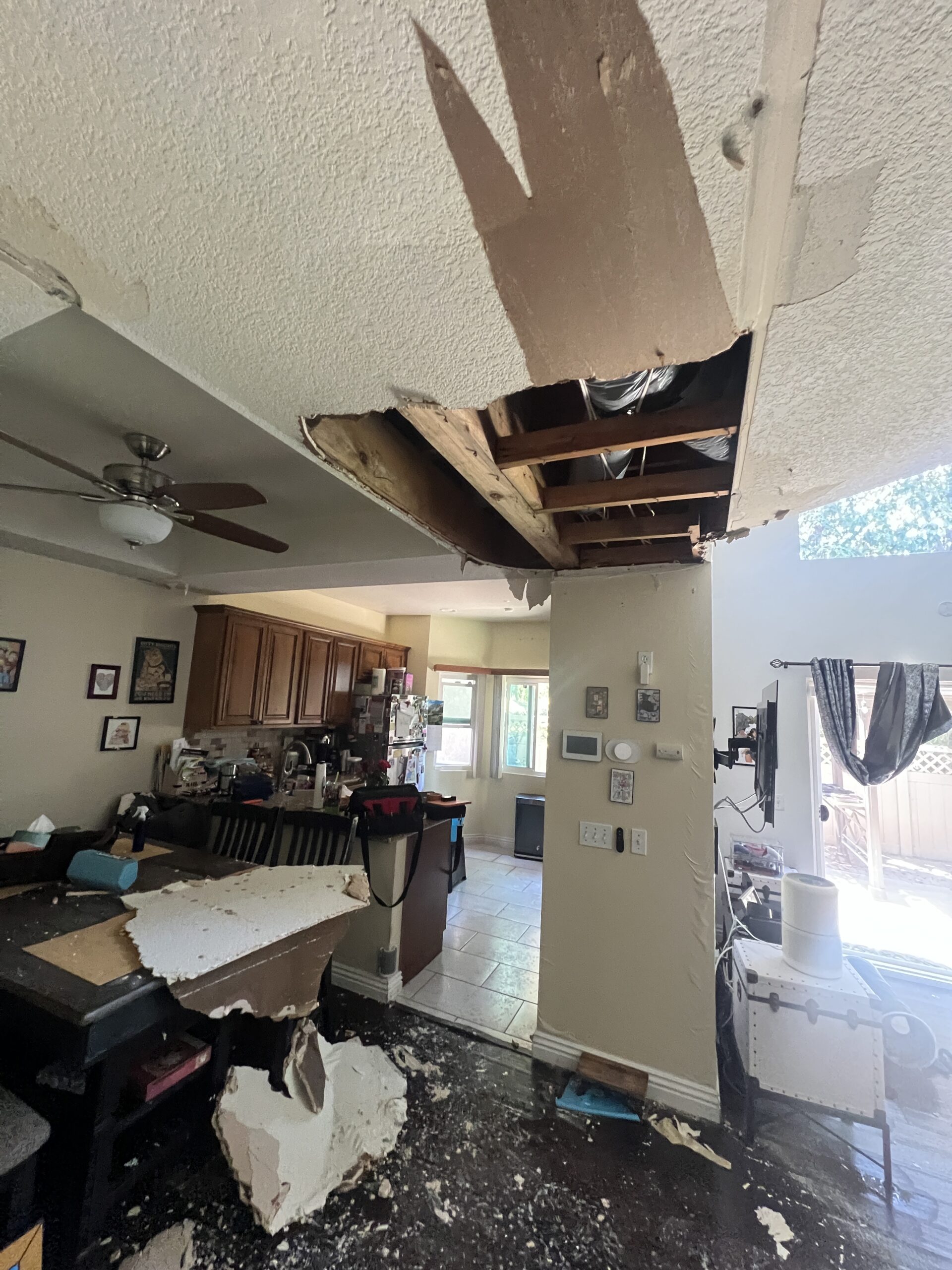
Water damage is not always easy to see. A plumbing leak can release water inside a wall cavity long before moisture becomes visible on the surface. By the time you notice discoloration, bubbling paint, damaged baseboards, or a musty odor, water may have already spread into drywall, insulation, flooring, or other building materials.
Knowing the warning signs of hidden water damage can help homeowners identify a problem before it becomes more extensive.
What Are the Signs of Water Damage Behind a Wall?
Some of the most common warning signs include:
- Discoloration or water stains on drywall
- Paint that is bubbling, peeling, or flaking
- Drywall that feels soft or swollen
- Warped or separating baseboards
- Unexplained musty odors
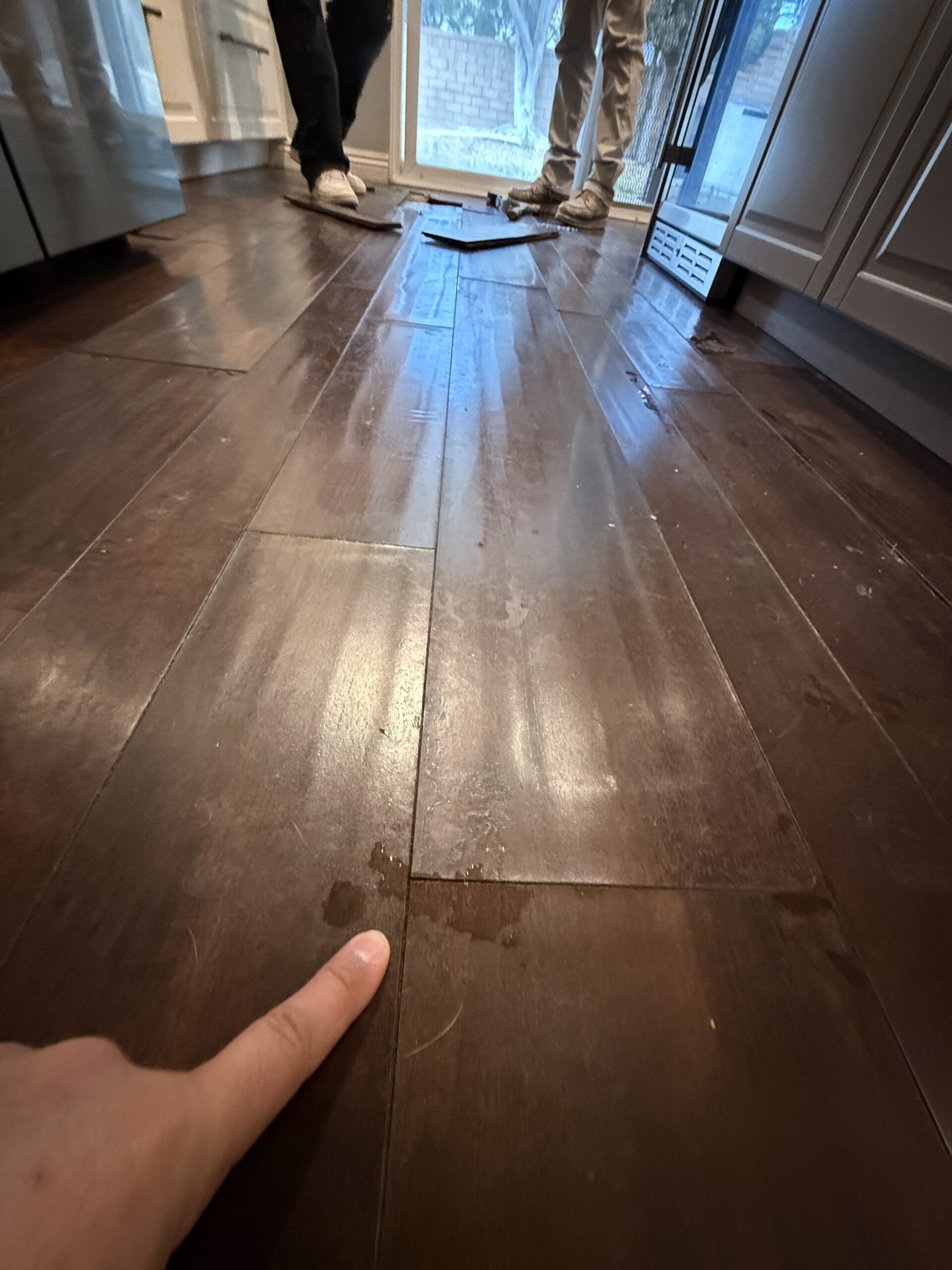
- Flooring that begins lifting, buckling, or separating near a wall
- Visible microbial growth
- The sound of dripping or running water when fixtures are turned off
- An unexplained increase in water usage
Not every one of these symptoms confirms an active leak, but they are good reasons to investigate the area further.
Can Drywall Look Dry Even When It Is Wet?
Yes. The surface of drywall can sometimes appear normal even though moisture is present inside the material or wall cavity.
Water can also travel away from the original leak. For example, water entering a wall from plumbing above may move downward along framing or other materials before becoming visible somewhere else.
This is why the first visible water stain is not necessarily where the leak started.
How Do Restoration Professionals Check for Hidden Moisture?
A professional water-damage inspection may involve several tools and methods to help determine where moisture has traveled.
Moisture Meters
Moisture meters can be used to compare affected building materials with known dry areas. Depending on the meter and material being evaluated, readings can help identify areas where elevated moisture may still be present.
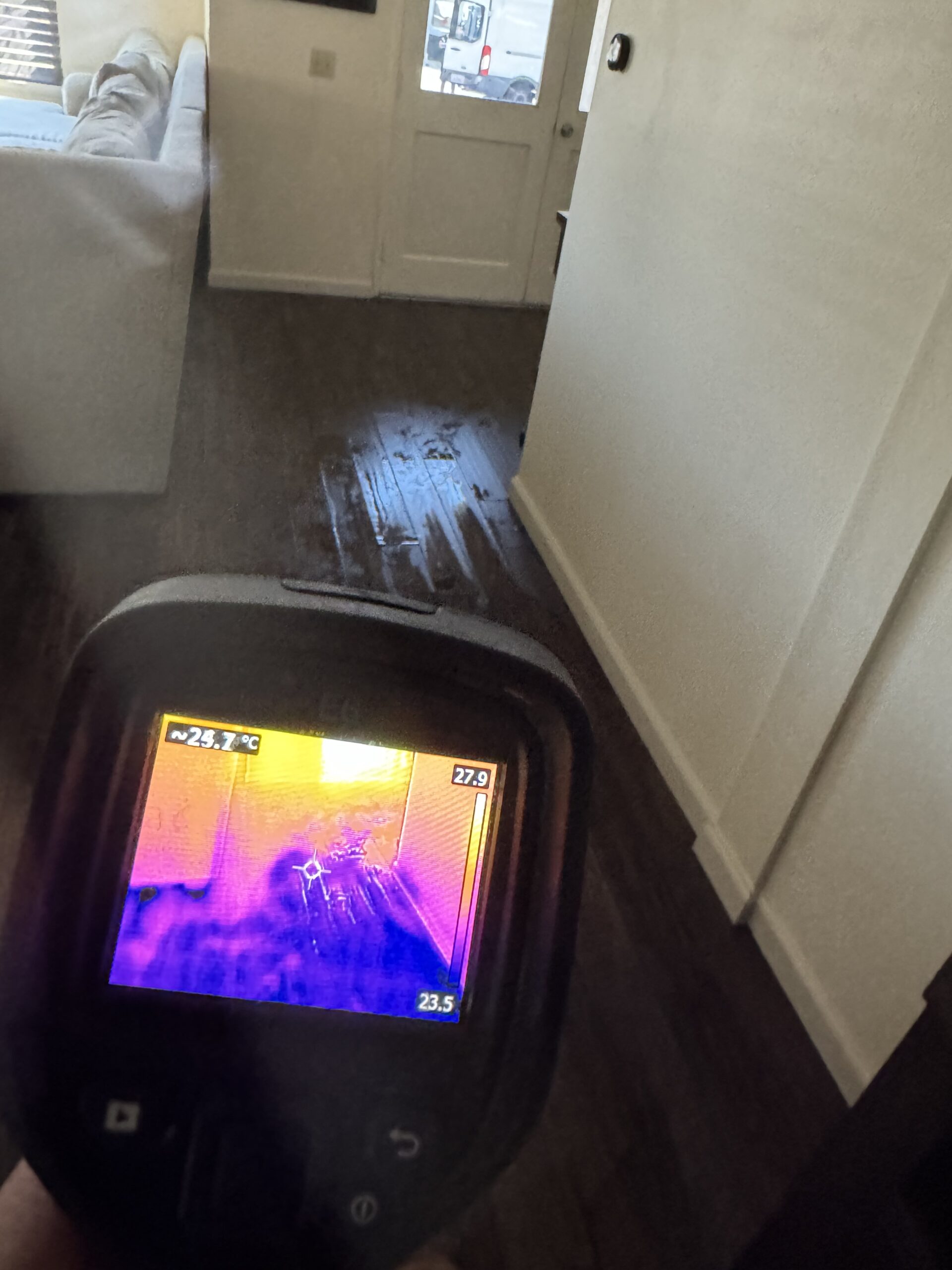
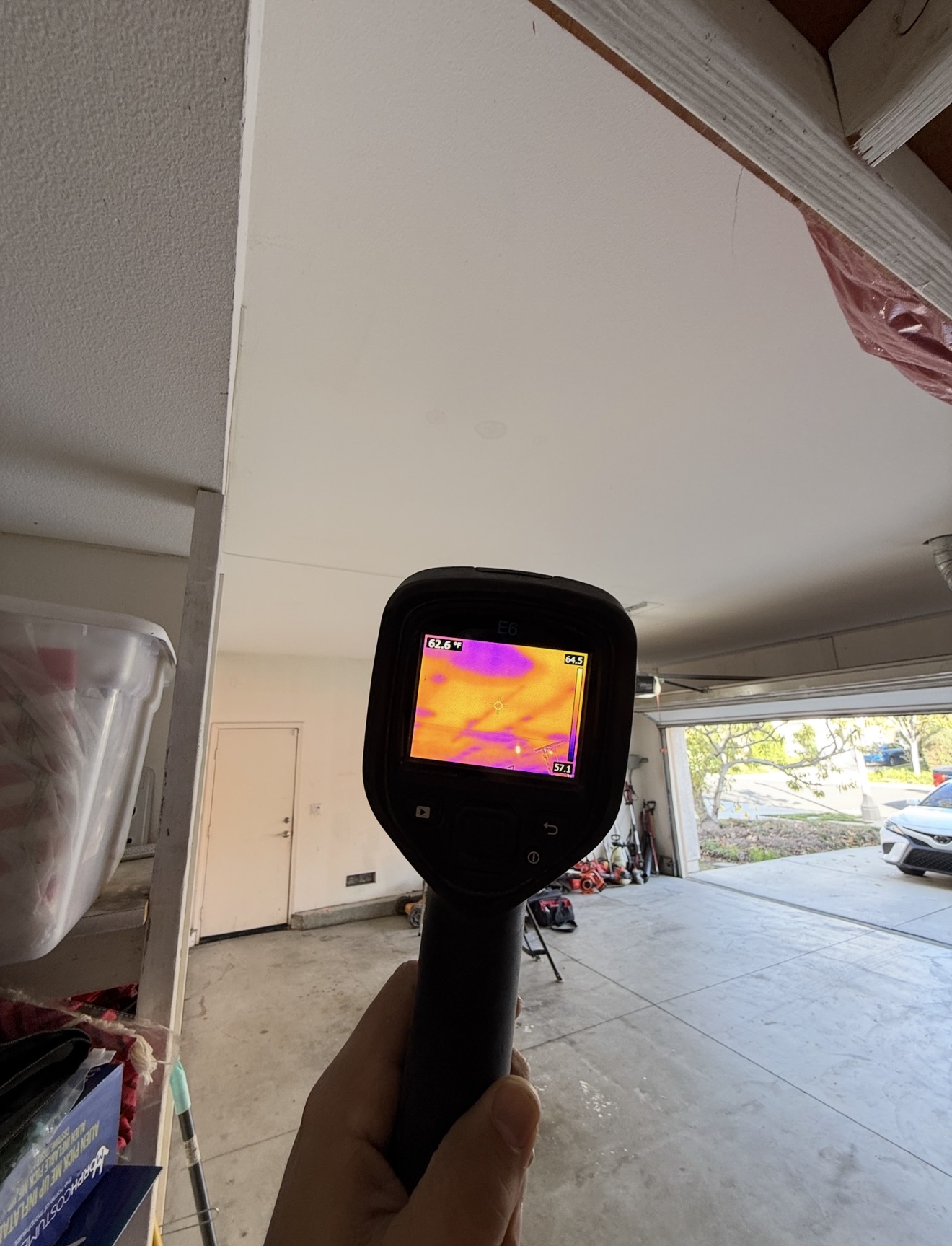
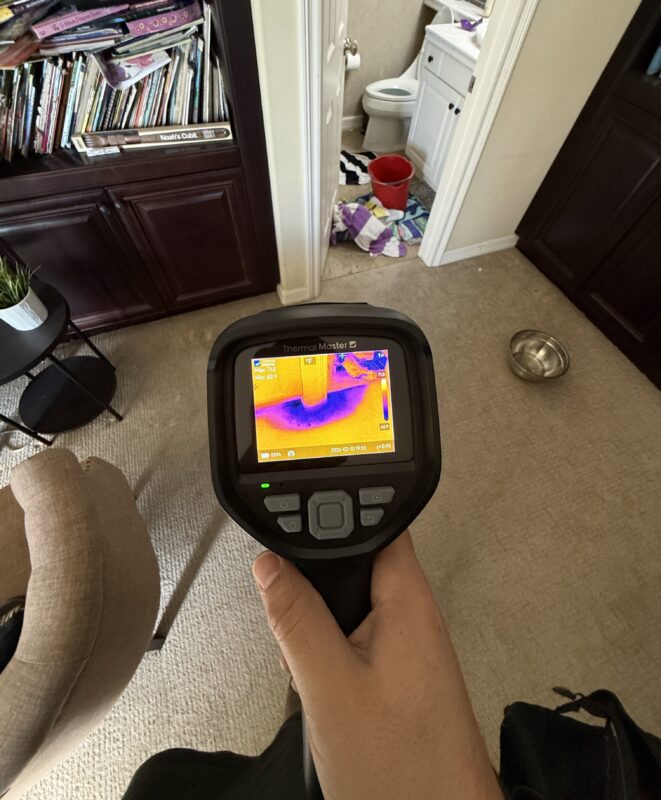
Infrared Cameras
Infrared cameras can help identify temperature differences across walls, ceilings, and floors. These temperature patterns may help locate areas that require additional investigation.
An infrared image by itself does not prove that water is present. Restoration professionals can use infrared imaging together with moisture readings and a physical inspection to better evaluate the affected area.
Physical Inspection
Changes in drywall, baseboards, flooring, paint, and other finishes can provide additional clues about where water has traveled.
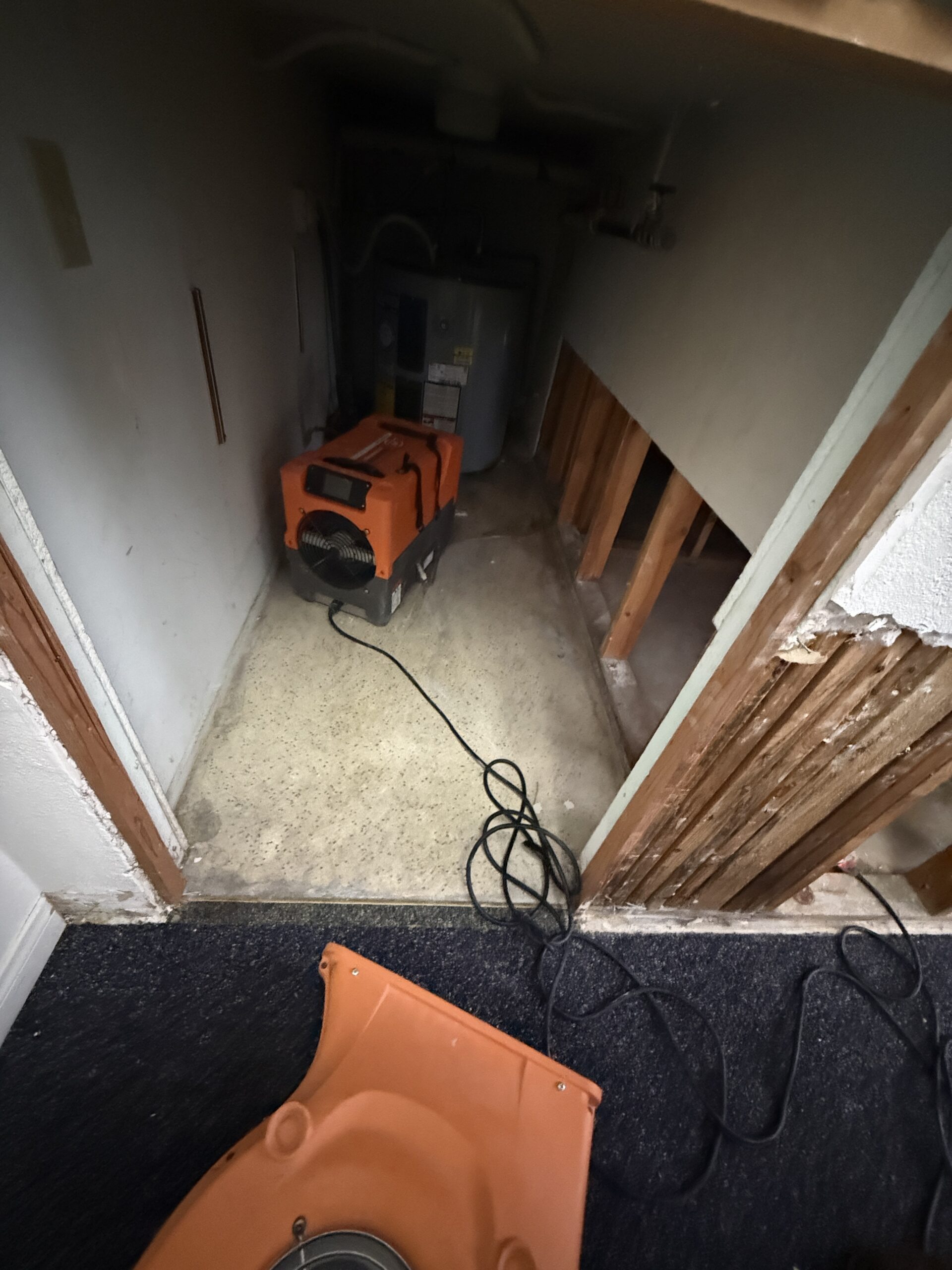
In some situations, limited access may be necessary to evaluate the wall cavity or properly dry affected materials.
Where Does Hidden Water Damage Commonly Occur?
Hidden moisture can occur anywhere plumbing or water-producing appliances are present, but some areas are more susceptible than others.
- Behind bathroom walls and showers
- Under kitchen and bathroom sinks
- Behind refrigerators and dishwashers
- Around washing machines
- Near water heaters
- Inside walls containing plumbing supply or drain lines
- Below upstairs bathrooms
- Around windows, exterior walls, and roof penetrations
Can Water Behind a Wall Cause Mold?
Moisture trapped inside a wall can create conditions that support microbial growth, particularly when wet materials remain damp for an extended period.
Drywall paper, wood framing, dust, and other materials inside wall cavities can provide surfaces where growth may develop when sufficient moisture is present.
If visible or suspected microbial growth is discovered, additional evaluation or remediation may be necessary depending on the conditions.
Does Wet Drywall Always Have to Be Removed?
No. Finding elevated moisture does not automatically mean the entire wall needs to be demolished.
Whether drywall can be dried or should be removed depends on factors such as the source of the water, how saturated the material became, how long it remained wet, its condition, and whether the wall cavity needs to be accessed.
A professional inspection can help determine the appropriate approach before unnecessary demolition is performed.
What Should You Do If You Suspect Water Inside a Wall?
If you believe there may be water behind a wall, try to identify and stop the source of the water if it is safe to do so.
Avoid simply painting over a water stain or replacing damaged baseboard without determining why the damage occurred. If moisture is still present, repairing the cosmetic damage will not address the underlying problem.
Have the affected area inspected so the source and extent of the moisture can be determined.
Hidden Water Damage Inspections in Riverside County
911 Restoration of Riverside County provides water damage inspections and restoration services for plumbing leaks, burst pipes, appliance leaks, water heater failures, overflowing fixtures, and other water losses.
Our technicians can use moisture meters, infrared imaging, and physical inspection methods to help determine where water has traveled and which building materials have been affected.
If you suspect water is hiding behind your walls, call 911 Restoration of Riverside County to have the affected area inspected.
Frequently Asked Questions
Can you detect water behind drywall without opening the wall?
Moisture meters, infrared imaging, and physical observations can help identify areas of concern without immediately opening the wall. In some situations, however, access may ultimately be necessary to fully evaluate or dry the wall cavity.
What does water-damaged drywall look like?
Possible signs include staining, discoloration, bubbling paint, swelling, softness, cracking, or changes around baseboards. However, drywall can sometimes contain elevated moisture before obvious visual damage appears.
Can water travel inside a wall?
Yes. Water can move along framing, drywall, insulation, plumbing penetrations, and other materials, which means visible damage may appear some distance from the original source.
Can an infrared camera see water through a wall?
An infrared camera does not literally see water through drywall. It detects surface temperature differences that can help identify areas requiring further investigation. Moisture readings should be used to help confirm the findings.
Should I open my wall if I think there is a leak?
Not necessarily. The source and extent of the problem should first be evaluated when possible. Unnecessary demolition can sometimes be avoided by determining where moisture is actually present before materials are removed.
This article provides general property-restoration information. The correct scope for a specific loss depends on the source of damage, water category or contamination conditions, affected materials, building assembly, duration of exposure, moisture readings, and other site conditions.