When water enters a home from a plumbing leak, burst pipe, appliance failure, overflowing fixture, or another unexpected source, the damage is not always limited to what you can see. Water can travel underneath flooring, into drywall, behind cabinets, and through adjoining rooms.
Water damage restoration is the process of identifying the affected areas, removing excess water when necessary, drying the structure, removing materials that cannot be appropriately restored, and preparing the property for repairs.
Although every water loss is different, here is what homeowners can generally expect during the water damage restoration process.
Step 1: Identify and Stop the Source of the Water
Before effective drying can begin, the source of the water needs to be stopped or controlled.
This might involve shutting off the home’s water supply, repairing a broken plumbing line, addressing an overflowing fixture, or having a plumber repair the source of the leak.
If water is still actively entering the property, additional damage can continue to occur even after cleanup has started.
Step 2: Inspect the Affected Areas
The next step is determining how far the water traveled.
A restoration technician will visually inspect the property and may use moisture-detection equipment to evaluate building materials in and around the affected area.
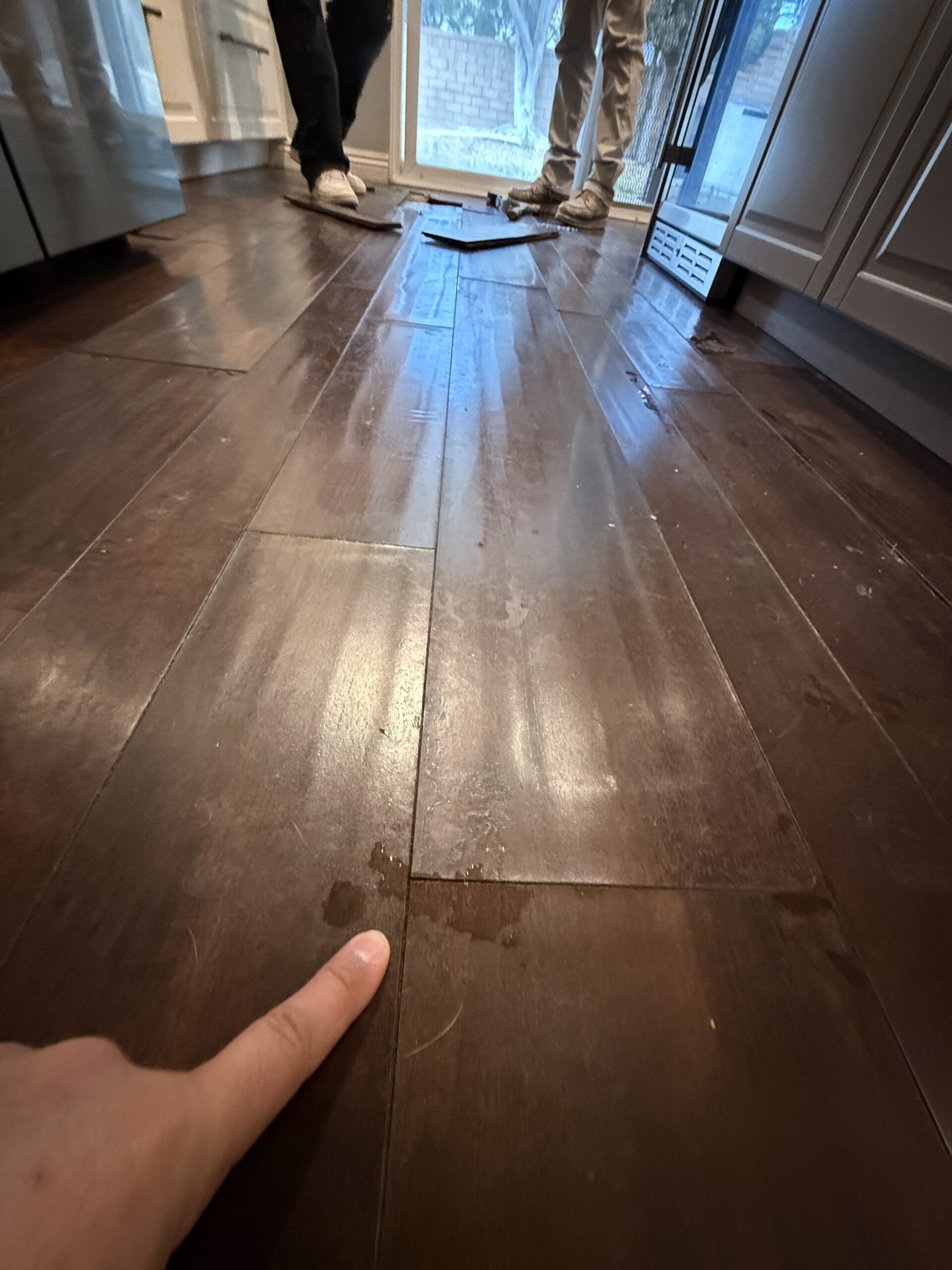
Water does not always remain directly underneath the source. It can migrate through drywall, flooring, insulation, cabinetry, wall cavities, and other porous materials.
Moisture Meters
Moisture meters can help identify materials with elevated moisture levels and compare them with unaffected areas of the property.
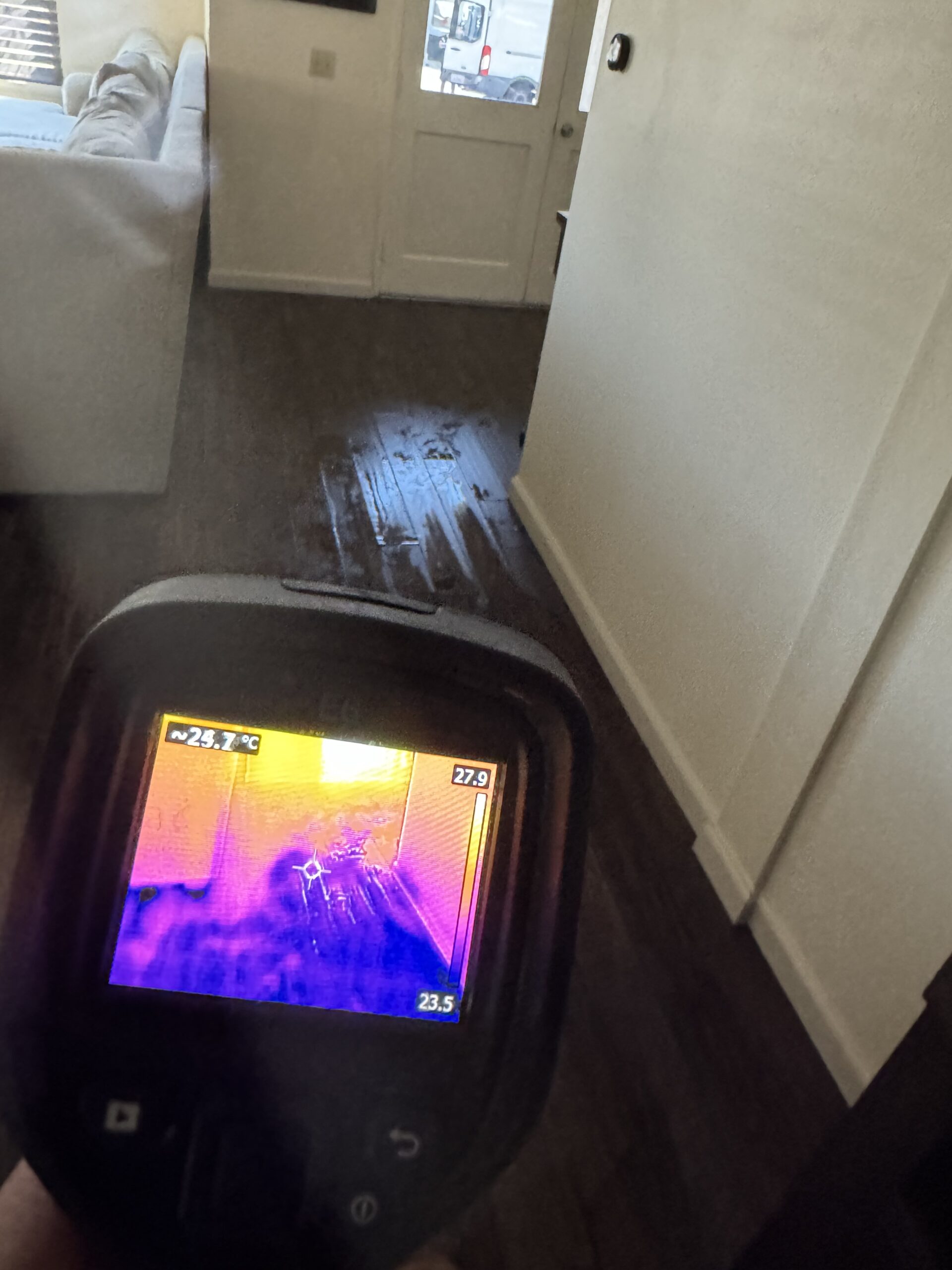
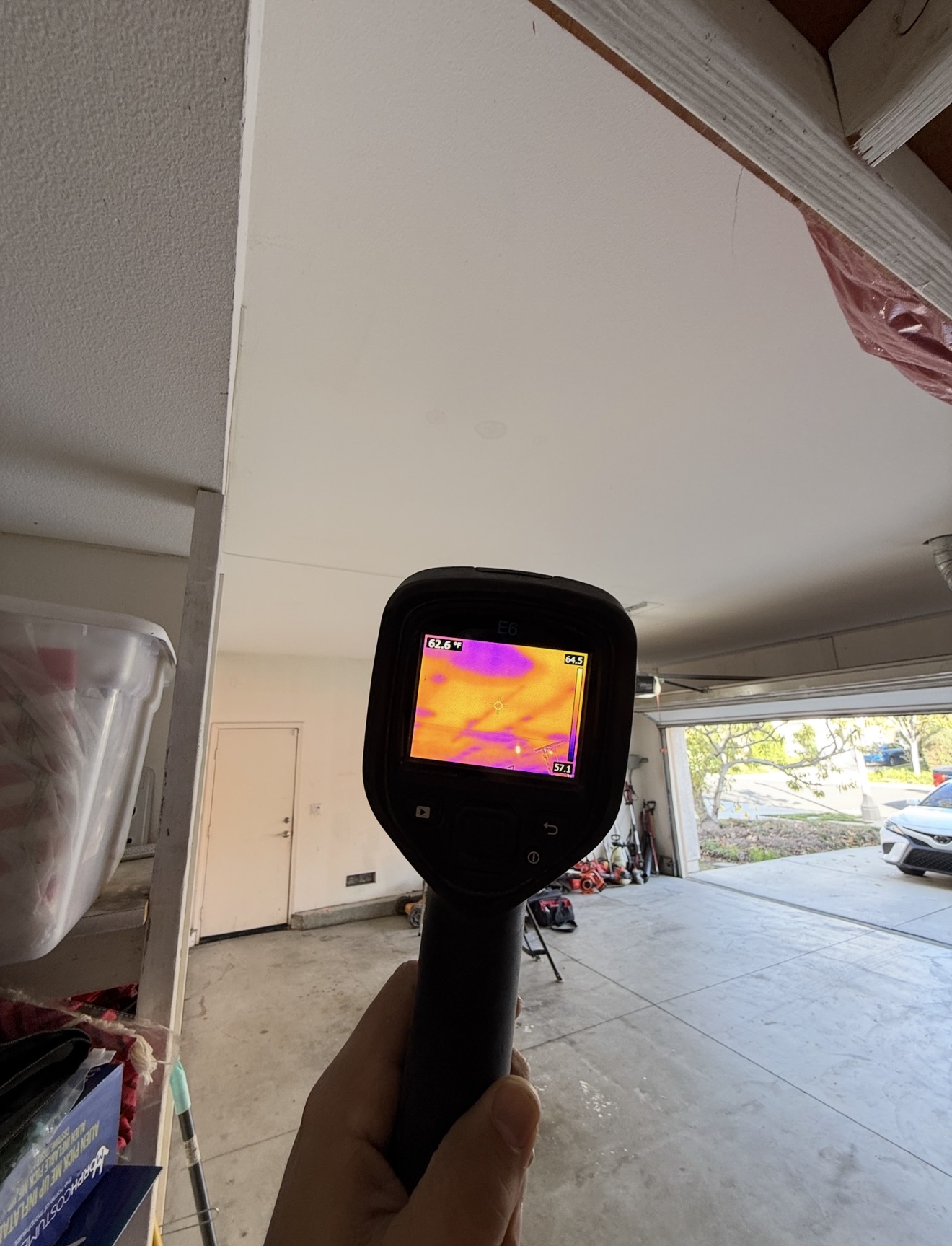
Infrared Imaging
Infrared cameras can help identify temperature differences across building surfaces that may indicate areas requiring further investigation. Moisture readings and physical inspection can then be used to help confirm conditions.
Step 3: Document the Water Damage
Documentation is an important part of the restoration process, particularly when an insurance claim may be involved.
Depending on the loss, documentation may include photographs, moisture readings, measurements of affected areas, equipment records, drying documentation, and an estimate describing the work performed or recommended.
Homeowners should also photograph the property shortly after discovering the damage when it is safe to do so.
Step 4: Extract Standing Water
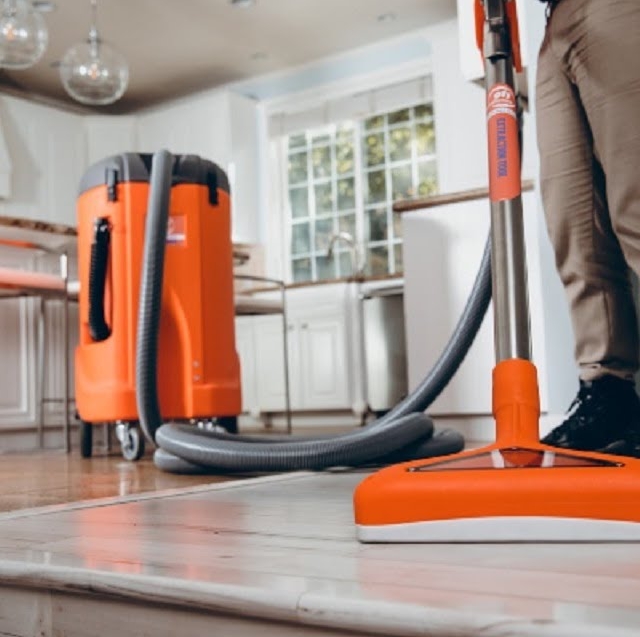
If standing water is present, water extraction may be performed before structural drying begins.
Removing excess water can help reduce the amount of moisture that continues to absorb into flooring, drywall, cabinetry, and other building materials.
The amount and type of extraction needed depends on the conditions found at the property.
Step 5: Determine What Can Be Dried
Not every material that becomes wet automatically needs to be removed.
Restoration professionals evaluate factors such as the source of the water, the type of material, the amount of saturation, how long the material has remained wet, and whether the material can be effectively dried.
Some materials may be dried in place, while others may require removal.
Step 6: Remove Affected Materials When Necessary
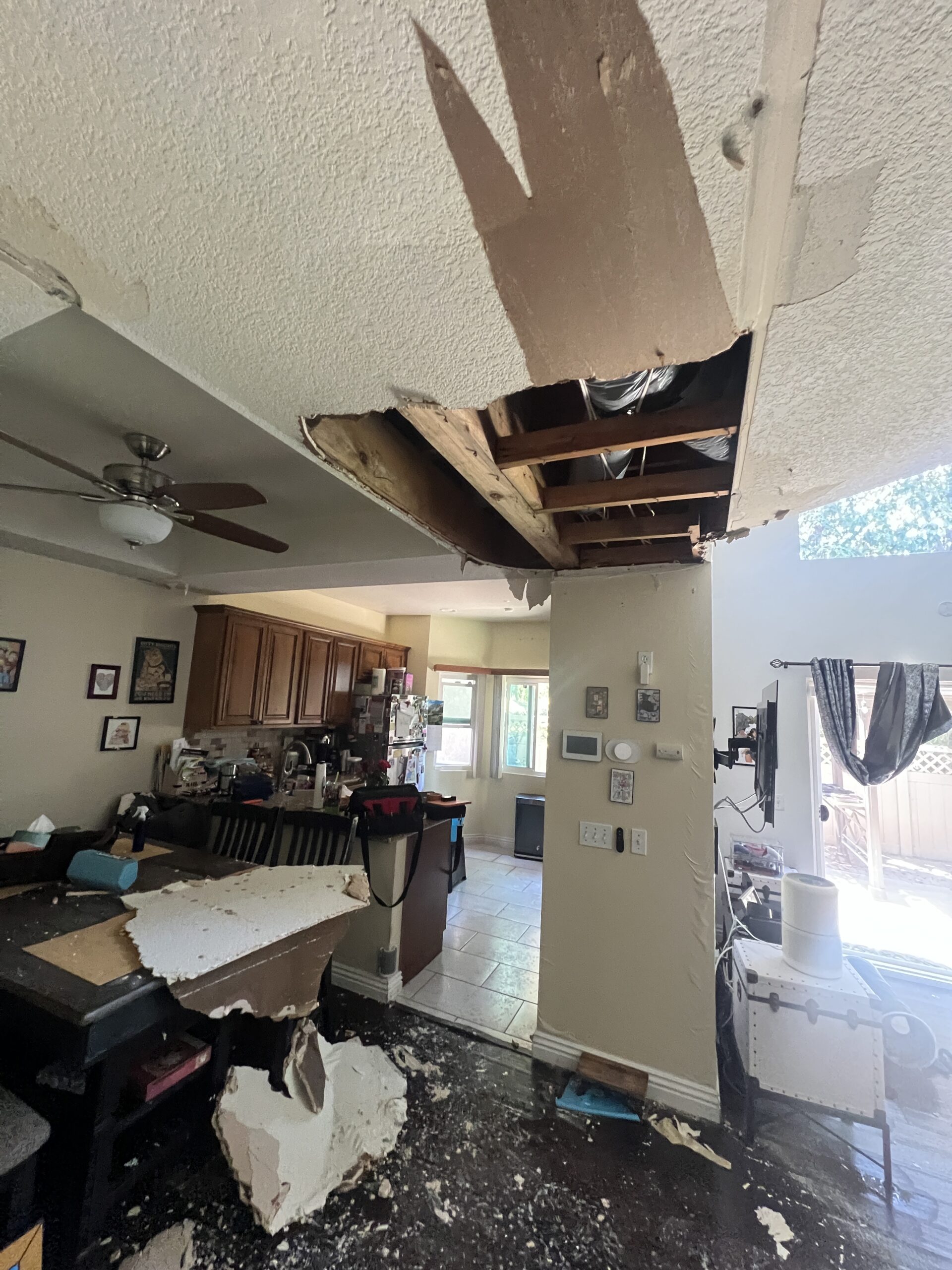
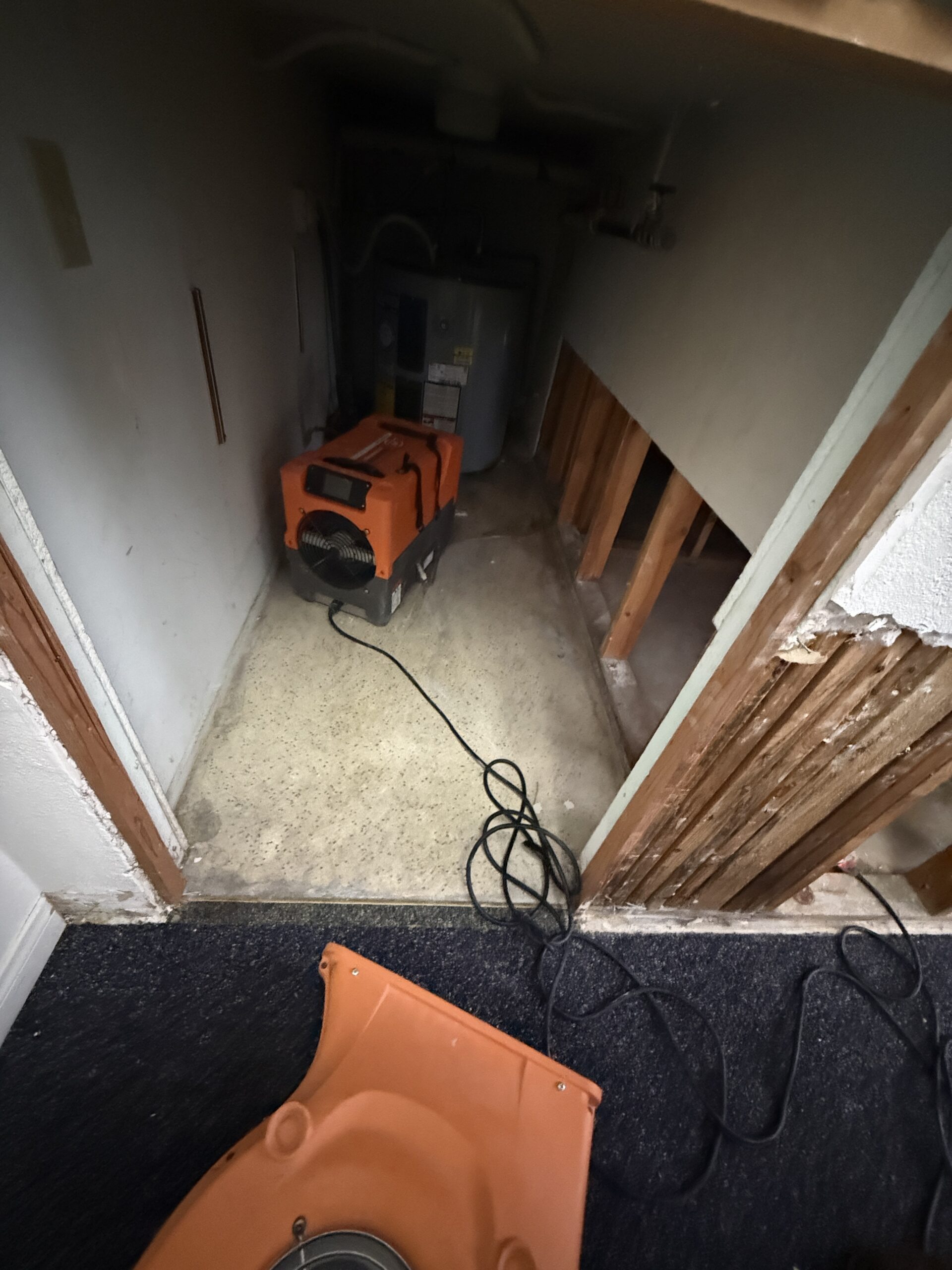
When building materials cannot be appropriately restored or when removal is necessary to access wet areas, controlled demolition may be performed.
This could include removing affected drywall, insulation, baseboards, flooring, carpet padding, or other materials depending on the circumstances.
The goal should be to remove what is necessary based on the conditions found rather than automatically demolishing unaffected portions of the property.
Step 7: Set Up Professional Drying Equipment
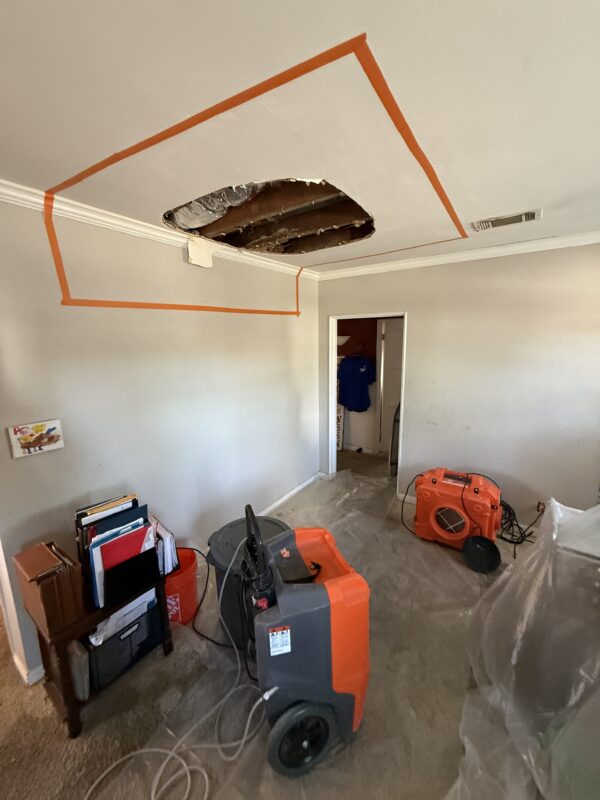
Once standing water has been removed and necessary material removal is complete, professional drying equipment may be installed.
Air Movers
Air movers create airflow across wet building materials, helping moisture evaporate from surfaces.
Dehumidifiers
Commercial dehumidifiers remove moisture from the air and help control humidity during the structural drying process.
The amount and placement of equipment depends on the size of the affected area, the materials involved, environmental conditions, and other characteristics of the loss.
Step 8: Monitor the Drying Process
Drying equipment should not simply be installed and removed after a predetermined number of days.
During monitoring visits, technicians may take moisture readings and evaluate temperature and relative humidity to determine how drying is progressing.
These measurements help determine when affected materials have reached appropriate drying conditions.
Step 9: Cleaning and Treatment When Appropriate
Depending on the source and conditions of the water loss, affected areas may require additional cleaning or treatment.
The appropriate procedures depend on the type of water involved and the materials affected. Not every water loss requires the same cleaning or treatment process.
Step 10: Reconstruction and Repairs
After the structure has been appropriately dried, repairs can begin.
Depending on what was removed during mitigation, reconstruction may include replacing drywall, insulation, baseboards, flooring, cabinetry, texture, and paint.
The extent of reconstruction depends on the damage caused by the original water loss and the materials that required removal during mitigation.
How Long Does Water Damage Restoration Take?
There is no single drying timeline that applies to every property.
The amount of water, materials affected, environmental conditions, how quickly mitigation began, and the extent of the damage can all affect the restoration timeline.
Moisture readings and drying conditions should be used to evaluate progress rather than assuming every property will dry within the same number of days.
What About Homeowners Insurance?
Some sudden and accidental water losses may be covered by homeowners insurance depending on the cause of the damage and the terms of the individual policy.
A restoration company can document the conditions and work performed, but the insurance carrier ultimately determines whether a loss is covered.
If an insurance claim is involved, homeowners should speak directly with their carrier or adjuster regarding coverage, deductibles, limits, and exclusions.
Water Damage Restoration in Riverside County
911 Restoration of Riverside County provides water damage restoration for plumbing leaks, burst pipes, water heater failures, appliance leaks, overflowing fixtures, and other unexpected water losses.
Our team can inspect the affected areas, document moisture conditions, perform water extraction when necessary, remove affected materials, set up professional drying equipment, and monitor the property throughout the drying process.
If you have water damage in your home or business, call 911 Restoration of Riverside County for immediate assistance.
Frequently Asked Questions
What does a water damage restoration company do?
A water damage restoration company evaluates affected areas, removes standing water when necessary, determines which materials can be dried, removes materials when appropriate, installs drying equipment, and monitors moisture conditions throughout the drying process.
Does all wet drywall have to be removed?
No. Whether drywall requires removal depends on factors including the source of the water, saturation level, condition of the material, length of exposure, and whether the wall cavity needs to be accessed.
How do you know when a house is dry?
Restoration professionals can use moisture readings along with environmental measurements to evaluate drying progress. A surface simply looking or feeling dry does not necessarily mean moisture is no longer present inside the material.
Can you stay in your home during water damage restoration?
It depends on the severity and location of the damage, the source of the water, electrical or structural concerns, and the amount of restoration work being performed. Conditions should be evaluated individually.
What happens after the drying equipment is removed?
Once appropriate drying conditions have been reached, drying equipment can be removed. If building materials were removed during mitigation, reconstruction can then restore those areas of the property.
This article provides general property-restoration information. The correct scope for a specific loss depends on the source of damage, water category or contamination conditions, affected materials, building assembly, duration of exposure, moisture readings, and other site conditions.