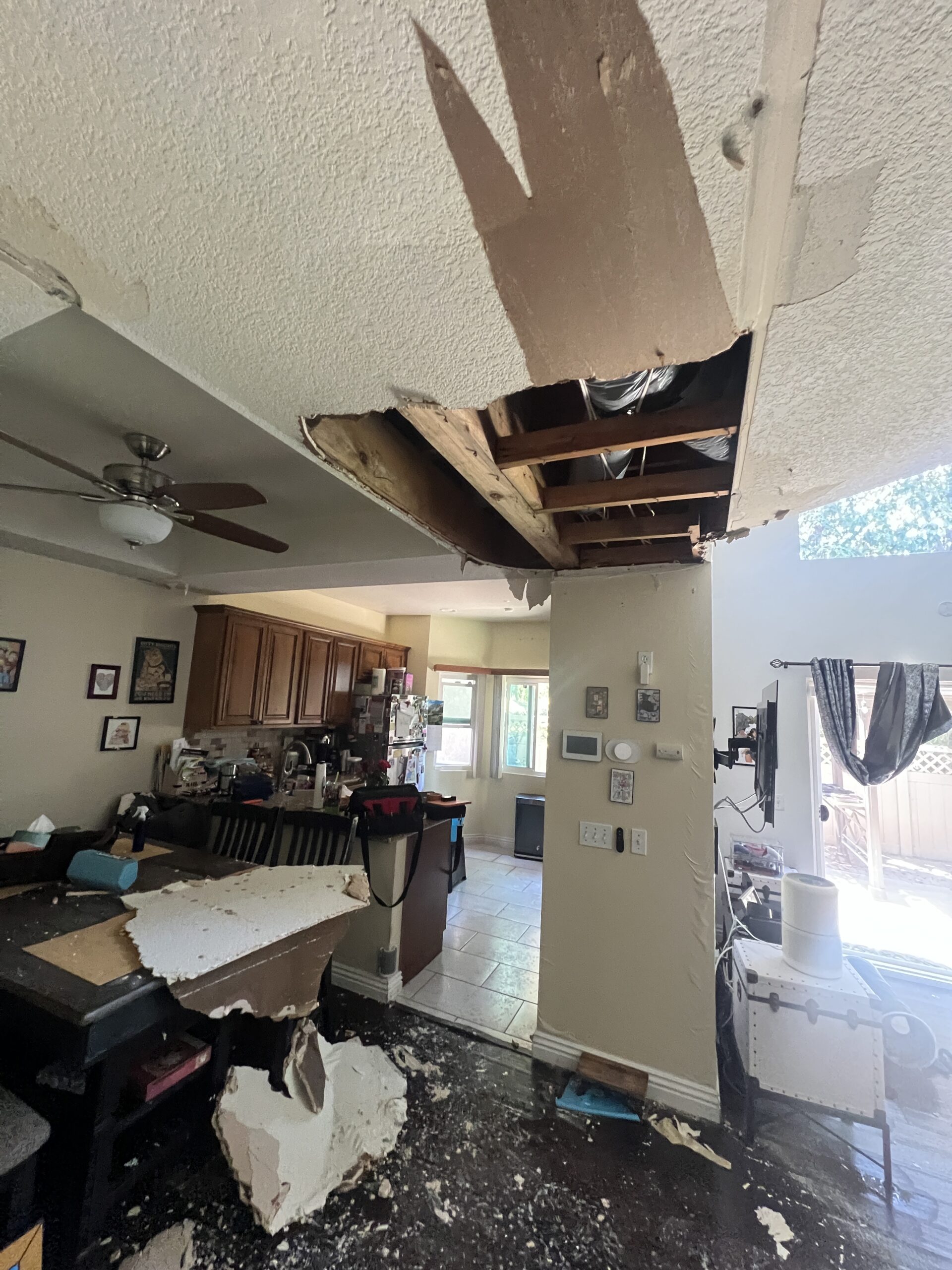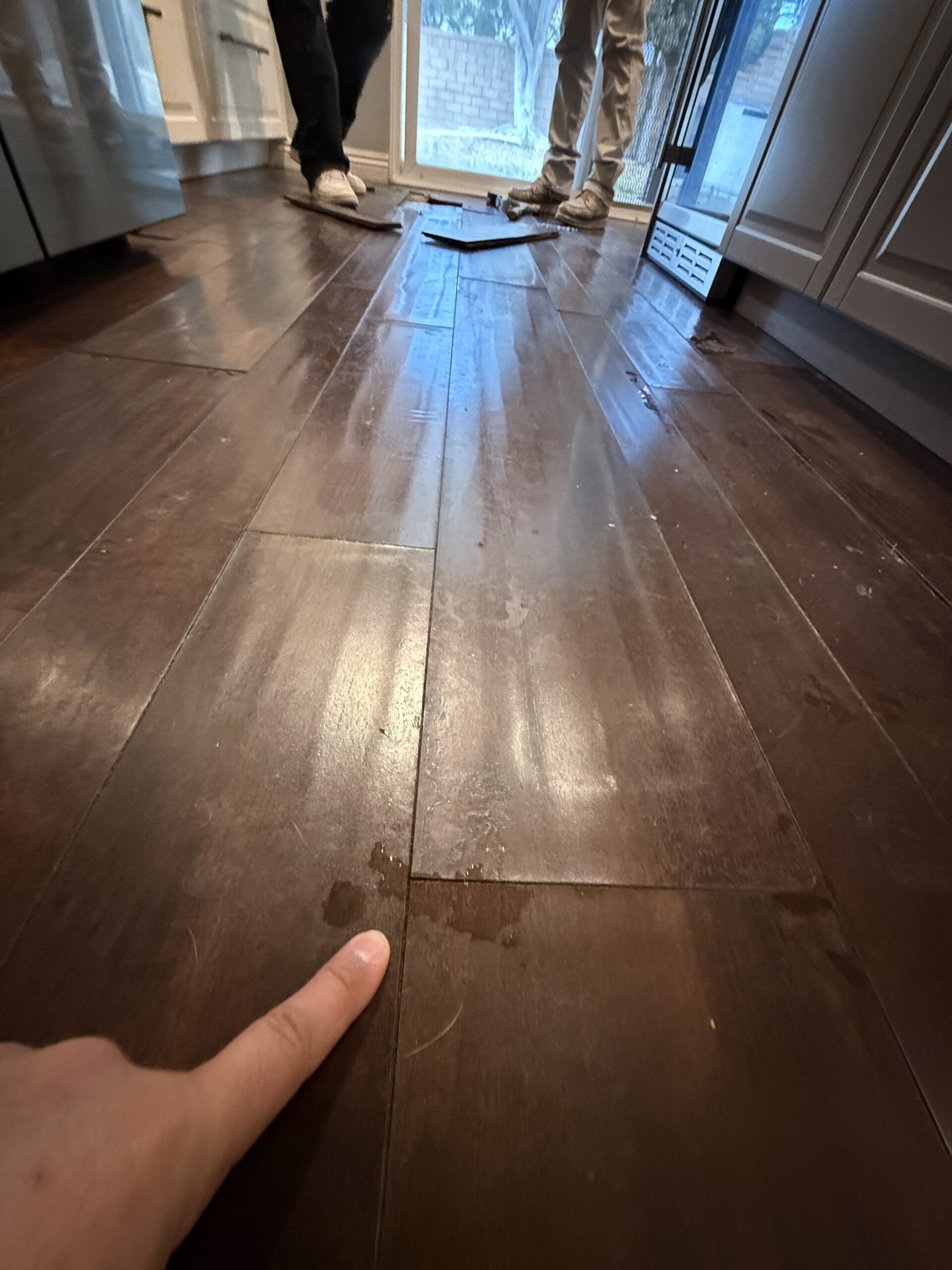
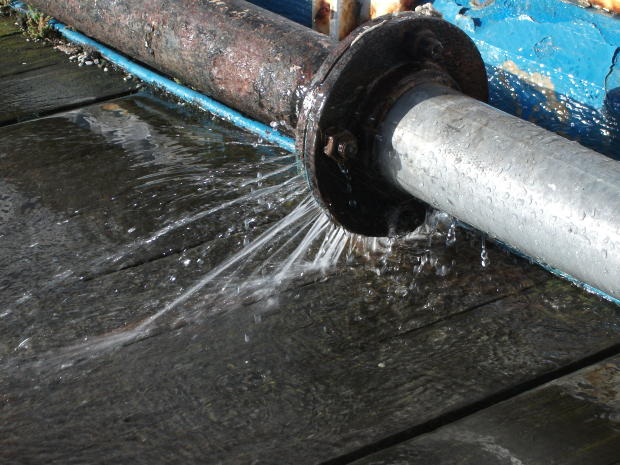
A burst pipe can release a significant amount of water into a home in a short period of time. Water may spread underneath flooring, into drywall, behind cabinets, and into adjoining rooms before the full extent of the damage is visible.
If a pipe bursts in your home, the first priority is stopping the water and protecting the property from additional damage. Here’s what homeowners should do after discovering a burst or broken water line.
1. Shut Off the Water
If water is actively coming from a broken pipe, shut off the home’s main water supply as quickly as it is safe to do so.
Homeowners should know where their main water shutoff is located before an emergency occurs. Depending on the property, it may be located near the water meter, garage, exterior wall, or another utility area.
Once the water has been shut off, open a faucet to help relieve remaining pressure in the plumbing system.
2. Be Careful Around Electricity
Water and electricity can create a serious safety hazard. If water has reached electrical outlets, fixtures, appliances, or an electrical panel, avoid entering the affected area until it can be evaluated safely.
Do not handle electrical equipment while standing in water.
3. Document the Water Damage
Before cleanup or damaged-material removal begins, take photographs and videos of the affected areas when it is safe to do so.
Try to document the apparent source of the water as well as affected flooring, walls, ceilings, cabinets, furniture, and personal belongings.
If an insurance claim is filed, this initial documentation can help show the condition of the property shortly after the loss occurred.
4. Contact a Plumber to Repair the Broken Pipe
The source of the water needs to be repaired before the structure can be effectively dried.
A licensed plumber can identify and repair the failed plumbing component. Depending on where the pipe is located, access may need to be created through drywall, cabinetry, ceilings, or other building materials.
5. Have the Water Damage Professionally Inspected
One of the biggest mistakes after a plumbing leak is assuming that everything is dry because the visible water has been cleaned up.
Water can migrate underneath flooring, into wall cavities, behind baseboards, and through porous building materials.
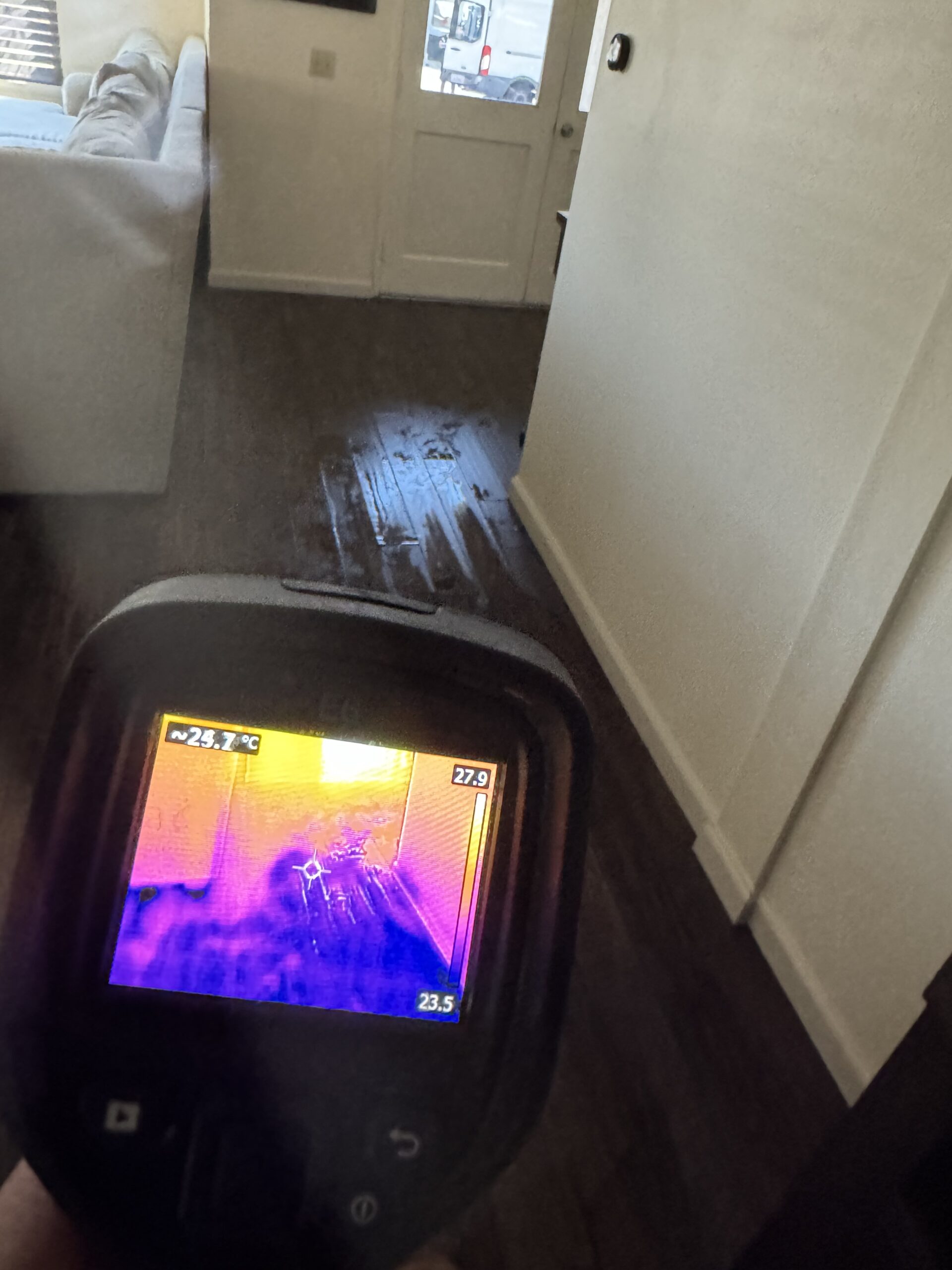
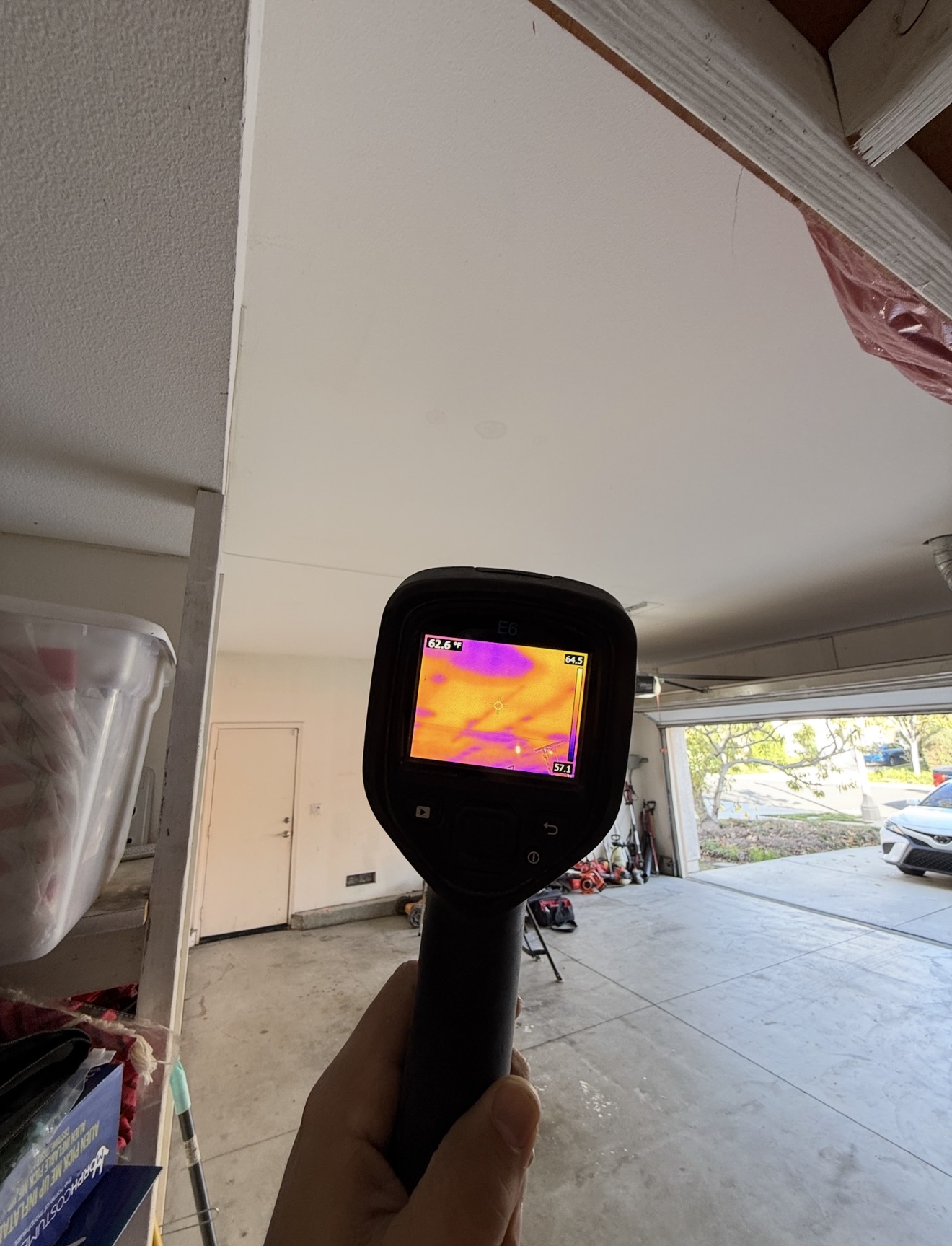
During a professional water-damage inspection, restoration technicians may use moisture meters and infrared imaging to help locate affected areas that may not be obvious from a visual inspection alone.
6. Remove Standing Water
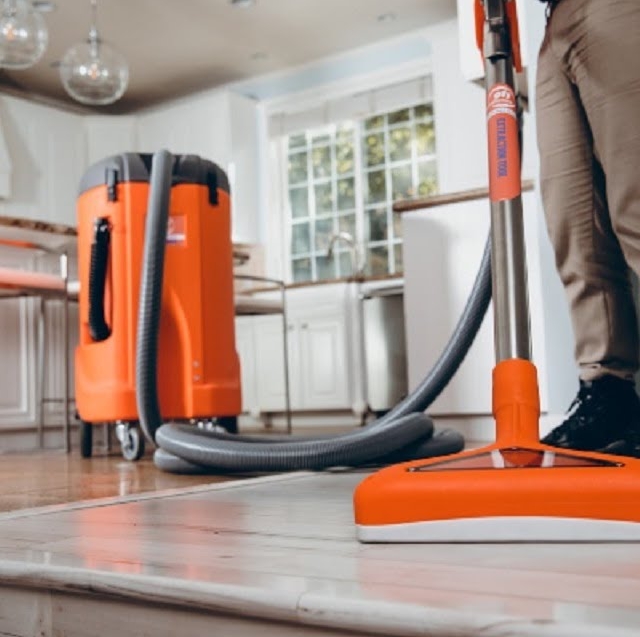
If a substantial amount of water has entered the property, extraction may be necessary before structural drying can begin.
Removing standing water quickly can help limit how far moisture spreads through the structure and reduce the amount of time building materials remain wet.
7. Determine What Can Be Dried and What Needs to Be Removed
A burst pipe does not automatically mean every wet material needs to be torn out.
Whether a material can be dried depends on several factors, including the type of material, how wet it became, how long it remained wet, and the source of the water.
Some structural materials may be dried in place, while others may require removal to properly access and dry affected areas.
8. Begin Structural Drying
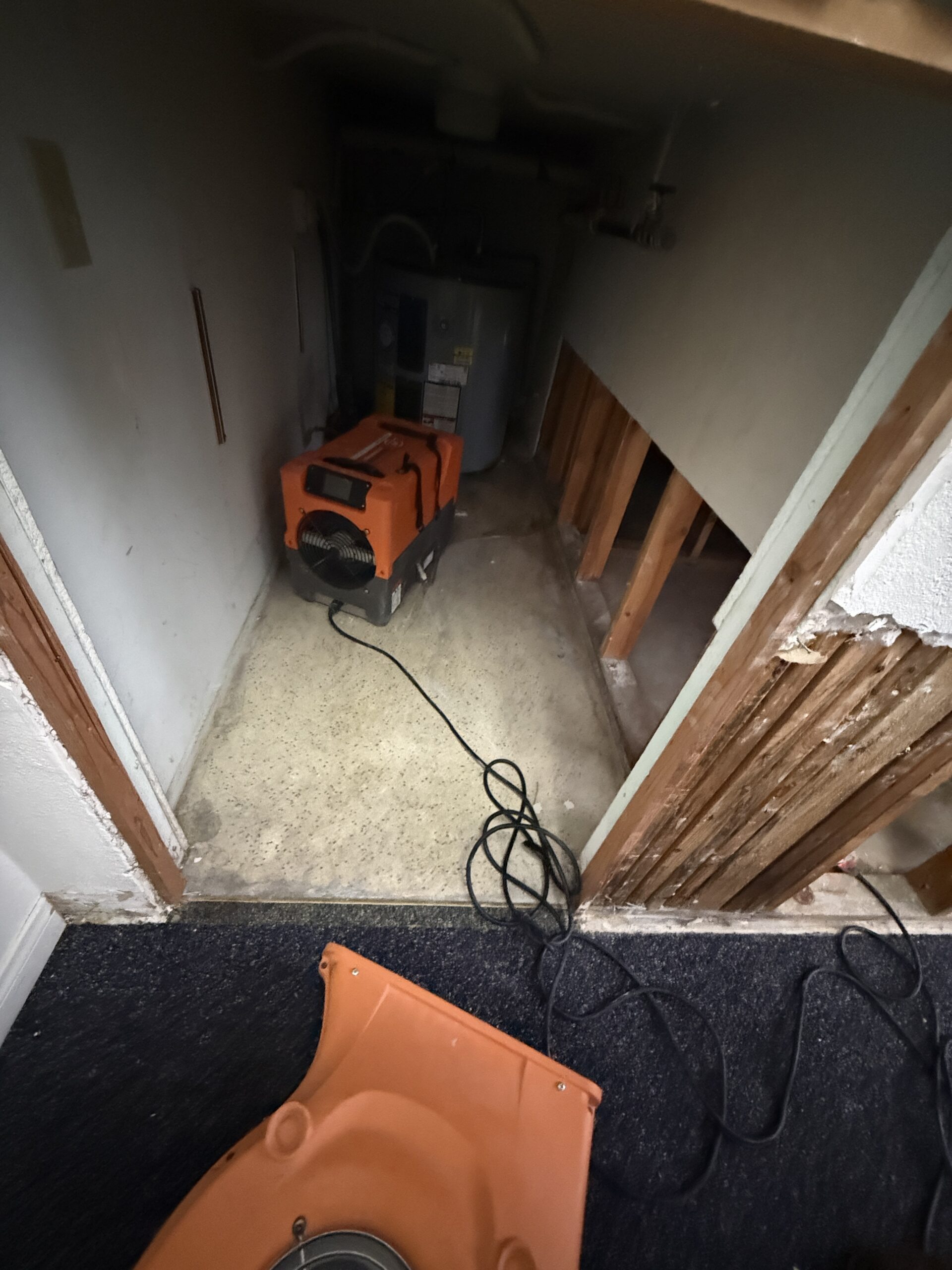
After standing water has been removed and necessary demolition has been completed, professional drying equipment may be installed.
Air movers help increase airflow across wet surfaces while commercial dehumidifiers remove moisture from the air. The specific amount and type of equipment needed depends on the size and conditions of the affected area.
Moisture conditions should be monitored throughout the drying process rather than relying only on how materials look or feel.
Can a Burst Pipe Cause Mold?
Wet building materials can create conditions that support microbial growth if moisture remains present. That is one reason water damage should be addressed promptly rather than allowing affected materials to remain wet.
The amount of time involved is not the only factor. Temperature, humidity, the materials affected, and existing conditions inside the property can also influence microbial growth.
If visible growth or suspected mold is discovered during the restoration process, the affected area may require additional evaluation and remediation procedures.
Does Homeowners Insurance Cover a Burst Pipe?
Homeowners insurance may provide coverage for resulting water damage from a sudden and accidental plumbing failure, depending on the circumstances and the terms of the individual policy.
Coverage for the resulting damage and coverage for repairing the plumbing component that failed may also be handled differently.
The insurance carrier ultimately determines whether a particular loss is covered, so homeowners should contact their carrier or adjuster with questions about their policy.
What Should You Avoid After a Pipe Bursts?
- Don’t enter areas where water may have created an electrical hazard.
- Don’t assume that removing visible water means the structure is dry.
- Don’t wait several days to investigate wet drywall, flooring, or cabinetry.
- Don’t dispose of damaged materials before documenting them if an insurance claim may be involved.
- Don’t begin extensive demolition without first determining the extent of the affected area.
Burst Pipe and Water Damage Help in Riverside County
911 Restoration of Riverside County provides emergency water damage restoration for burst pipes, plumbing leaks, appliance failures, overflowing fixtures, water heater leaks, and other unexpected water losses.
Our team can inspect affected areas, document moisture conditions, perform water extraction when necessary, remove affected materials, and set up professional drying equipment to help restore the property.
If you have an active water emergency in Riverside County, call 911 Restoration of Riverside County for immediate assistance.
Frequently Asked Questions
What is the first thing I should do when a pipe bursts?
If it is safe to do so, shut off the home’s main water supply to stop additional water from entering the property. Then address any electrical hazards and begin documenting the damage.
How do I know if water got behind my walls?
Water inside a wall is not always visible from the surface. Moisture meters and infrared imaging can help restoration professionals identify areas that may require further investigation.
Does wet drywall always need to be removed?
Not necessarily. Whether drywall can be dried or should be removed depends on the source of the water, the extent of saturation, how long it remained wet, and the condition of the material.
Should I call a plumber or a water restoration company first?
If water is actively leaking, the immediate priority is stopping the source. A plumber may be needed to repair the plumbing failure, while a water restoration company addresses the water that entered the structure and the resulting damage.
How long does it take to dry a home after a burst pipe?
Drying time varies depending on the amount of water, materials affected, environmental conditions, and how quickly mitigation begins. Moisture readings should be used to determine drying progress rather than relying on a predetermined number of days.
This article provides general property-restoration information. The correct scope for a specific loss depends on the source of damage, water category or contamination conditions, affected materials, building assembly, duration of exposure, moisture readings, and other site conditions.