Water dripping or pouring from a ceiling can be a sign that a plumbing leak, overflowing fixture, appliance failure, or another water source is affecting the area above. Even a small ceiling stain can indicate moisture inside drywall, insulation, framing, or other concealed building materials.
If water is actively leaking from your ceiling, protecting yourself and stopping the source should come before trying to repair the visible damage.
What Should You Do First When Water Is Leaking From the Ceiling?
If you discover an active ceiling leak, take the following steps when it is safe to do so:
- Stay clear of electrical hazards. Avoid ceiling lights, electrical fixtures, outlets, and other electrical components that may have been exposed to water.
- Stop the water source. If the leak is plumbing-related and you can safely identify the source, shut off the affected fixture or the home’s main water supply.
- Move belongings away from the area. Relocate furniture and personal property when this can be done safely.
- Contain dripping water. Place a container underneath the leak if there is no electrical or ceiling-collapse hazard.
- Document the damage. Photograph and video the ceiling and surrounding affected areas.
- Have the damage inspected. Determine how far the water traveled rather than repairing only the visible ceiling stain.
Where Is the Ceiling Water Coming From?
The location where water appears is not necessarily the location where the leak started. Water can travel along pipes, framing, insulation, and other building materials before becoming visible through the ceiling below.
Common sources of ceiling water damage include:
- Overflowing upstairs toilets
- Bathtub or shower leaks
- Broken plumbing supply lines
- Drain-line leaks
- Water heater failures
- Washing machine supply or drain problems
- HVAC condensation or drain issues
- Roof leaks
Is a Water-Damaged Ceiling Dangerous?
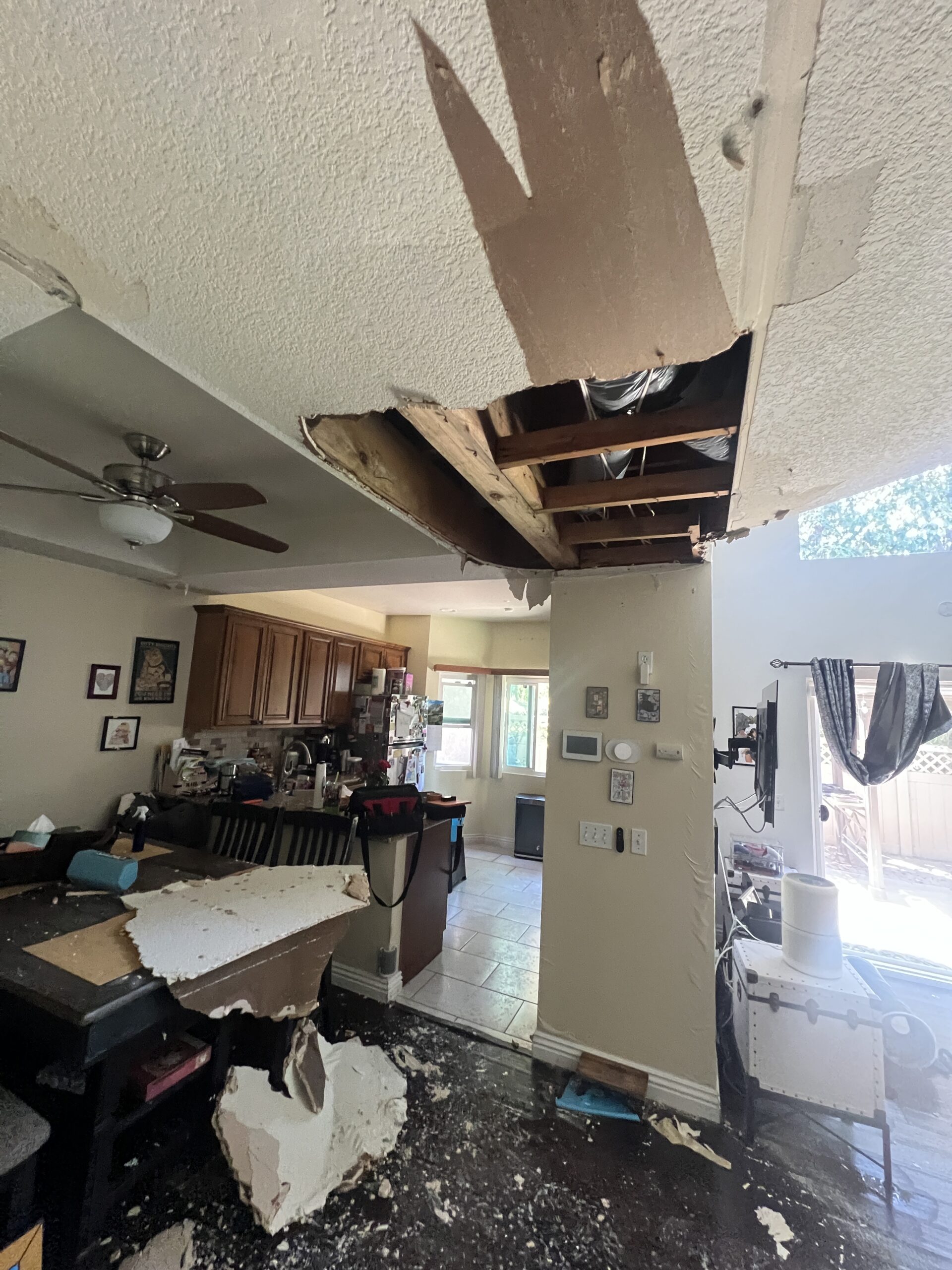
A water-damaged ceiling should be treated cautiously. Saturated drywall can become heavy and lose strength. In more severe situations, sections of ceiling material may sag or eventually fall.
Water near ceiling lights or electrical components can create an additional hazard.
If a ceiling is heavily saturated, sagging, bulging, or showing signs of structural failure, stay out from underneath the affected area and have the conditions evaluated.
Should You Poke a Hole in a Bulging Ceiling?
Homeowners sometimes hear that they should puncture a ceiling bulge to release trapped water. Doing this without understanding the conditions above the ceiling can create additional risks.
There may be electrical wiring, insulation, contaminated water, or a significant amount of water above the drywall. The ceiling material itself may also be unstable.
If a ceiling is substantially saturated or bulging, professional evaluation is the safer approach.
How Do You Know How Far the Water Traveled?
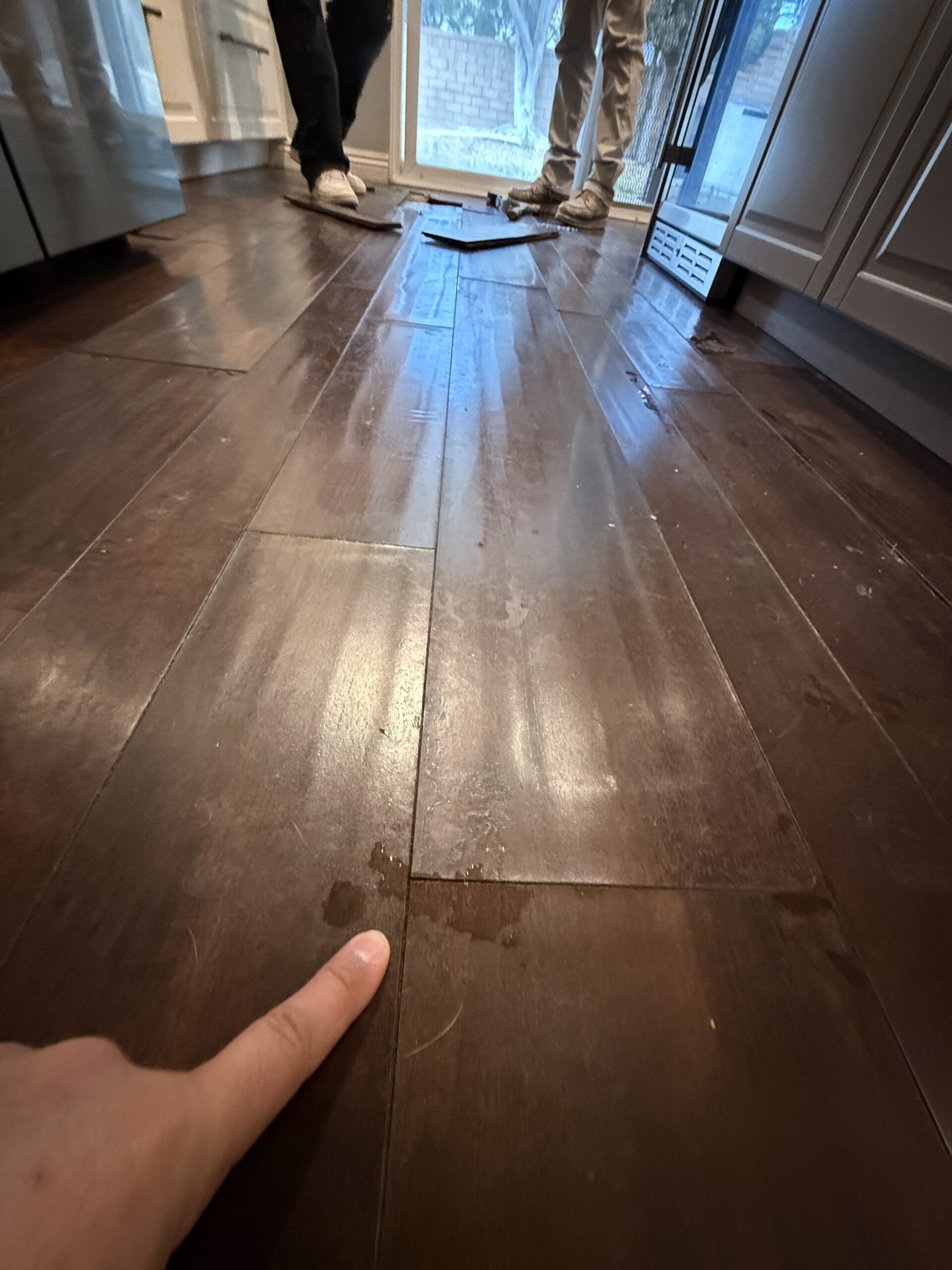
Visible staining only shows part of the story. Water may have spread across the backside of the ceiling or entered adjoining walls and flooring.
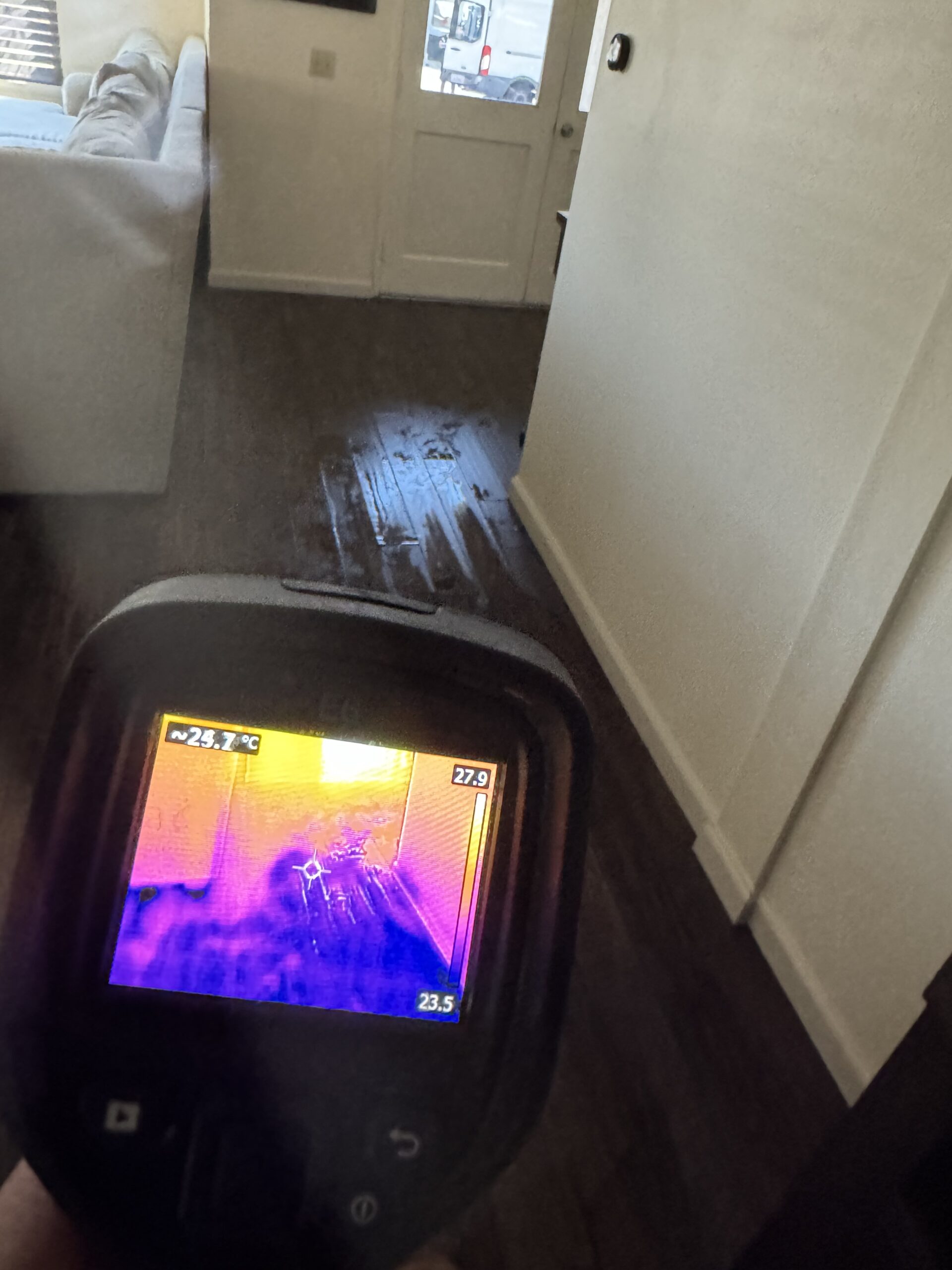
During a water-damage inspection, restoration technicians may use moisture meters to identify elevated moisture in building materials.
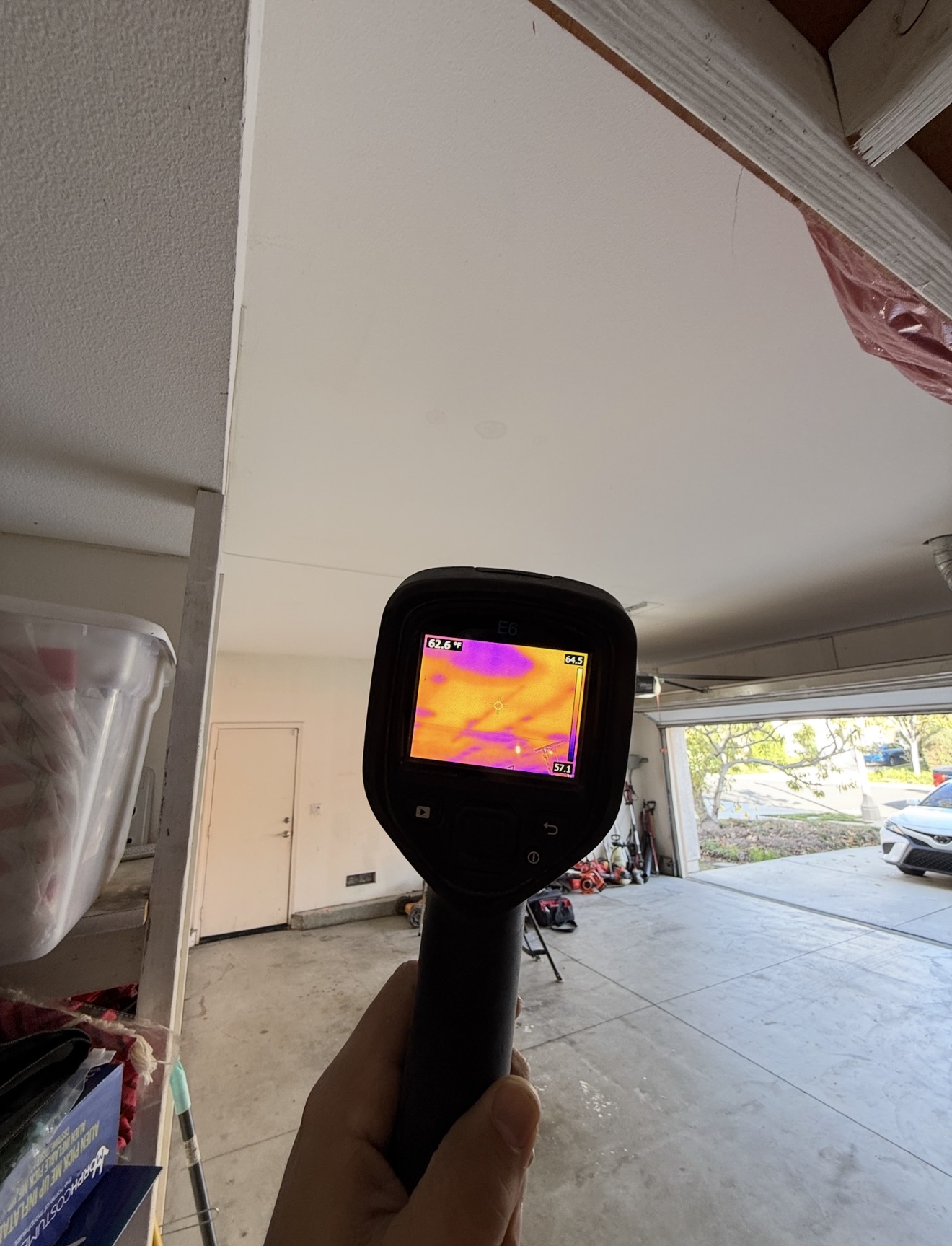
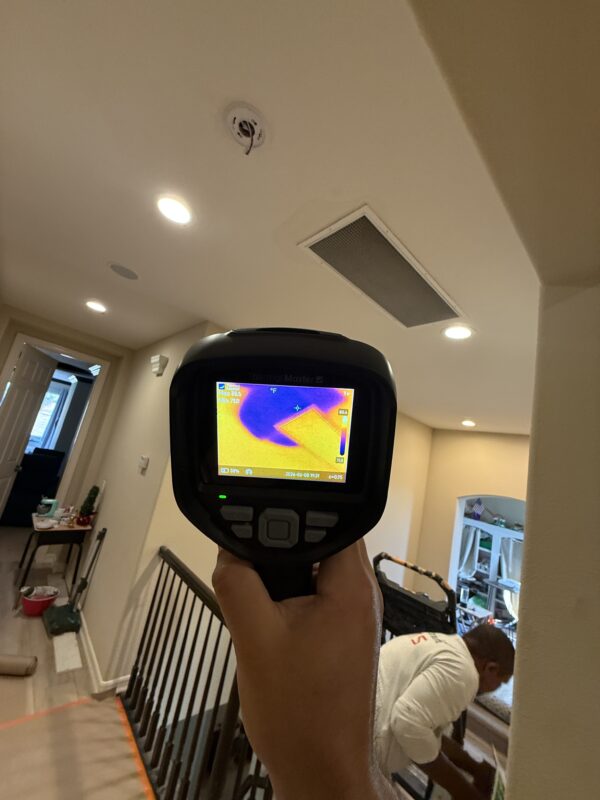
Infrared imaging can also help identify temperature differences across ceilings and walls that may indicate areas requiring further investigation. Infrared findings should be evaluated alongside moisture readings and physical inspection.
Does Wet Ceiling Drywall Have to Be Removed?
Not every wet ceiling automatically requires complete removal.
The appropriate restoration approach depends on several factors, including:
- The source and category of the water
- How saturated the drywall became
- How long the material remained wet
- The condition and structural integrity of the drywall
- Whether insulation above the ceiling became affected
- Whether access is needed to properly dry the cavity
Some materials may be capable of being dried, while damaged or contaminated materials may require removal.
What If the Ceiling Leak Came From an Upstairs Toilet?
An overflowing toilet can create additional concerns depending on the source and contamination level of the water.
Water can travel through the bathroom flooring and subfloor before entering the ceiling and wall cavities below. When contaminated water is involved, restoration procedures may require removal and cleaning of affected materials rather than simply drying everything in place.
Can a Ceiling Leak Cause Mold?
Moisture that remains inside drywall, insulation, framing, or other building materials can create conditions that support microbial growth.
This is one reason a ceiling that stops dripping should not automatically be considered dry. The source should be corrected and affected materials should be evaluated for remaining moisture.
Can You Just Paint Over a Water Stain?
Painting over a ceiling stain only addresses its appearance. Before repairing or repainting the ceiling, the source of the water should be corrected and affected materials should be appropriately dried.
Otherwise, additional staining, deterioration, or other moisture-related problems may continue.
Does Homeowners Insurance Cover Ceiling Water Damage?
Homeowners insurance may cover resulting water damage from certain sudden and accidental events, depending on the cause of the loss and the terms of the policy.
For example, damage resulting from a sudden plumbing failure may be treated differently from damage associated with a long-term leak or maintenance issue.
The insurance carrier ultimately determines coverage. If a claim may be involved, document the damage and contact your carrier or adjuster regarding your specific policy.
Ceiling Water Damage Restoration in Riverside County
911 Restoration of Riverside County provides emergency water damage restoration for ceiling leaks, overflowing toilets, burst pipes, appliance failures, plumbing leaks, water heater failures, and other unexpected water losses.
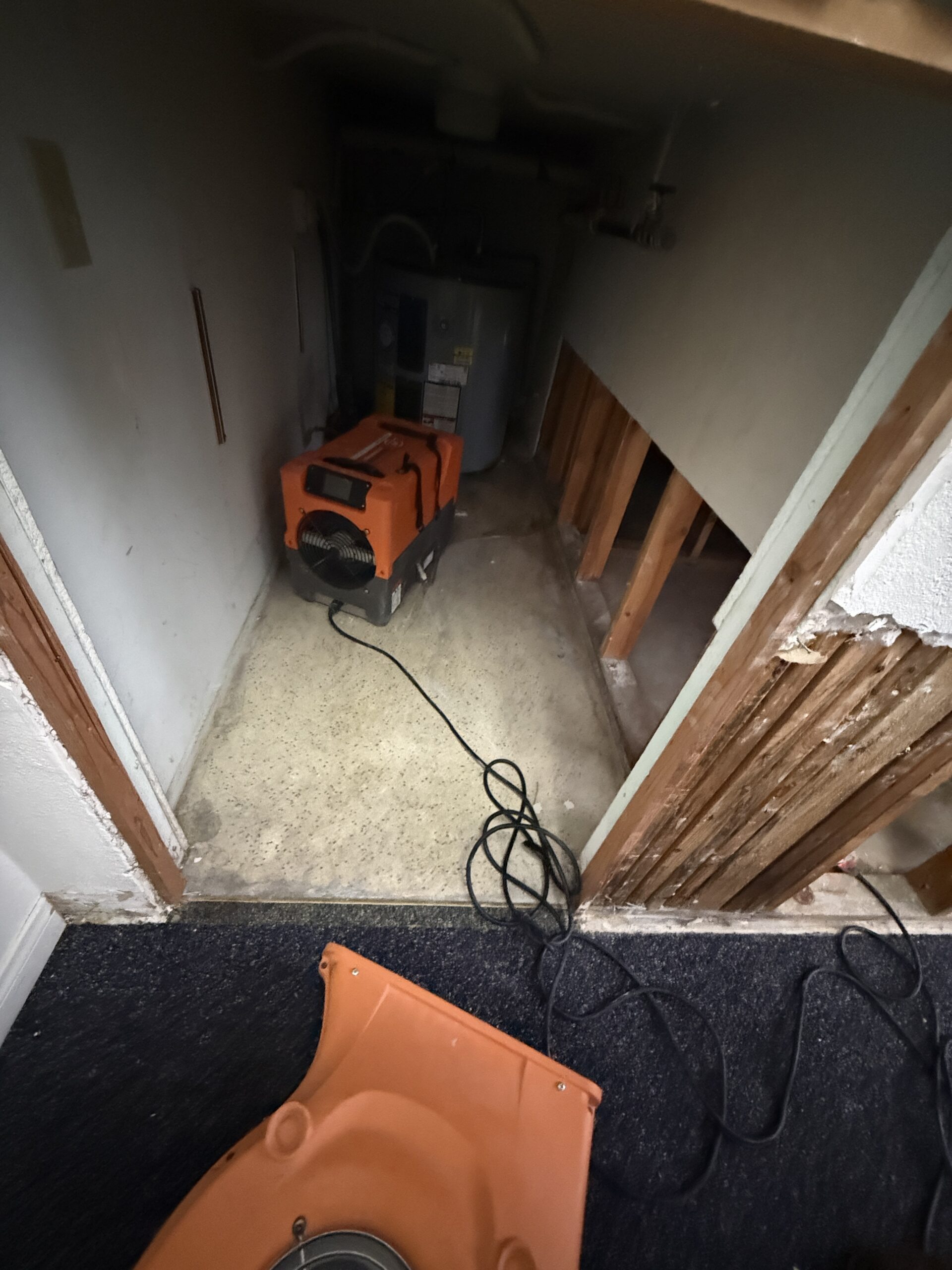
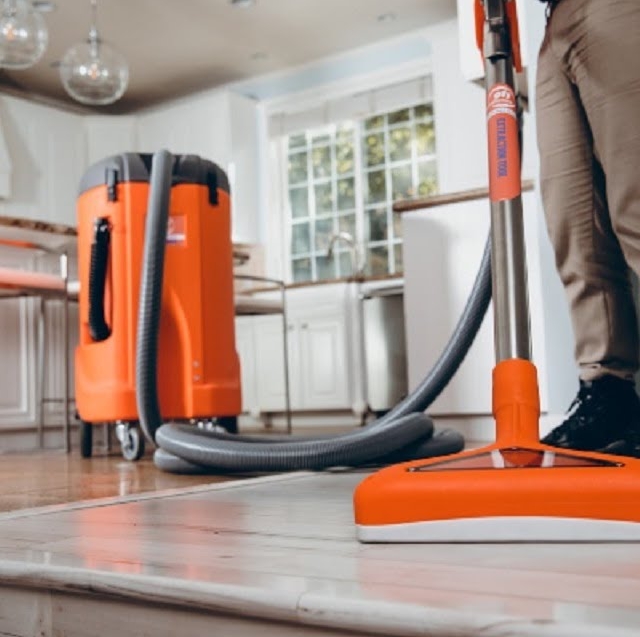
Our team can inspect affected areas, document moisture conditions, perform water extraction when necessary, remove affected materials when appropriate, and install professional drying equipment.
If water is actively leaking from your ceiling in Riverside County, call 911 Restoration of Riverside County for immediate water damage assistance.
Frequently Asked Questions
Why is water suddenly dripping from my ceiling?
Possible causes include an upstairs plumbing leak, overflowing toilet or bathtub, broken supply line, appliance leak, HVAC-related issue, or roof leak. The source should be identified before repairing the ceiling.
Can a wet ceiling collapse?
Severely saturated ceiling materials can lose strength. Sagging, bulging, cracking, or heavily saturated drywall should be treated cautiously, and people should stay out from underneath unstable areas.
How do you know if a ceiling is still wet?
Professional moisture meters can help determine whether elevated moisture remains in ceiling materials even when the surface appears dry.
Should I call a plumber or water damage company for a ceiling leak?
A plumber may be needed to repair a plumbing source, while a water damage restoration company addresses the water that entered the structure and evaluates affected building materials. Depending on the situation, both services may be necessary.
Should I replace drywall after a ceiling leak?
Not automatically. The decision depends on the water source, contamination, saturation, condition of the drywall, length of exposure, and whether concealed materials also need to be accessed.
This article provides general property-restoration information. The correct scope for a specific loss depends on the source of damage, water category or contamination conditions, affected materials, building assembly, duration of exposure, moisture readings, and other site conditions.